
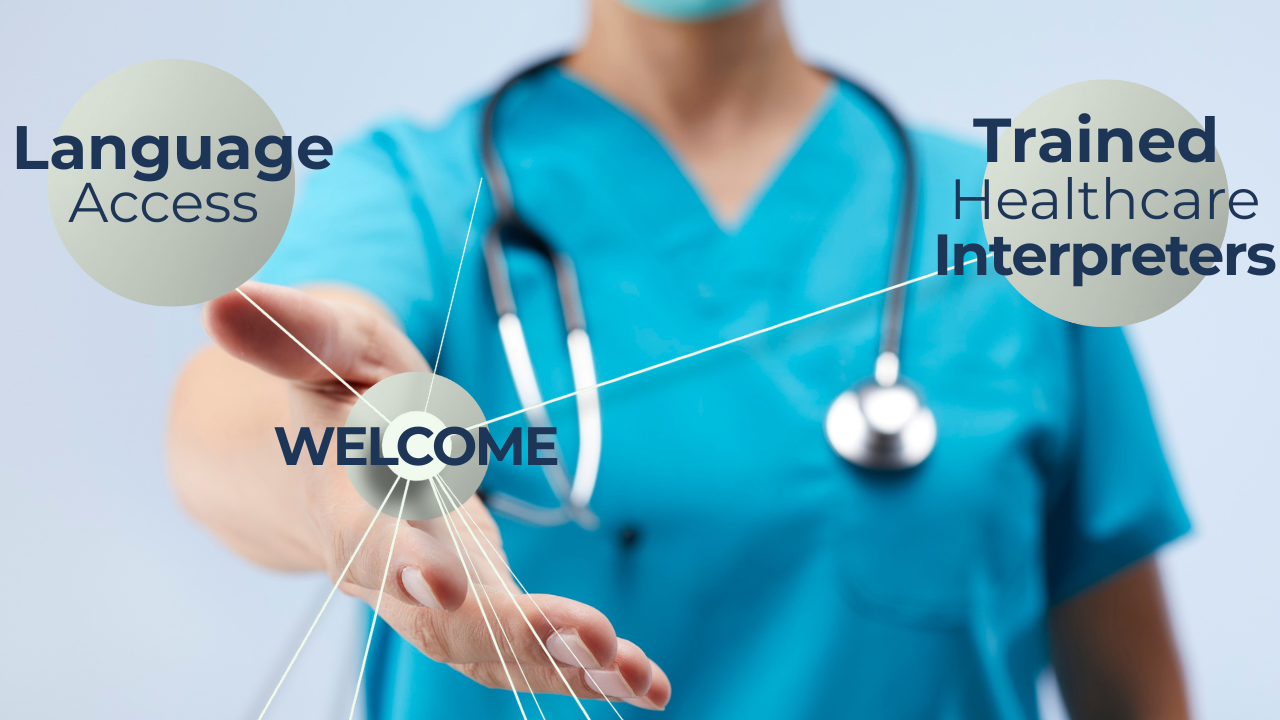
Language access is a cornerstone of equity in healthcare: without it, care is not equally accessible, effective, or safe. For people who do not speak the same language as the service provider, or are Deaf or hard of hearing, access to trained interpreters is not just helpful — it’s essential for receiving safe, respectful, and effective care.
Interpreters working in signed or spoken languages, such as Mandarin, Arabic, Farsi, Punjabi, or any of the other 200+ languages spoken in Canada, play a vital role when it comes to public services in Canada – like healthcare. They help ensure that patients understand critical information, can provide informed consent, and are heard. Their work supports not only individual patients, but the quality and fairness of the healthcare system as a whole, and the professional integrity of the healthcare team. Extending beyond that, the work of interpreters contributes to more cohesive communities by bridging linguistic and cultural divides, fostering trust, and ensuring that all voices are heard in our every day lives.
When Every Word Matters: Interpreting in Canadian Medical Encounters
Healthcare interpreting also presents unique challenges. Like many specialized settings, it requires knowledge of specific terminology—not just medical terms, but also jargon unique to healthcare and distinctive of the Canadian system and context. While the biomedical model may be broadly consistent across countries—even those sharing the same language—the real distinctions lie in the broader context: how healthcare is organized, accessed, and delivered, as well as the cultural expectations and systemic nuances that shape patient-provider interactions. These differences have a significant impact on how we train interpreters at The Interpreter’s Lab. Effective interpreting depends not only on language fluency and interpreting competences, but on an understanding of these systems, roles, and protocols that influence every healthcare encounter.
Healthcare settings are emotionally complex and constantly shifting, often placing interpreters in the middle of deeply personal and difficult conversations. From end-of-life discussions to emotionally charged decisions, interpreters must stay poised, impartial, and accurate while navigating evolving emotions and sensitive interpersonal dynamics.
Interpreters working in medical settings must understand clinical systems, stay grounded in their professional role, and remain composed in difficult moments—all while making space for individuals to speak and be heard. This is why setting-specific training is essential. Without it, navigating the complexity of medical encounters has the potential to overwhelm interpreters and ultimately affect everyone involved.
“A patient without a professional interpreter is less likely to understand their diagnosis, less likely to be able to give fully informed consent for treatment, and ultimately less likely to adhere to their treatment protocol.” (National Standards for Healthcare Equity, p. 10)
Interpreting in Healthcare & Medical Settings is a specialized training program that helps interpreters build the knowledge and skills required to meet these challenges.
The Interpreting in Healthcare and Medical Settings covers:
• Canadian healthcare systems
• Medical and related terminology
• Ethics and role maintenance
• Cultural safety and the role of culture in healthcare
• Interpreting protocols and navigating complexities
• Techniques to manage assignment preparation, focus, memory, and accuracy
Specialized Interpreter Training Supports Quality Care and Equity in Service Provision
Training at The Interpreter’s Lab strengthens interpreters’ ability to work effectively with clinicians across disciplines and support patients from diverse cultural and linguistic backgrounds. By exploring how culture shapes health beliefs and communication, interpreters are better equipped to support meaningful interactions and contribute to more equitable care.
Our programs provide the tools, frameworks, and reflective practices needed to navigate ethical tensions in real time—helping interpreters stay grounded, make informed decisions, and uphold the integrity of their role, even under pressure.
The Human Element – Mission Critical
The human element in healthcare and medical interpreting cannot be understated: People are essential to the success of this work. While AI is often promoted as a solution to language barriers, the perception that it works well is often stronger than its actual effectiveness. In healthcare, where communication is dynamic, emotional, and deeply rooted in interpersonal and intercultural realities, AI is rarely a reliable or ethical substitute. It cannot interpret tone, context, or nuance, and it cannot support clarity or cultural safety. Human interpreters remain essential to ensuring language access that is accurate, appropriate, and equitable.
“People are essential to the success of this work.”
Interpreting in healthcare is more than just language work. It’s a critical part of ensuring language rights and language access and reducing barriers to care. Specialized training helps interpreters bring clarity, dignity, and equity into every conversation.
Resources and Additional Readings
- “When I’m sick, I’m not bilingual” – Language Support is Health Equity (2025). Access HERE
- Investing in Language Access to Optimize Health System Performance (Research Snapshot). Found HERE
- Access to Health Care – addressing the Language Barriers (2009). Found HERE
- Medical Interpreting Services for Refugees in Canada – Current State of Practice and Considerations in Promoting this Essential Human Right for All (2024). Found HERE
- National Standards for Healthcare Equity: The Case for Provincial Interpretation Services. National Newcomer Navigation Network (2022). Found at Newcomer Access to Professional Interpretation Services in Healthcare