Why is the interpreting profession difficult to navigate in Canada?
Community and public service interpreting in Canada remains largely unregulated, with inconsistent qualifications, limited transparency, and no clearly visible professional pathway. As a result, interpreters are often left to navigate training, contracts, rates, specializations, and career development largely on their own.
Interpreter Career Development
In more than 30 years of working in the interpreting field in Canada, and having held a multitude of roles within it, one thing has remained remarkably consistent: the field itself is often obscured from the very people it relies on.
This is particularly true in community and public service interpreting. Many interpreters find their way into the work almost by accident. They may be recruited because they speak another language, referred by someone in their community, or offered an assignment before they fully understand the profession they are entering. This is not a universal reality, at all, but a very common one.
Those who continue for 10, 20, or even 30 years often develop considerable knowledge within their immediate working environment. They know the organizations that hire them, the settings in which they work, and the expectations they encounter every day.
But move beyond that immediate horizon, and the larger field can become much harder to see.
We recently explored many of these issues in our monthly Professional Development Workshop, Drawing the Line: Navigating Challenges as a Freelance Interpreter in Canada. The discussion reinforced just how many interpreters are seeking greater clarity about the business of interpreting, from assignments, contracts, and rates to qualifications, professional boundaries, and negotiating with language service providers. Regardless of the length of time they have been working in the field. Interpreters frequently ask:
- How do language service providers assign appointments?
- What criteria do they use?
- How are interpreter rates determined?
- Can I negotiate my contract or request a higher rate?
- Why do some providers require training and language assessments while others do not even ask for a résumé?
- Can I work directly for a lawyer, healthcare provider, public institution, or private company?
- What qualifications should I pursue?
- What are other interpreters earning?
- What does a sustainable career in this field actually look like?
These are all valid questions. Some have relatively straightforward answers. Others expose much larger issues within the interpreting sector.
If you don’t know what you don’t know, where do you start?
Community Interpreting in Canada
Community and public service interpreting remains largely unregulated in Canada, with little oversight. Requirements vary significantly among sectors, jurisdictions, institutions, and language service providers. There is no single, clearly visible pathway into the profession. Or through it.
As a result, interpreters are often left to assemble their own understanding of the field. Many work independently and have limited opportunities to connect with colleagues, compare experiences, learn how the broader system operates, or identify reliable professional practices.
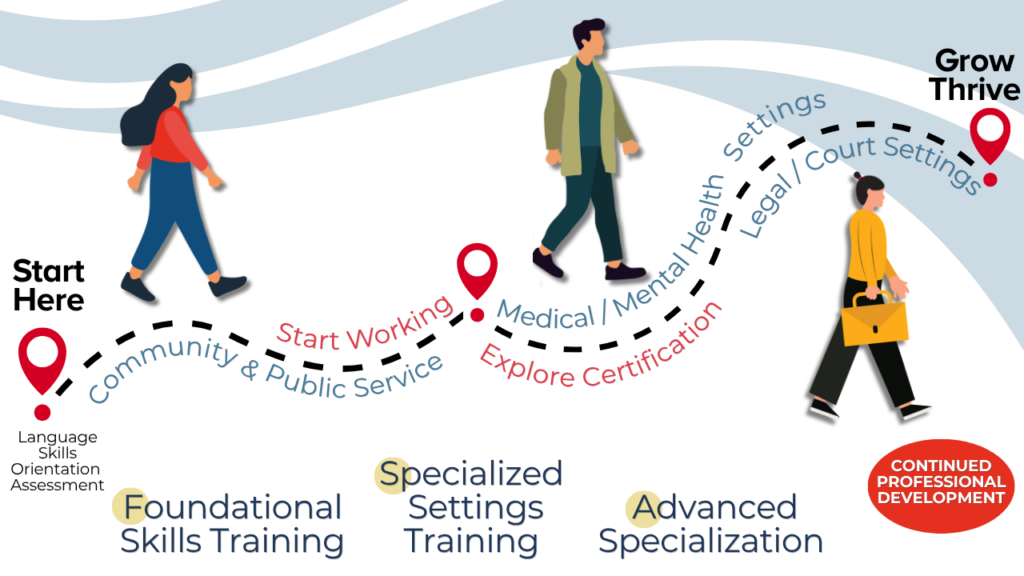
This creates more than an information gap. It affects how interpreters make decisions about training, contracts, rates, professional boundaries, specialization, and career development. But, it is important to note, that interpreters can begin building stronger professional pathways at any stage of their careers.
Below are some of the most common mistakes that I have seen interpreters make.
- Mistaking loyalty for exclusivity
Most community interpreters work as independent contractors. Unless a contract specifically states otherwise, working with one language service provider does not necessarily prevent an interpreter from working with others.

Yet many interpreters remain dependent on a single provider without fully considering the implications. This can limit access to assignments, sectors, experience, and income, leaving the interpreter particularly vulnerable when demand changes.
Professional relationships matter, but loyalty does not have to mean exclusivity. Interpreters can maintain their contractual obligations, provide consistently high-quality service, and still develop relationships with multiple reputable organizations.
The important questions are: Does the organization have fair and transparent practices? Does it respect the interpreter’s role? Are its expectations consistent with professional standards? And does the relationship support the direction in which the interpreter wants to grow?
- Believing that compassion and business do not mix
Interpreters may be motivated by compassion and a commitment to language access, but they are still skilled professionals whose work should be properly valued and compensated.
It is possible to care deeply about language access, equity, and the people who depend on interpreting services while also paying attention to contracts, working conditions, expenses, payment terms, and rates.
In fact, professional boundaries support both.
When interpreters understand their role, communicate their conditions clearly, and approach negotiations as businesspeople providing a skilled service, they contribute to a more sustainable profession. Compassion should inform the work; it should not be used to justify undervaluing it.
- Working without a professional direction
Many interpreters begin by accepting assignments as they arrive. That is understandable, particularly when someone is new to the field and trying to gain experience.
The difficulty arises when reacting to the next available assignment becomes the long-term career strategy.
A professional pathway requires more deliberate questions:
- What settings do I want to work in?
- What knowledge and competencies will those settings require?
- What additional education or assessment should I pursue?
- Which organizations align with my professional standards?
- What kind of work do I want to be doing two or five years from now?
- What practical steps will move me in that direction?
Experience matters, but experience alone does not automatically create a career pathway. Interpreters also need access to information, education, professional networks, and a clearer understanding of the system in which they work.
We explore many of these questions in our courses, encouraging interpreters to research the organizations, requirements, rates, and opportunities that shape their work. Yet this exercise consistently exposes a larger problem: much of the information interpreters need is difficult, if not impossible, to find.
These may appear to be individual questions, but they are also system questions. Certainly, interpreters can take greater ownership of those aspects of their professional lives they can control. They can conduct research, pursue further training, strengthen their negotiating skills, and plan their careers more deliberately.
But individual effort can only go so far when the field itself lacks transparency, or when faced with challenges created by an unregulated system.
When qualifications are inconsistent, procurement decisions are difficult to see, rates are determined without transparency, and the interpreter’s role is poorly understood. Uncertainty is not simply a personal failure to “figure it out.” It is evidence of a broader coordination problem.
The Interpreter’s Lab was created in response to this need: to provide a place where interpreters can learn, connect, ask questions, and better understand both the work and the field surrounding it.
Because interpreters deserve more than a collection of assignments. They deserve access to the knowledge required to navigate their profession, and a system coherent enough that the people working within it can actually see where they are going.
This connects directly to the questions I have been exploring in my System, What System? series. Canada relies on interpreters across healthcare, justice, immigration, education, social services, and many other public institutions. Yet the people performing this essential work often have no clear way to understand how those pieces connect, or where they themselves fit within them.
Bad actors and low-threshold hiring practices make that problem worse. They reduce interpreting to the ability to speak two languages; obscuring the knowledge, judgment, ethics, preparation, and complex human communication the work actually requires.
But with access to clearer information and the right support, interpreters can make more deliberate professional decisions.
You do not have to navigate the field alone
Greater transparency across the interpreting field will require broader, systemic change. But interpreters can still take meaningful steps now, and support is available.
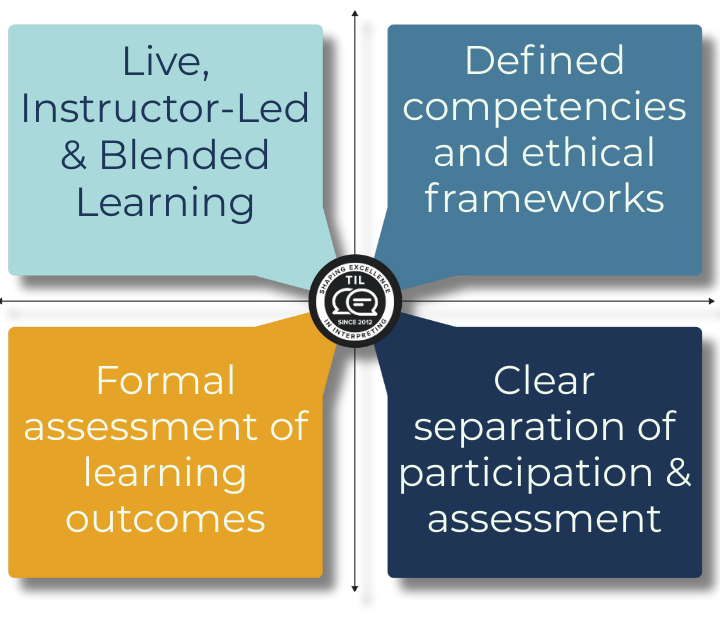
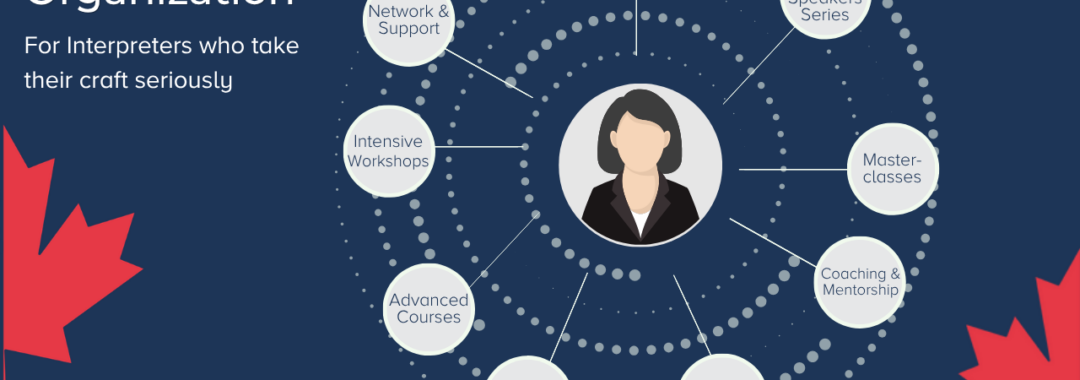
At The Interpreter’s Lab, we help interpreters better understand the profession, strengthen their skills and professional judgment, explore areas of specialization, and make more informed decisions about their development and careers. Through standards-based training, continuing professional development, practical resources, and opportunities to connect with others in the field, we are working to make the professional landscape more visible and easier to navigate.
Whether you are new to interpreting, have worked in the field for many years, or are trying to determine your next professional step, you do not have to figure it all out on your own.
Explore TIL training and professional development opportunities: www.interpreterslab.org
Making more of the field visible
Our developing resource, A Field Guide for Interpreters in Canada: Navigating the Work, Business and Profession (estimated publication date January 2027), grows from this same purpose. It will not solve every structural problem or provide a single answer that applies to every interpreter, language, region, or sector. The field is too varied for that.

What it can do is make more of the landscape visible. It can help interpreters understand how work is organized, what questions to ask, how to assess opportunities, and how to make more informed decisions about their professional development and careers.
Interpreters are critical and essential links, not only facilitating communication, access, and language justice, but also sustaining the cultural and linguistic diversity that strong communities need.
They deserve access to the information, education, professional networks, and support needed to understand the field, navigate it with confidence, and build sustainable careers within it. Making the profession more visible will not resolve every systemic challenge, but it can give interpreters greater knowledge, agency, and choice.
That is an important place to begin and work we can undertake together, because no interpreter should be expected to navigate the field alone.
Join TIL and become a part of a Community of Peers.








 organizations, and supporting educators.