The Interpreter’s Path: How to Enter One of Canada’s Most Essential Profession

Interpreting is everywhere. You encounter interpreters in hospitals, courtrooms, community centres, schools, at the insurance office, during financial aid meetings, or in child welfare visits, and even at the negotiating table when organizations or communities need to find common ground across a language divide. And yet, despite its reach and its stakes, the profession remains poorly understood by most people, including many who are drawn to it.

At The Interpreters Lab, we hear the same question regularly: How does someone actually become an interpreter? It is one of the most searched and least clearly answered questions in the field. The pathway is not as linear as medicine or law, and there is no single credentialing body that defines it universally. That ambiguity can be discouraging, but it shouldn’t be. The path exists. It is well-established, and for the right person, it is deeply rewarding.

This is where it starts.

Language Proficiency: The Non-Negotiable Foundation

Every conversation about interpreter training must begin here, because there is no version of this profession that does not require it. Genuine, high-level proficiency in at least two languages is not a preferred qualification, it is a baseline requirement. And it is worth being precise about what proficiency means in this context.

The interpreter is not a translator working quietly at a desk with time to consult a dictionary. The interpreter operates in real time, in live environments, often under significant pressure. They must receive meaning in one language and render it accurately, completely, and fluently in another, in consecutive or simultaneous mode and within moments. That demands more than academic knowledge of a language. It demands the kind of fluency that is intuitive, flexible, and responsive to register, dialect, emotional tone, and context.

If you are bilingual and considering this career, ask yourself honestly: in both of your languages, can you follow rapid, idiomatic speech without effort? Can you express complex ideas with precision? Can you shift register fluidly, from formal to colloquial; from clinical to conversational; without losing accuracy? These are the standards the profession demands. This is what training teaches you.

The Personal Qualities That Drive the Work

Language proficiency is necessary, but it is not all. This is where many aspiring interpreters are surprised.

The weight of that responsibility is real. For the professionals who carry it well, it is also the most compelling reason they chose the field.

The qualities that distinguish a skilled interpreter are not only linguistic. They are fundamentally human. A genuine interest in people, in their circumstances, their communication styles, their cultural frameworks, is not a nice-to-have. It shapes how an interpreter shows up in a room. So does intellectual curiosity, a comfort with uncertainty, and the capacity to remain composed and focused in environments that are often emotionally charged or logistically demanding.

Interpreters in community or public services often work in settings defined as complicated and complex. They encounter people at their most vulnerable, their most adversarial, and their most exposed. The professionals who thrive in this work tend to share a particular disposition: they are drawn to the challenge rather than deterred by it.

Not sure whether you have the profile? Our assessment was designed to help you find out. Take the Do You Have What It Takes Assessment

Foundational Training: Where the Talent Meets Competence
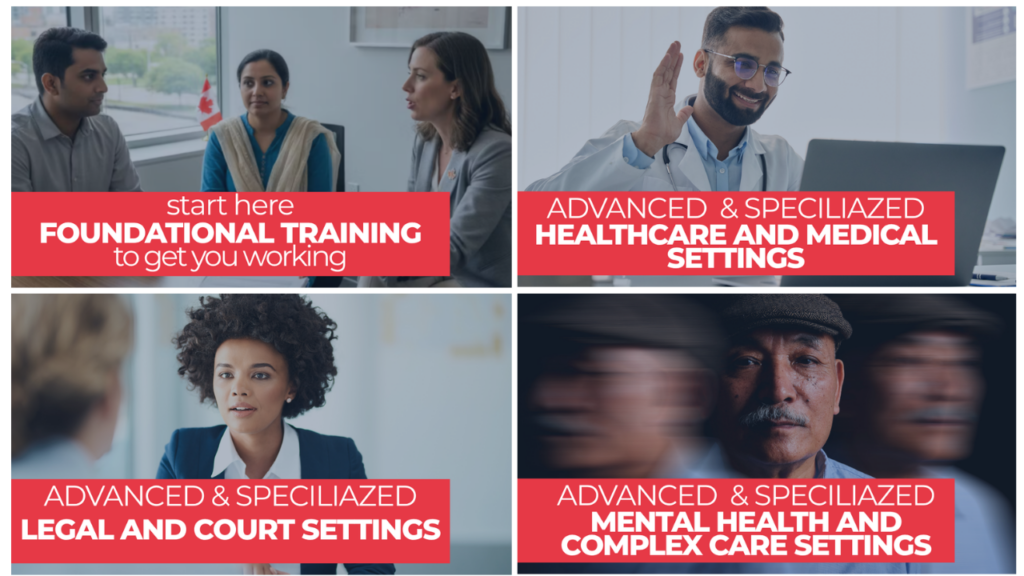
The assumption that bilingualism alone qualifies someone to interpret professionally is one of the most persistent and consequential misconceptions in the field. Foundational training is not supplementary. It is essential. It is where interpreting as a discipline is actually learned.

Structured training – such as The Interpreter’s Lab Interpreting in Community Settings course – introduces the core modes of interpreting:

  • consecutive interpreting, in which the interpreter renders a complete utterance after the speaker pauses
  • simultaneous interpreting, in which the interpreter works in real time, with almost no delay
  • sight translation, in which the interpreter reads from a document in one language and translates it into another – using either spoken or signed.

Each mode requires distinct skills and significant practice to execute well. Training also covers:

  • note-taking methodology
  • memory retention techniques
  • research skills
  • ethics
  • cognitive strategies (necessary to manage the considerable mental load of live interpreting)

Equally important is the professional formation that takes place in a rigorous training environment:

  • understanding the interpreter’s role and its limits
  • developing the discipline of impartiality
  • learning to navigate the ethical dimensions of the work (before encountering them in the field)

But in Canada, these pathways are limited in both availability and relevance. Where they do exist, they are often tied to official languages and follow highly structured academic routes. For many of the languages used in community settings, these pathways are not only unavailable, they often don’t align with the realities of the work.

Canada’s linguistic landscape tells a different story. According to the 2021 Census, the most common mother tongues other than English or French include Mandarin, Punjabi, Cantonese, and Spanish. Beyond these, more than 100,000 people each speak Arabic, Tagalog, Persian/Farsi, Urdu, Russian, and Korean at home.

Punjabi, Mandarin and Arabic Languages in Demand

The demand for community interpreters in languages such as Punjabi, Mandarin, Arabic, Tagalog, Hindi, Urdu, and Farsi is not only substantial, it is actively growing. And importantly, this demand is not uniform across the country. Regional variation matters. In British Columbia, Mandarin and Punjabi are among the most commonly spoken languages; in Ontario, Punjabi and Arabic are prominent; and in Quebec, Arabic is the most common immigrant language.

In other words, the need for interpreting spans a wide and evolving range of languages, shaped by local realities. Yet the training pathways have not kept pace. What exists on paper does not always reflect what is needed in practice.

For most languages outside of signed languages and Canada’s official languages, formal educational pathways are limited. Where they do exist, they are often found in private training models or smaller, practice-based programs rather than within traditional academic institutions.

That said, pathways into foundational training do exist. These may include university programs in conference interpreting or translation studies, community and healthcare interpreter certification programs, and specialized training institutes. The appropriate pathway depends on the individual’s goals, prior education, and the settings in which they intend to work.

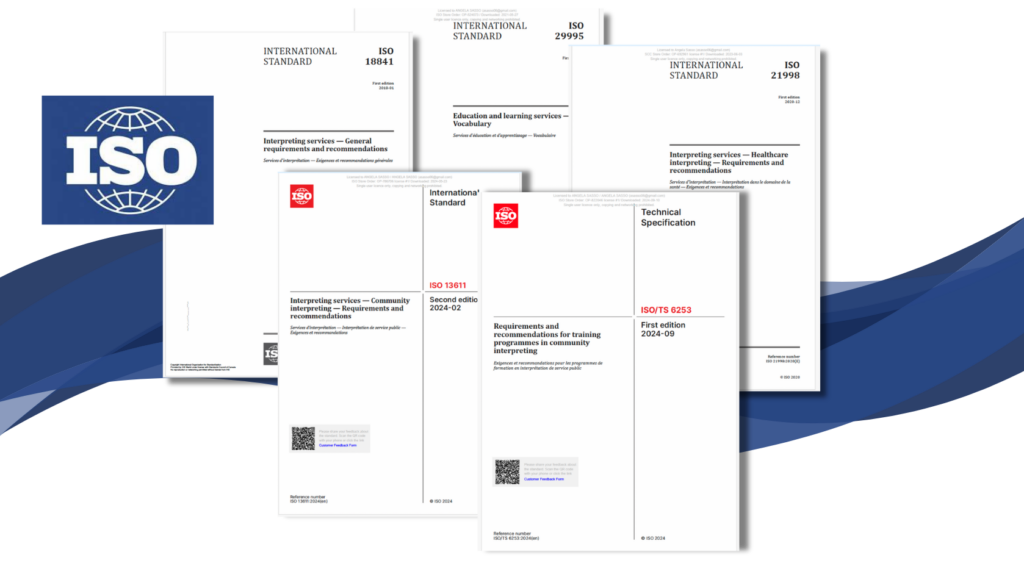
This gap between practice and formal pathways was a key impetus behind the development of ISO/TS 6253, an international standard designed to address training in community interpreting where traditional models fall short.
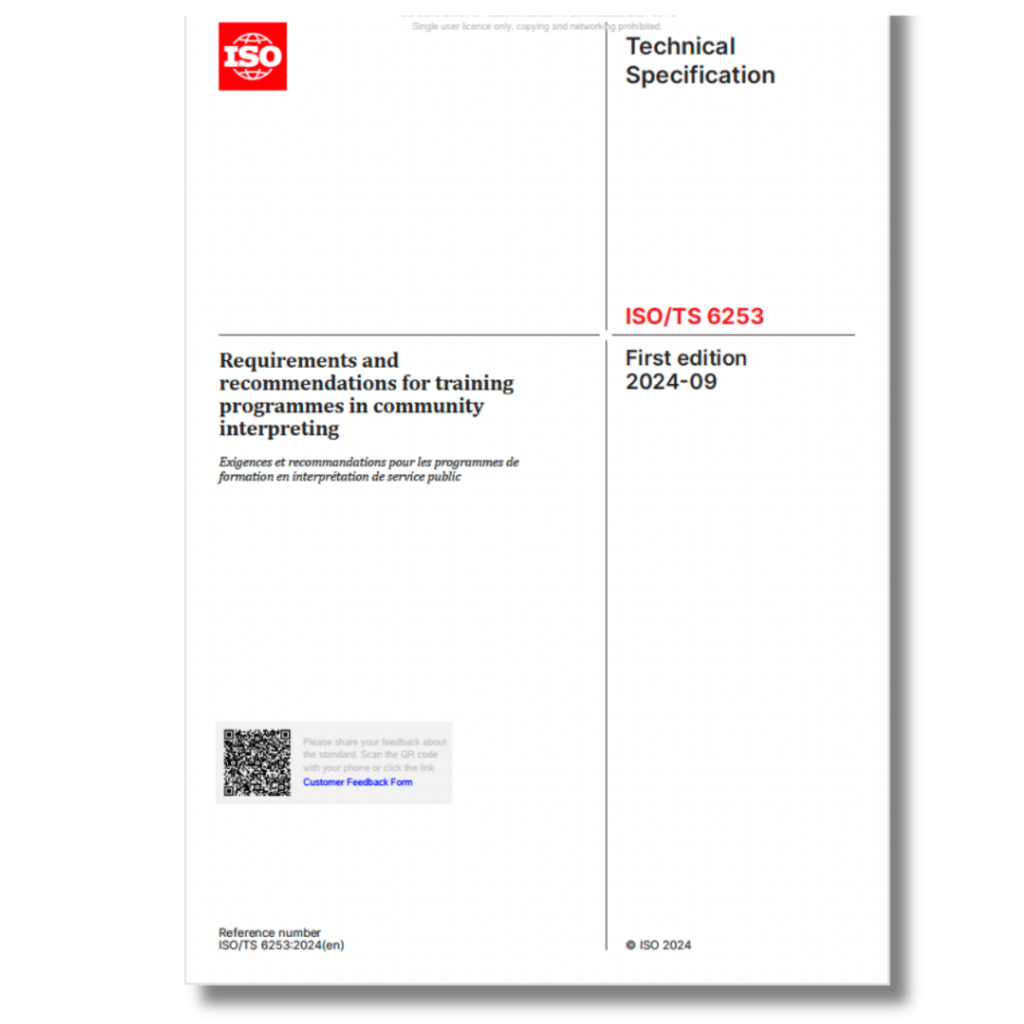
ISO TS 6253:2024

Specialization: Medical Interpreting and Court Interpreting

For many interpreters, foundational training is followed by specialization, and it is here that a critical distinction must be made. Specialization in interpreting is widely understood to mean subject-matter knowledge. Medical interpreters know medical terminology. Legal interpreters know legal terminology. This is accurate, but it is a significant understatement of what specialization actually requires.

To work credibly in a medical setting, an interpreter must understand more than vocabulary. They must understand the structure and hierarchy of a clinical environment, the dynamics of a patient-provider relationship, the ethical and legal framework governing patient confidentiality, working with multidisciplinary teams, and the weight of conversations about diagnosis, prognosis, and consent. They must know how to interpret these conversations not only accurately but appropriately, with an understanding of what is at stake for every person in the room.

The same depth applies in legal, mental health, educational, and other specialized contexts. In each setting, the interpreter is not simply a language conduit. They are a professional whose presence carries institutional weight. That credibility is not automatic. It is built through preparation, experience, and a sustained commitment to understanding the environments in which the work takes place.

The Professional Responsibility That Defines the Role

Interpreting is, at its core, a profession of consequence. A commitment to professionalism, including strict adherence to and understanding of completeness, fidelity to the message and accuracy can determine whether a patient receives the correct treatment, whether a defendant understands the charges they face, or whether a negotiation succeeds or fails. This is not the work of a background function. It is the work of a trained, accountable professional operating at the intersection of language, culture, and daily demands.

The weight of that responsibility is real. For the professionals who carry it well, it is also the most compelling reason they chose the field.

If you are considering this path, as a first career, a second, or a natural evolution of your language skills, the question is not whether the profession is demanding. It is whether the demand is something you are prepared to meet.

Begin by finding out where you stand. The Interpreters Lab  Take the Do You Have What It Takes? Assessment


Sources for statistical information courtesy of Statistics Canada:

https://www12.statcan.gc.ca/census-recensement/2011/as-sa/98-314-x/98-314-x2011003_2-eng.cfm

https://www.canada.ca/en/immigration-refugees-citizenship/corporate/publications-manuals/departmental-plans/departmental-plan-2024-2025/departmental-plan-2024-2025-full.html

 

Interpreter Training Is Not Content Delivery

Workshops, Techniques and the Hard Truth About Interpreter Training

There are tips and techniques.

There are workshops, webinars, and quick fixes.

And then there is training.

These things are not the same. Treating them as interchangeable has quietly undermined the interpreting profession for years.

Workshops have value. They raise awareness, introduce ideas, and support interpreters who already have a foundation. But they do not replace training.

Training is structured, cumulative, and grounded in standards. It is what moves someone from being bilingual to being appropriately qualified. That distinction matters, whether people realize it or not, especially in situations where the consequences are real and the impacts are lasting.

The Work Behind the Words

One of the most persistent myths in our field is that interpreting is simply “helping out” with language; that if you speak two languages and care enough, a few workshops will prepare you.

This belief is usually rooted in goodwill. Communities want access. Organizations are under pressure. People step in because someone must. But good intentions do not equal professional competence.

When interpreting is reduced to the act of speaking two languages, the work is treated as a simple transaction: words in, words out. But that framing oversimplifies the complex process of communicating across languages, cultures, and people. Interpreting involves constant decision-making within complex human and institutional contexts.

Interpreting requires far more than bilingual ability; it includes, among other important things, ethical judgment, role clarity, session management, discourse and register control, memory, and research skills.

Those competencies don’t emerge accidentally. They are developed deliberately and progressively.

“Interpreting is not a transaction. It is a professional, decision-based practice.”

Learning About Interpreting vs. Learning to Be an Interpreter

This is where confusion often arises.

Workshops tend to focus on content:

  • What interpreters do
  • Common mistakes
  • Ethical scenarios
  • Practical tips

Training focuses on formation:

  • Exploring communication
  • Meaning and language
  • Professional identity
  • Scope of practice
  • Decision-making and critical thinking
  • Developing professional competencies and skills
  • Accountability to standards
  • Consistency across settings
  • Ethical awareness and dilemma resolution

A webinar can raise awareness. A workshop can spark insight. But neither prepares someone to interpret in public service settings such as social services, healthcare, law enforcement, or mental-health contexts, where the consequences are real.

“Training is not about shortcuts. It is about readiness.”

Where Asynchronous Learning Fits–and Where It Doesn’t

Asynchronous learning, self-paced learning that occurs without live, real-time interaction between instructors and learners, has a role in interpreter education. It can support foundational knowledge, introduce concepts, and allow learners to engage with theory, terminology, and ethical frameworks at their own pace.

What it cannot do, on its own, is develop skilled interpreting competence. Asynchronous learning can support training, but it cannot replace it.

Interpreting is a performative, decision-based practice. It requires real-time interaction, guided feedback, correction, and exposure to unpredictability. These elements cannot be meaningfully replicated through fully self-directed, asynchronous formats. Without structured interaction and feedback, learners may absorb information without developing judgment.

When asynchronous learning is positioned as a complete substitute for interpreter training, it creates the illusion of readiness without the conditions needed to develop it.

And while the growth of asynchronous and on-demand learning has made education more accessible, that accessibility is not the same as adequacy. When it comes to acquiring tangible interpreting competencies, asynchronous learning alone is not innovation. It is omission.

Why Standards Matter, Especially When No One Is Enforcing Them

In many jurisdictions, including Canada, interpreter training is uneven or unregulated. That vacuum allows almost anything to be labelled “training.”

This is precisely why standards matter. International frameworks such as ISO 13611:2024 Interpreting services — Community interpreting — Requirements and recommendations and ISO/TS 6253:2024 Requirements and recommendations for training programmes in community interpreting articulate what professional practice and interpreter education require: defined learning outcomes, qualified educators, structured programmes, assessment, and progression.

Even when training programs are short in duration, they are designed to build competence, not simply share tips and tricks. 

At The Interpreter’s Lab (TIL), our courses are built around these principles, not to be prescriptive, but to be responsible. Without standards, training becomes performative rather than transformative.

Real-World Training for a Real-World Landscape

Our courses may not be the longest, and that is intentional.

Our programmes are largely self-funded by participants, so accessibility matters. We design our courses to be focused and rigorous, without unnecessary length or cost. At the same time, we are responding to urgent workforce needs and systems that too often rely on “good enough” language support. Shorter does not mean lighter.

At a time when interpreter training programmes have been closing across Canada, we have remained relevant by staying current. Our programmes are intentionally designed to sit at the intersection of academia and industry; grounded in professional practice and informed by the real-world realities interpreters are navigating now, not an abstract or idealized version of the profession.

“Accessibility in education is important, but accessibility is not the same as adequacy.”

This includes engaging with current modes of practice, evolving technologies, and the practical skills interpreters need to sustain their work, such as finding assignments, negotiating contracts and fees, and adapting to new forms of service delivery.

Rather than treating these realities as peripheral, we embed them into training as part of professional formation, alongside ethical judgment, international standards, and reflective practice.

Our programmes are taught by experienced practitioners and educators who have spent years working in, advocating for, and shaping this field; they are designed to lay a strong professional foundation.

Training does not need to be endless to be rigorous. It needs to be coherent, intentional, and accountable; it must provide a solid foundation for ongoing professional development, guided by those who understand both the field and the work.

From “Bilingual Helper” to Professional Practitioner

Many bilingual individuals have been interpreting for years before encountering formal training. When they do, the realization can be uncomfortable: there is much more to this profession than they were ever told.

That moment is not failure. It is professional awakening. As the saying goes, you don’t know what you don’t know.

Proper training reframes the role. It moves interpreters away from instinct-driven decisions and blurred boundaries, and toward ethical clarity, professional confidence, and consistency.

Training Is a Beginning, Not a Badge

Completing a solid training programme does not make someone “finished.” It provides a foundation, one that supports specialization, mentorship, and continuing professional development.

That is how professions function.

Tips have their place. Workshops have value.

But training, real training, is what turns intention into competence.

And once that distinction is clear, it’s impossible to ignore.

References and Resources

ISO STANDARDS ISO 37/SC 5

ISO 13611:2024

ISO/TS 6253:2024

Claudio Fantinuoli:

  1. Panel: The Future of Interpreter Training: Challenges, AI, and the Path Forward https://www.claudiofantinuoli.org/2025/02/28/the-future-of-interpreter-training-challenges-ai-and-the-path-forward/
  2. What future for translation and interpreting training institutions? https://www.claudiofantinuoli.org/2025/01/25/what-future-for-translation-and-interpreting-training-institutions/


Advancing the Field: A Milestone in Court and Legal Interpreting for ASL-English Interpreters

We’re proud and delighted to share that The Interpreter’s Lab – Centre for Interpreter Education and Training has just completed the first-ever Interpreting in Legal and Court Settings: ASL–English Advanced Program, led by the exceptional Dr. Debra Russell. With over 20 ASL-English interpreters participating, this inaugural cohort marks a groundbreaking moment for interpreter education in BC and across Canada.

Advanced Training for ASL-English Interpreters in Court Settings

This program is more than another course, it represents the first coordinated, advanced training for interpreters in legal and court settings, built specifically for ASL-English interpreters and grounded in Canadian practice, standards, and legal frameworks. And it reflects something essential about how we work at The Interpreter’s Lab: when interpreters and our partners identify a gap, we respond, quickly, collaboratively, and with purpose.

After listening to ASL-English interpreters across BC describe the persistent gap in legal-interpreting training, we adapted our well-established spoken-language legal interpreter training framework and rebuilt it specifically for ASL-English interpreters. This required re-sequencing modules, reworking assignment design, and ensuring that the competencies, protocols, and ethical considerations unique to ASL–English court work were meaningfully integrated. And we did so in a relatively short time, ensuring that interpreters could access the training they needed without waiting years for a program to be developed.

Coordinated, advanced training for interpreters in legal and court settings, built specifically for ASL interpreters and grounded in Canadian practice, standards, and legal frameworks.

Under Dr. Russell’s leadership, participants engaged in rigorous, research-informed learning: case analyses, applied skill-development, explorations of courtroom dynamics, and considerations and protocols for team/co-interpreting practices. The energy, thoughtfulness, and commitment from this cohort made it clear just how needed, and overdue, this type of training truly is.

Best Practices, International Standards (ISO) and the Canadian Justice System

This program was also deliberately grounded in international standards and evidence-based research on interpreter education. Drawing on the ISO framework for interpreter training, particularly the standards developed under ISO TC 37/SC 5 and decades of scholarship on legal interpreting, assessment, and professional competencies, we ensured the curriculum aligned with recognized best practices.

Everything from sequencing to assignment design, to skill development was informed by research and premised on the Canadian Law and Justice system. This alignment with standards and evidence-based pedagogy is central to how we design our programs and reinforces our commitment to delivering training that reflects the realities and responsibilities of legal interpreting today.

“At The Interpreter’s Lab, our mission is to deliver accessible, responsive, and standards-based training”

We extend our sincere gratitude to all participants, and to Dr. Russell for her leadership, expertise, and generosity in shaping this pioneering program.

More Training Opportunities to Come in 2026

This inaugural cohort centred ASL–English interpreters; however, we acknowledge the important contributions of Deaf interpreters in legal settings and plan to explore future training options that support and reflect their role in this work. The timeline for this first delivery made it necessary to proceed with the established structure; however, The Interpreter’s Lab is fully prepared to adapt the program for a second offering that reflects the needs of all sign language interpreters.

“The information and the opportunity to have Dr Russell guide our learning was incredible, and I do feel as though it was a great professional development opportunity.”

As we continue investing in sector-specific ASL-English interpreter education, this first-of-its-kind program sets a new benchmark, and it’s only the beginning. More advanced training opportunities for signed-language interpreters are coming in 2026.


Raising the Standard: Language Access and the Role of Trained Healthcare Interpreters

Language access is a cornerstone of equity in healthcare: without it, care is not equally accessible, effective, or safe. For people who do not speak the same language as the service provider, or are Deaf or hard of hearing, access to trained interpreters is not just helpful — it’s essential for receiving safe, respectful, and effective care.

Interpreters working in signed or spoken languages, such as Mandarin, Arabic, Farsi, Punjabi, or any of the other 200+ languages spoken in Canada, play a vital role when it comes to public services in Canada – like healthcare. They help ensure that patients understand critical information, can provide informed consent, and are heard. Their work supports not only individual patients, but the quality and fairness of the healthcare system as a whole, and the professional integrity of the healthcare team. Extending beyond that, the work of interpreters contributes to more cohesive communities by bridging linguistic and cultural divides, fostering trust, and ensuring that all voices are heard in our every day lives.

When Every Word Matters: Interpreting in Canadian Medical Encounters

Healthcare interpreting also presents unique challenges. Like many specialized settings, it requires knowledge of specific terminology—not just medical terms, but also jargon unique to healthcare and distinctive of the Canadian system and context. While the biomedical model may be broadly consistent across countries—even those sharing the same language—the real distinctions lie in the broader context: how healthcare is organized, accessed, and delivered, as well as the cultural expectations and systemic nuances that shape patient-provider interactions. These differences have a significant impact on how we train interpreters at The Interpreter’s Lab. Effective interpreting depends not only on language fluency and interpreting competences, but on an understanding of these systems, roles, and protocols that influence every healthcare encounter.

Healthcare settings are emotionally complex and constantly shifting, often placing interpreters in the middle of deeply personal and difficult conversations. From end-of-life discussions to emotionally charged decisions, interpreters must stay poised, impartial, and accurate while navigating evolving emotions and sensitive interpersonal dynamics.

Interpreters working in medical settings must understand clinical systems, stay grounded in their professional role, and remain composed in difficult moments—all while making space for individuals to speak and be heard. This is why setting-specific training is essential. Without it, navigating the complexity of medical encounters has the potential to overwhelm interpreters and ultimately affect everyone involved.

“A patient without a professional interpreter is less likely to understand their diagnosis, less likely to be able to give fully informed consent for treatment, and ultimately less likely to adhere to their treatment protocol.” (National Standards for Healthcare Equity, p. 10)

Interpreting in Healthcare & Medical Settings is a specialized training program that helps interpreters build the knowledge and skills required to meet these challenges.

The Interpreting in Healthcare and Medical Settings covers:
• Canadian healthcare systems
• Medical and related terminology
• Ethics and role maintenance
• Cultural safety and the role of culture in healthcare
• Interpreting protocols and navigating complexities
• Techniques to manage assignment preparation, focus, memory, and accuracy

Specialized Interpreter Training Supports Quality Care and Equity in Service Provision

Training at The Interpreter’s Lab strengthens interpreters’ ability to work effectively with clinicians across disciplines and support patients from diverse cultural and linguistic backgrounds. By exploring how culture shapes health beliefs and communication, interpreters are better equipped to support meaningful interactions and contribute to more equitable care.

Our programs provide the tools, frameworks, and reflective practices needed to navigate ethical tensions in real time—helping interpreters stay grounded, make informed decisions, and uphold the integrity of their role, even under pressure.

The Human Element – Mission Critical
The human element in healthcare and medical interpreting cannot be understated: People are essential to the success of this work. While AI is often promoted as a solution to language barriers, the perception that it works well is often stronger than its actual effectiveness. In healthcare, where communication is dynamic, emotional, and deeply rooted in interpersonal and intercultural realities, AI is rarely a reliable or ethical substitute. It cannot interpret tone, context, or nuance, and it cannot support clarity or cultural safety. Human interpreters remain essential to ensuring language access that is accurate, appropriate, and equitable.

“People are essential to the success of this work.”

Interpreting in healthcare is more than just language work. It’s a critical part of ensuring language rights and language access and reducing barriers to care. Specialized training helps interpreters bring clarity, dignity, and equity into every conversation.

Resources and Additional Readings

  1. “When I’m sick, I’m not bilingual” – Language Support is Health Equity (2025). Access HERE
  2. Investing in Language Access to Optimize Health System Performance (Research Snapshot). Found HERE 
  3. Access to Health Care – addressing the Language Barriers (2009). Found HERE
  4. Medical Interpreting Services for Refugees in Canada – Current State of Practice and Considerations in Promoting this Essential Human Right for All (2024). Found HERE
  5. National Standards for Healthcare Equity: The Case for Provincial Interpretation Services. National Newcomer Navigation Network (2022). Found at Newcomer Access to Professional Interpretation Services in Healthcare

Progress or Perish: In a World of Constant Change, Shouldn’t Education Keep Up?

Dr. Claudio Fantinuoli recently argued in an article for the Chartered Institute of Linguists that translation and interpreting education must evolve or risk becoming irrelevant—a point I’ve been making for years. While his focus is likely on conference interpreting curricula and simultaneous mode training, the same—or even greater—urgency applies to community and public-service interpreting, whether simultaneous, consecutive, remote, or in-person.

“It should be quite clear that if we continue along the current trajectory of absence of relevant change, we risk drifting into irrelevance—and this could happen sooner than expected.”

Interpreter Training Must Keep Pace

Public service and community interpreter training in Canada can be traced back to the 1970s, when one of the country’s most robust programs launched in Vancouver, British Columbia. Although other programs followed over the years, most ceased updating their content by the early 2010s. Since then, the profession’s demands, core competencies, ethical guidelines, and standards of practice have shifted dramatically. It’s understandable that many institution-based programs lack the flexibility to adapt—perhaps explaining their decline or demise—but remaining anchored in outdated theories and practices renders their course content irrelevant, and that’s before even considering the profound impact of AI and other emerging technologies.

When curricula ignore modern tools, platforms, and workflows, interpreters miss the chance to learn how to use these innovations effectively—and are left unable to discuss them knowledgeably with clients, further widening the gap between practice and consumer needs.
Of course, a firm grounding in the profession’s foundations—its ethics, principles, and theoretical frameworks—is essential. But training must also meet the expectations of the 21st-century marketplace, equipping students to handle contemporary challenges from day one.

Interpreter Education Through a Real-World Lens

That forward-looking perspective motivated me to spearhead ISO TS 6253:2024, Requirements and recommendations for training programmes in community interpreting. This first ISO publication to address interpreter training in specialized settings marks a significant milestone in the evolution of public-service language services—one I was proud to champion and privileged to lead as project head of the international working group. And because progress is essential to sustain relevance in both education and standards, we’re already revisiting the specification to make it even more accessible and aligned with today’s needs.

Progress Means Letting Go

We need to let go of outdated paradigms and frameworks so that the essential role of interpreting—and interpreters themselves—is genuinely understood and valued. Interpreter education must be dynamic, responsive, and grounded in best ethical practices. Anything less does a disservice to our students and to the broader field of community interpreting. Training programs must be agile and innovative, actively engaging with the marketplace. Change may be difficult, but irrelevance is far worse.

“Let’s not ever forget that amid these challenges lie opportunities. Beyond boldly reforming existing structures – which is admittedly difficult –there is also the possibility of creating something entirely new. Perhaps a new type of institution is needed – one that anticipates future changes rather than merely reacts to them.”

End Note:
I would like to thank Dr. Fantuoli’s for his contributions to our understanding, and I encourage you to read his particular article (linked below) as many very good and insightful points are made.
All quoted content – Claudio Fantinuoli PhD in CIOL (Chartered Institute of Linguists)
https://www.ciol.org.uk/future-translation-interpreting-training?utm_source=pocket_shared

Master Legal Interpreting with Dr. Debra Russell

Your Path to Interpreting in Legal & Court Settings

Legal interpreting involves facilitating communication in a range of proceedings — depositions, trials, hearings, and more. It demands not only fluency in multiple languages but also a deep understanding of legal terminology, procedures, and cultural nuances that can influence communication.

Who Should Take This Course

If you have been working as an interpreter in other settings, such as social services, financial assistance, and other community-based situations, but are now ready to expand your practice, interpreting in legal and court settings is for you.

“It was a well-structured course led by a very knowledgeable instructor. I highly recommend this course to any interpreter who might be interested in interpreting in legal and court settings.”

– Corina, Interpreting in Legal and Court Settings Student / TIL

This course is designed for busy professionals who already have a lot going on but want to gain the skills and knowledge to expand their interpreting practice. Working as a court interpreter frequently means a higher hourly rate, with standard minimum hours per assignment.

With these additional specialized skills, you will be able to command higher pay rates—beyond courts and tribunals—that reflect the value you bring to all high-stakes, law enforcement environments.

Career Opportunities for Legal Interpreters

Qualified legal interpreters work with: 

  • Law firms 
  • Courts at all levels (local, provincial, and federal) 
  • Administrative tribunals 
  • Examinations for discovery and other legal settings 
  • Immigration and Refugee Board 
  • Municipal Police and the RCMP

The Ministry of the Attorney General, Court Services Branch (CSB), recognizes The Interpreter’s Lab (TIL) training as a qualification for court interpreting. Our Interpreting in Legal and Court Settings program is listed on the CSB spoken language interpreter application form, reflecting the quality and relevance of our training for interpreters pursuing work in legal environments.

Why Specialized Training in Legal and Court Interpreting Is Essential

Who better to teach legal and court interpreting than such an esteemed interpreter and educator as Dr. Debra Russell?

Meet Your Instructor Dr. Debra Russell

Dr. Debra Russell, a Canadian-certified interpreter, educator, and researcher with over 30 years of experience, has been at the forefront of advancing legal interpreting practices. She is a highly regarded educator and returns to TIL to lead our Interpreting in Legal and Court Settings program, starting February 6, 2025. This is a unique opportunity to learn from one of Canada’s most respected educators in the field.

Dr. Russell emphasizes the need for specialized skills to excel in legal and court settings, sharing insights into the complexities of working in these formal and high-stakes environments. Sharing her perspective as someone whose work and research have been rooted in the legal interpreting field for decades, Dr. Russell states:

“Legal proceedings are complex and nuanced. Misunderstandings in these settings can have serious consequences. Training provides interpreters with the skills and knowledge to navigate these challenges confidently and effectively.”

Specialized training prepares interpreters to handle the demands of legal proceedings by building on their existing expertise and addressing areas like:

  • Mastering legal terminology 
  • Becoming aware of and comfortable with procedural protocols 
  • Understanding the communication dynamics that influence interpreting in legal settings 
  • Gaining confidence to work in courtrooms, tribunals, or administrative hearings 
  • Understanding how to work in a variety of law enforcement settings (e.g., municipal police, RCMP, Canadian Border Services Agency)

This training helps interpreters navigate intimidating legal environments with professionalism, reducing anxiety and ensuring accuracy.

Take Your Career to the Next Level – Recognized by Agencies and Professional Memberships Across Canada including the Ministry of the Attorney General (MAG) 

If you’re an interpreter looking to expand your skill set and explore new opportunities, consider enrolling in TIL’s Interpreting in Legal and Court Settings program. By investing in this training, you’ll gain the tools needed to excel in legal settings and stand out as a professional in the field. 

This is also your chance to learn directly from Dr. Russell, whose expertise, research, and passion for teaching make her an invaluable resource for interpreters at all stages of their careers.

Start your journey toward becoming a highly skilled legal interpreter and open the door to a rewarding and  meaningful career.


Next Program Start Date: February 6, 2025

REGISTRATION CLOSES ON JANUARY 31, 2025

Live Sessions run Thursdays: 5:30 p.m. to 7:30 p.m. PST (UTC-7)

This course is a blended learning program, combining both online, real-time instruction with self-guided content, materials, resources, and student manuals.

  • TIL Members receive 20% off all second-level, advanced courses.

Learn More OR Register See the Course Outline


The Importance of Specialized Training for Interpreters

Interpreter Training: Are All Programs Created Equal?

Interpreting occurs across diverse settings. While core professional competencies remain indispensable, the context and situations vary significantly and demand specialized attention. Working in a conference booth or a remote setting, for example, is vastly different from working in a small office alongside a clinician, a client, and the client’s family members. The skills required to ensure effective communication in these situations differ. The interpersonal dynamics in community settings are real, requiring interpreters to be situationally aware and adaptable.

Interpreter training must include essential components that equip professionals with the competencies necessary for effective performance. This is not up for debate. In fact, the recently published ISO TS 6253:2024 standard outlines these crucial elements for training programs in community interpreting — an international project I had the privilege to lead.

Beyond Terminology and Systems

Interpreting involves much more than mastering terminology, systems, and technical realities—although these are vital. Understanding these elements helps interpreters accurately convey meaning, context, and nuance. Without this depth of knowledge, an interpreter risks distorting the speaker’s intent, compromising the integrity of the message.

Is Specialized Training Important?

Absolutely. Without a doubt. Interpreting is a sophisticated skill that requires balancing the art of communication with the structure and mechanics of language. And in each setting this careful practice is customised to fit the situation, and allows the work of the interpreter to be seamless and effective.

Working at the community level, in public services, demands a wide range of knowledge – basically, you need to know a lot of stuff. Why? Because these environments involve different systems, participants, and regulations. Familiarity with these systems provides interpreters with the clarity needed to stay focused, accurately grasp terminology, and manage session dynamics.

However, no interpreter can know every system or predict constant changes. This makes research skills fundamental. Effective interpreters must be able to locate, absorb, and apply information quickly to enhance their performance. Specialized training must teach these essential research skills as part of the professional toolkit.

Specialized Interpreter Training Programs in Canada

Finding specialized interpreter training programs in Canada can be challenging. Most post-secondary institutions focus on interpreting and translation programs for official languages, while English-only interpreter training is rare. Programs tailored to specific fields—legal, medical, law enforcement, social services, education, and more—are limited.

In British Columbia, many once-available programs have closed, leaving only a few, comprehensive options. The Interpreter’s Lab, founded in 2012, stands out as one of the leading program, offering in-depth training across multiple settings, offering online courses and workshops. You can discover more about our programs HERE

Understanding the Unique Skills and Challenges of Specialized Interpreting Settings.

I’ve always been fascinated by the wide range of settings where interpreters work— from correctional facilities and wedding celebrations to end-of-life care, alongside more routine assignments. It’s both a gift and a privilege to be part of people’s lives in such meaningful and diverse ways.

Different settings require varying levels of emotional awareness and professional presence, as the demands and dynamics shift significantly. Each specialized environment presents unique challenges, making dedicated training, professional development, and situational awareness crucial for effective performance.

Consider these examples:

  • Police Situations: Working with distressed individuals under legal scrutiny means every interpreted statement matters. Miscommunication can have serious legal consequences.
  • Medical Settings: Medical interpreters often navigate emotional tension while managing complex terminology and processes that may overlap with legal contexts. Family members can further complicate the communication process.
  • Social Services: Cases involving financial hardship or trauma can emotionally impact both the interpreter and the session. Specialized training helps interpreters manage these situations with professionalism.
  • Formal Legal Settings: Courts and tribunals require precise adherence to protocol, correct forms of address, and nuanced language use. Missteps can compromise justice outcomes.
  • These scenarios highlight how specialized skills build on core competencies, forming the foundation for professional growth and career advancement.

The Impact of Specialized Training

Interpreters with specialized training for working in fields like healthcare and law tend to perform better. For example, lawyer-linguists with legal knowledge and translation experience are more accurate in translating legal documents than those with just translation experience. Similarly, medical interpreters trained in medical terminology help keep patients safer by reducing errors and improving their understanding of diagnoses and treatment plans.

Interpreters cannot be experts in every field—but specialized training equips them with the tools to adapt and perform effectively across diverse contexts. This foundation is essential for maintaining the integrity of communication and supporting positive outcomes in all professional settings.

What to Look for in a Specialized Training Program – Some Advice for Interpreters

When searching for a specialized interpreter training program, consider the following factors:

  • Curriculum Depth: Does the program cover the essential competencies outlined in standards like ISO TS 6253:2024?
  • Context-Specific Training: Does the program prepare you for the settings you plan to work in?
  • Experienced Instructors: Are the trainers experienced interpreters with relevant field experience?
  • Training Format: Is the program offered in real-time led by an instructor or is it self-directed with pre-recorded videos?
  • Practical Application: Does the program offer practical exercises, role-playing, and mentorship opportunities?

Specialized training not only enhances your skills but also elevates the quality and professionalism of interpreting services across all fields.

References used:
Sasso, A. (2020). In Through the Looking Glass: The Discord Between Practice and Education. In I. Souza & E. Fragkou (Eds.), Handbook of Research on Medical Interpreting (pp. 397-420). IGI Global Scientific Publishing. https://doi.org/10.4018/978-1-5225-9308-9.ch017
The impact of specialised translator training and professional experience on legal translation quality assurance: an empirical study of revision performance. https://pmc.ncbi.nlm.nih.gov/articles/PMC11132547/
Do Professional Interpreters Improve Clinical Care for Patients with Limited English Proficiency? A Systematic Review of the Literature. https://pmc.ncbi.nlm.nih.gov/articles/PMC1955368/