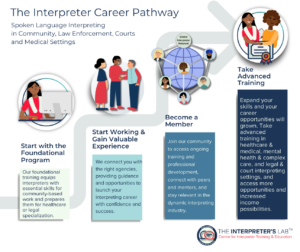
Interpreter Training Programs in Canada: From First Word to Full Career

A Learning Home Base for Interpreters at Every Stage of Their Career

Interpreting is not a skill you learn once and carry forever. It’s a practice. It deepens with every encounter, every setting, every challenge that asks more of you than the last one did.

The question isn’t whether to keep growing. It’s where. 

The reality is that most interpreters are left to navigate this on their own. Entry into the field often comes through a single course, a short training, or no formal preparation at all, and from there the expectation is that experience will somehow close the gaps. Yet the system has not been designed to support that kind of progression. It remains fragmented, inconsistent, and often disconnected from what interpreters need once they are already working.

We built our programs around a simple belief: interpreters deserve a learning home, not a scattered collection of one-off courses, but a place where every stage of your professional journey has somewhere to go. That’s why we chose the name, The Interpreter’s Lab; to signal a constant learning and experimentation – a place where we can all connect, share and learn together.

Interpreters are at different stages in their learning and practice journey, and that looks different for everyone.

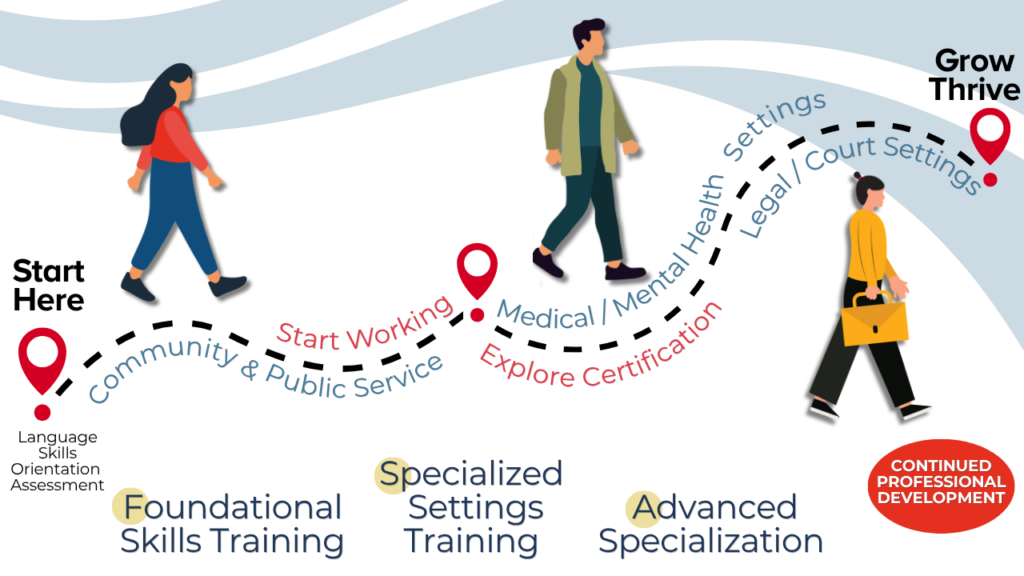
Start Your Career Here

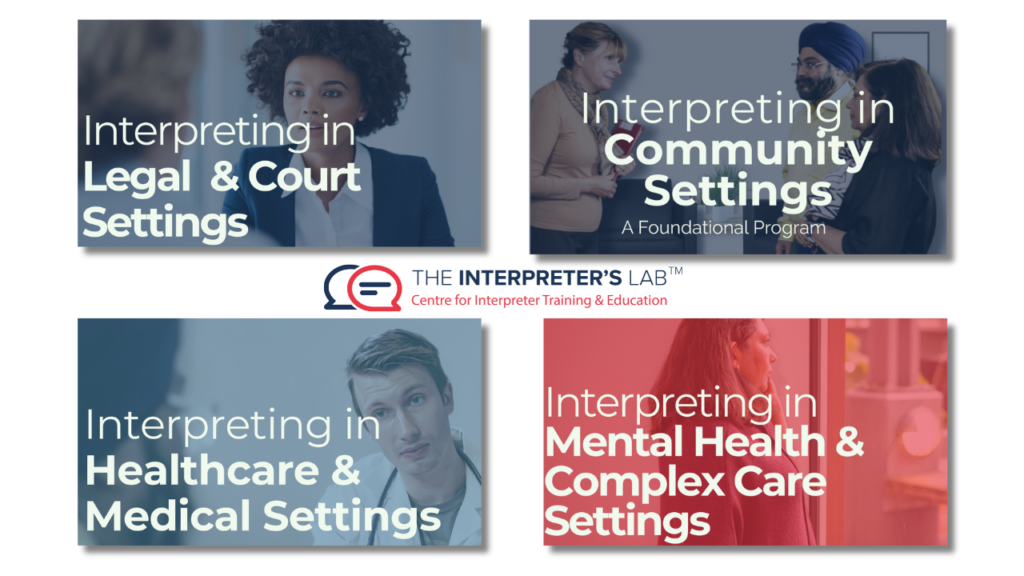
If you’re just beginning, our foundational skills program, Interpreting in Community Settings, gives you the skills, the knowledge, the cohort, and the confidence to step into real work. Live classes, self-directed study components, practice with peers, student manuals and glossaries you’ll return to repeatedly, and a Certificate of Successful Completion that speaks to your qualifications and what you’ve earned. And that is recognized nation-wide. 

DISCOVER THE FOUNDATIONAL SKILLS TRAINING PROGRAM TO GET YOU STARTED

Advanced Interpreter Training: Medical, Mental Health, and Court Interpreting Settings

If you’re ready to specialize, our advanced training programs take you deeper into the settings that matter most: healthcare and medical interpreting, mental health and complex care, legal and court. These are intensive, short-course programs, serious, immersive learning for interpreters who want to build real skill and deliver with confidence.

DISCOVER ADVANCED PROGRAMS IN SPECIALIZED SETTINGS

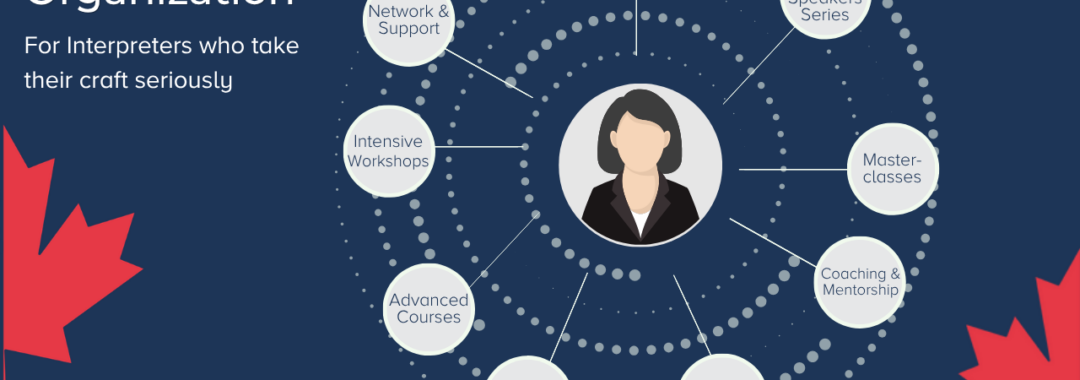
A 360 wrap-around organization for interpreters who take their craft seriously.

If you want to sharpen a specific skill, right now, and efficiently, our intensive workshops are designed for exactly that. Workshops on medical terminology OR simultaneous interpreting. Targeted, practical, and immediately applicable.

Each year, we bring a different focus, or revisit what matters most, based on what you, the interpreter, need.

FOR A FULL LISTING OF UPCOMING SESSIONS, PROGRAMS AND WORKSHOPS – CHECKOUT OUR CALENDAR

Everything You Need to Grow as an Interpreter — In One Place

And if, between programs, you want to continue learning and advancing your skills and career, our professional development focussed Membership Program is a 360 wrap-around:

  • monthly speakers
  • subject-matter experts
  • significant discounts on all advanced courses
  • quarterly drop-in sessions
  • masterclass access
  • exam prep support
  • an exclusive community of peers

Everything that a freelance professional needs to build and grow their practice.

DISCOVER MEMBERSHIP AND PROFESSIONAL DEVELOPMENT AT TIL

The Interpreter’s Lab also offers coaching, mentorship and language and skills assessments; the full arc of professional development, not just the beginning of it.

We think about this often: what does an interpreter actually need to become the professional they’re capable of being? Not just training, but continuity. Not just knowledge, but community. Not just a credential, but a career.

That’s what we’re building here. We have a place for you, wherever you are in your journey.

See you at The Lab!

The Interpreter’s Path: How to Enter One of Canada’s Most Essential Profession

Interpreting is everywhere. You encounter interpreters in hospitals, courtrooms, community centres, schools, at the insurance office, during financial aid meetings, or in child welfare visits, and even at the negotiating table when organizations or communities need to find common ground across a language divide. And yet, despite its reach and its stakes, the profession remains poorly understood by most people, including many who are drawn to it.

At The Interpreters Lab, we hear the same question regularly: How does someone actually become an interpreter? It is one of the most searched and least clearly answered questions in the field. The pathway is not as linear as medicine or law, and there is no single credentialing body that defines it universally. That ambiguity can be discouraging, but it shouldn’t be. The path exists. It is well-established, and for the right person, it is deeply rewarding.

This is where it starts.

Language Proficiency: The Non-Negotiable Foundation

Every conversation about interpreter training must begin here, because there is no version of this profession that does not require it. Genuine, high-level proficiency in at least two languages is not a preferred qualification, it is a baseline requirement. And it is worth being precise about what proficiency means in this context.

The interpreter is not a translator working quietly at a desk with time to consult a dictionary. The interpreter operates in real time, in live environments, often under significant pressure. They must receive meaning in one language and render it accurately, completely, and fluently in another, in consecutive or simultaneous mode and within moments. That demands more than academic knowledge of a language. It demands the kind of fluency that is intuitive, flexible, and responsive to register, dialect, emotional tone, and context.

If you are bilingual and considering this career, ask yourself honestly: in both of your languages, can you follow rapid, idiomatic speech without effort? Can you express complex ideas with precision? Can you shift register fluidly, from formal to colloquial; from clinical to conversational; without losing accuracy? These are the standards the profession demands. This is what training teaches you.

The Personal Qualities That Drive the Work

Language proficiency is necessary, but it is not all. This is where many aspiring interpreters are surprised.

The weight of that responsibility is real. For the professionals who carry it well, it is also the most compelling reason they chose the field.

The qualities that distinguish a skilled interpreter are not only linguistic. They are fundamentally human. A genuine interest in people, in their circumstances, their communication styles, their cultural frameworks, is not a nice-to-have. It shapes how an interpreter shows up in a room. So does intellectual curiosity, a comfort with uncertainty, and the capacity to remain composed and focused in environments that are often emotionally charged or logistically demanding.

Interpreters in community or public services often work in settings defined as complicated and complex. They encounter people at their most vulnerable, their most adversarial, and their most exposed. The professionals who thrive in this work tend to share a particular disposition: they are drawn to the challenge rather than deterred by it.

Not sure whether you have the profile? Our assessment was designed to help you find out. Take the Do You Have What It Takes Assessment

Foundational Training: Where the Talent Meets Competence
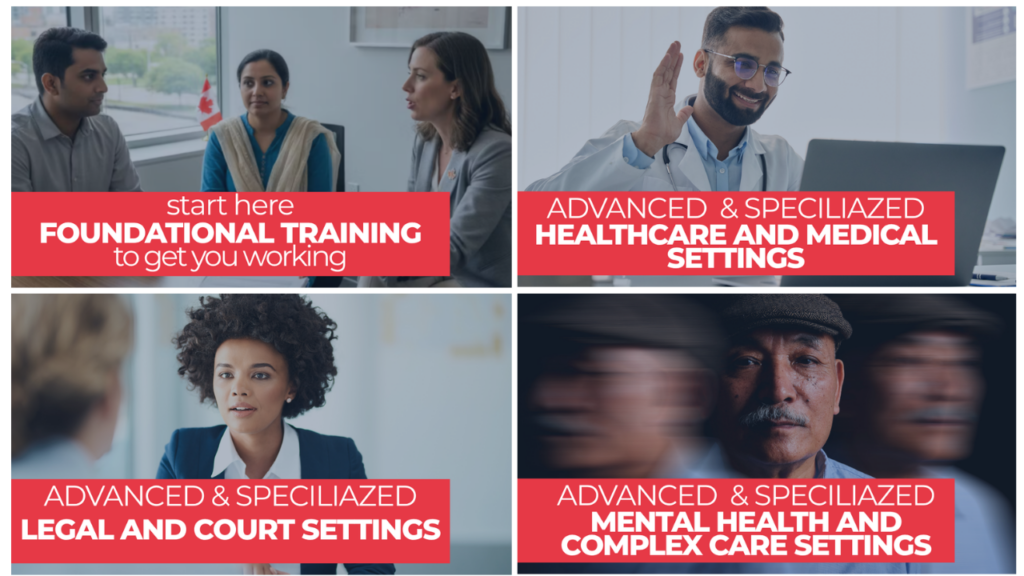
The assumption that bilingualism alone qualifies someone to interpret professionally is one of the most persistent and consequential misconceptions in the field. Foundational training is not supplementary. It is essential. It is where interpreting as a discipline is actually learned.

Structured training – such as The Interpreter’s Lab Interpreting in Community Settings course – introduces the core modes of interpreting:

  • consecutive interpreting, in which the interpreter renders a complete utterance after the speaker pauses
  • simultaneous interpreting, in which the interpreter works in real time, with almost no delay
  • sight translation, in which the interpreter reads from a document in one language and translates it into another – using either spoken or signed.

Each mode requires distinct skills and significant practice to execute well. Training also covers:

  • note-taking methodology
  • memory retention techniques
  • research skills
  • ethics
  • cognitive strategies (necessary to manage the considerable mental load of live interpreting)

Equally important is the professional formation that takes place in a rigorous training environment:

  • understanding the interpreter’s role and its limits
  • developing the discipline of impartiality
  • learning to navigate the ethical dimensions of the work (before encountering them in the field)

But in Canada, these pathways are limited in both availability and relevance. Where they do exist, they are often tied to official languages and follow highly structured academic routes. For many of the languages used in community settings, these pathways are not only unavailable, they often don’t align with the realities of the work.

Canada’s linguistic landscape tells a different story. According to the 2021 Census, the most common mother tongues other than English or French include Mandarin, Punjabi, Cantonese, and Spanish. Beyond these, more than 100,000 people each speak Arabic, Tagalog, Persian/Farsi, Urdu, Russian, and Korean at home.

Punjabi, Mandarin and Arabic Languages in Demand

The demand for community interpreters in languages such as Punjabi, Mandarin, Arabic, Tagalog, Hindi, Urdu, and Farsi is not only substantial, it is actively growing. And importantly, this demand is not uniform across the country. Regional variation matters. In British Columbia, Mandarin and Punjabi are among the most commonly spoken languages; in Ontario, Punjabi and Arabic are prominent; and in Quebec, Arabic is the most common immigrant language.

In other words, the need for interpreting spans a wide and evolving range of languages, shaped by local realities. Yet the training pathways have not kept pace. What exists on paper does not always reflect what is needed in practice.

For most languages outside of signed languages and Canada’s official languages, formal educational pathways are limited. Where they do exist, they are often found in private training models or smaller, practice-based programs rather than within traditional academic institutions.

That said, pathways into foundational training do exist. These may include university programs in conference interpreting or translation studies, community and healthcare interpreter certification programs, and specialized training institutes. The appropriate pathway depends on the individual’s goals, prior education, and the settings in which they intend to work.

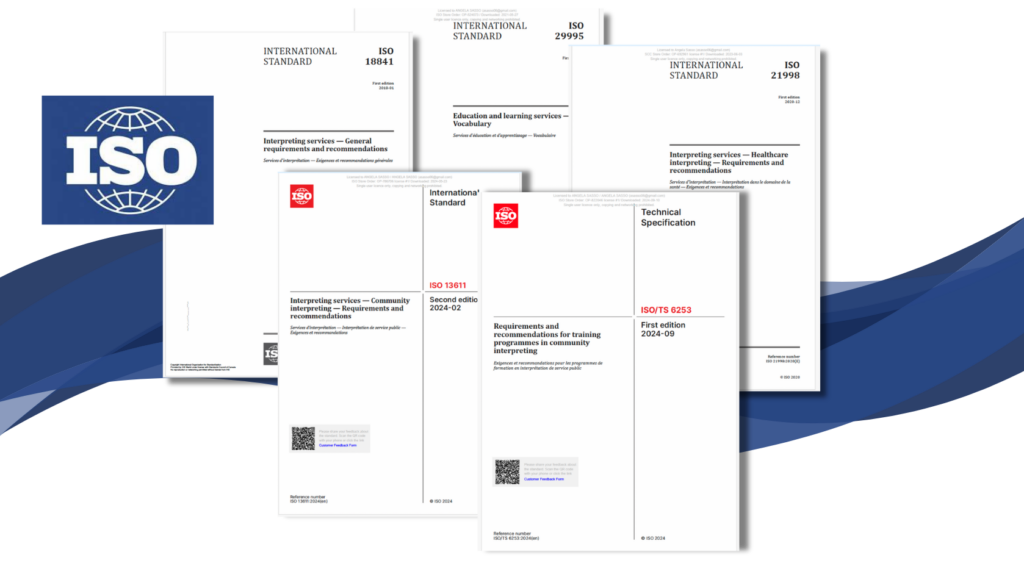
This gap between practice and formal pathways was a key impetus behind the development of ISO/TS 6253, an international standard designed to address training in community interpreting where traditional models fall short.
ISO TS 6253:2024

Specialization: Medical Interpreting and Court Interpreting

For many interpreters, foundational training is followed by specialization, and it is here that a critical distinction must be made. Specialization in interpreting is widely understood to mean subject-matter knowledge. Medical interpreters know medical terminology. Legal interpreters know legal terminology. This is accurate, but it is a significant understatement of what specialization actually requires.

To work credibly in a medical setting, an interpreter must understand more than vocabulary. They must understand the structure and hierarchy of a clinical environment, the dynamics of a patient-provider relationship, the ethical and legal framework governing patient confidentiality, working with multidisciplinary teams, and the weight of conversations about diagnosis, prognosis, and consent. They must know how to interpret these conversations not only accurately but appropriately, with an understanding of what is at stake for every person in the room.

The same depth applies in legal, mental health, educational, and other specialized contexts. In each setting, the interpreter is not simply a language conduit. They are a professional whose presence carries institutional weight. That credibility is not automatic. It is built through preparation, experience, and a sustained commitment to understanding the environments in which the work takes place.

The Professional Responsibility That Defines the Role

Interpreting is, at its core, a profession of consequence. A commitment to professionalism, including strict adherence to and understanding of completeness, fidelity to the message and accuracy can determine whether a patient receives the correct treatment, whether a defendant understands the charges they face, or whether a negotiation succeeds or fails. This is not the work of a background function. It is the work of a trained, accountable professional operating at the intersection of language, culture, and daily demands.

The weight of that responsibility is real. For the professionals who carry it well, it is also the most compelling reason they chose the field.

If you are considering this path, as a first career, a second, or a natural evolution of your language skills, the question is not whether the profession is demanding. It is whether the demand is something you are prepared to meet.

Begin by finding out where you stand. The Interpreters Lab  Take the Do You Have What It Takes? Assessment


Sources for statistical information courtesy of Statistics Canada:

https://www12.statcan.gc.ca/census-recensement/2011/as-sa/98-314-x/98-314-x2011003_2-eng.cfm

https://www.canada.ca/en/immigration-refugees-citizenship/corporate/publications-manuals/departmental-plans/departmental-plan-2024-2025/departmental-plan-2024-2025-full.html

 

Interpreter Training Is Not Content Delivery

Workshops, Techniques and the Hard Truth About Interpreter Training

There are tips and techniques.

There are workshops, webinars, and quick fixes.

And then there is training.

These things are not the same. Treating them as interchangeable has quietly undermined the interpreting profession for years.

Workshops have value. They raise awareness, introduce ideas, and support interpreters who already have a foundation. But they do not replace training.

Training is structured, cumulative, and grounded in standards. It is what moves someone from being bilingual to being appropriately qualified. That distinction matters, whether people realize it or not, especially in situations where the consequences are real and the impacts are lasting.

The Work Behind the Words

One of the most persistent myths in our field is that interpreting is simply “helping out” with language; that if you speak two languages and care enough, a few workshops will prepare you.

This belief is usually rooted in goodwill. Communities want access. Organizations are under pressure. People step in because someone must. But good intentions do not equal professional competence.

When interpreting is reduced to the act of speaking two languages, the work is treated as a simple transaction: words in, words out. But that framing oversimplifies the complex process of communicating across languages, cultures, and people. Interpreting involves constant decision-making within complex human and institutional contexts.

Interpreting requires far more than bilingual ability; it includes, among other important things, ethical judgment, role clarity, session management, discourse and register control, memory, and research skills.

Those competencies don’t emerge accidentally. They are developed deliberately and progressively.

“Interpreting is not a transaction. It is a professional, decision-based practice.”

Learning About Interpreting vs. Learning to Be an Interpreter

This is where confusion often arises.

Workshops tend to focus on content:

  • What interpreters do
  • Common mistakes
  • Ethical scenarios
  • Practical tips

Training focuses on formation:

  • Exploring communication
  • Meaning and language
  • Professional identity
  • Scope of practice
  • Decision-making and critical thinking
  • Developing professional competencies and skills
  • Accountability to standards
  • Consistency across settings
  • Ethical awareness and dilemma resolution

A webinar can raise awareness. A workshop can spark insight. But neither prepares someone to interpret in public service settings such as social services, healthcare, law enforcement, or mental-health contexts, where the consequences are real.

“Training is not about shortcuts. It is about readiness.”

Where Asynchronous Learning Fits–and Where It Doesn’t

Asynchronous learning, self-paced learning that occurs without live, real-time interaction between instructors and learners, has a role in interpreter education. It can support foundational knowledge, introduce concepts, and allow learners to engage with theory, terminology, and ethical frameworks at their own pace.

What it cannot do, on its own, is develop skilled interpreting competence. Asynchronous learning can support training, but it cannot replace it.

Interpreting is a performative, decision-based practice. It requires real-time interaction, guided feedback, correction, and exposure to unpredictability. These elements cannot be meaningfully replicated through fully self-directed, asynchronous formats. Without structured interaction and feedback, learners may absorb information without developing judgment.

When asynchronous learning is positioned as a complete substitute for interpreter training, it creates the illusion of readiness without the conditions needed to develop it.

And while the growth of asynchronous and on-demand learning has made education more accessible, that accessibility is not the same as adequacy. When it comes to acquiring tangible interpreting competencies, asynchronous learning alone is not innovation. It is omission.

Why Standards Matter, Especially When No One Is Enforcing Them

In many jurisdictions, including Canada, interpreter training is uneven or unregulated. That vacuum allows almost anything to be labelled “training.”

This is precisely why standards matter. International frameworks such as ISO 13611:2024 Interpreting services — Community interpreting — Requirements and recommendations and ISO/TS 6253:2024 Requirements and recommendations for training programmes in community interpreting articulate what professional practice and interpreter education require: defined learning outcomes, qualified educators, structured programmes, assessment, and progression.

Even when training programs are short in duration, they are designed to build competence, not simply share tips and tricks. 

At The Interpreter’s Lab (TIL), our courses are built around these principles, not to be prescriptive, but to be responsible. Without standards, training becomes performative rather than transformative.

Real-World Training for a Real-World Landscape

Our courses may not be the longest, and that is intentional.

Our programmes are largely self-funded by participants, so accessibility matters. We design our courses to be focused and rigorous, without unnecessary length or cost. At the same time, we are responding to urgent workforce needs and systems that too often rely on “good enough” language support. Shorter does not mean lighter.

At a time when interpreter training programmes have been closing across Canada, we have remained relevant by staying current. Our programmes are intentionally designed to sit at the intersection of academia and industry; grounded in professional practice and informed by the real-world realities interpreters are navigating now, not an abstract or idealized version of the profession.

“Accessibility in education is important, but accessibility is not the same as adequacy.”

This includes engaging with current modes of practice, evolving technologies, and the practical skills interpreters need to sustain their work, such as finding assignments, negotiating contracts and fees, and adapting to new forms of service delivery.

Rather than treating these realities as peripheral, we embed them into training as part of professional formation, alongside ethical judgment, international standards, and reflective practice.

Our programmes are taught by experienced practitioners and educators who have spent years working in, advocating for, and shaping this field; they are designed to lay a strong professional foundation.

Training does not need to be endless to be rigorous. It needs to be coherent, intentional, and accountable; it must provide a solid foundation for ongoing professional development, guided by those who understand both the field and the work.

From “Bilingual Helper” to Professional Practitioner

Many bilingual individuals have been interpreting for years before encountering formal training. When they do, the realization can be uncomfortable: there is much more to this profession than they were ever told.

That moment is not failure. It is professional awakening. As the saying goes, you don’t know what you don’t know.

Proper training reframes the role. It moves interpreters away from instinct-driven decisions and blurred boundaries, and toward ethical clarity, professional confidence, and consistency.

Training Is a Beginning, Not a Badge

Completing a solid training programme does not make someone “finished.” It provides a foundation, one that supports specialization, mentorship, and continuing professional development.

That is how professions function.

Tips have their place. Workshops have value.

But training, real training, is what turns intention into competence.

And once that distinction is clear, it’s impossible to ignore.

References and Resources

ISO STANDARDS ISO 37/SC 5

ISO 13611:2024

ISO/TS 6253:2024

Claudio Fantinuoli:

  1. Panel: The Future of Interpreter Training: Challenges, AI, and the Path Forward https://www.claudiofantinuoli.org/2025/02/28/the-future-of-interpreter-training-challenges-ai-and-the-path-forward/
  2. What future for translation and interpreting training institutions? https://www.claudiofantinuoli.org/2025/01/25/what-future-for-translation-and-interpreting-training-institutions/


responsive by design

Interpreter Training That Keeps Pace

At The Interpreter’s Lab – Centre for Interpreter Education and Training (TIL), our programs are regularly reviewed and updated to reflect evolving professional standards, practitioner experience, and the realities of public-service interpreting. Continuous improvement is not an add-on, it is part of how we design, deliver, and assess training.

What’s NEW for 2026

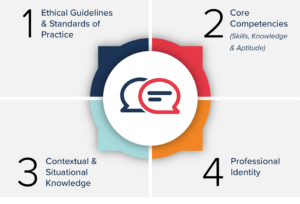
  • Updated ethical guidelines, standards of practice, and competency frameworks, aligned with current international standards
  • Improved navigation to help participants move more easily through course content
  • Enhanced learning resources to support applied practice
  • Course content updated to ensure alignment with current standards, clearer competency expectations, and consistent assessment of learning outcomes.

Professional Standards

Professional standards are not static. ISO standards, for example, are developed by international experts and are periodically reviewed and revised to remain relevant as professional contexts, technologies, and expectations evolve. As a long-standing member of ISO TC 37/SC 5 (since 2010) and the Project Leader for ISO/TS 6253:2024 – Requirements and Recommendations for Training Programmes in Community Interpreting, TIL’s Founder and Director, Angela Sasso, is very familiar with the components required to prepare bilingual individuals to work competently as interpreters in public-service settings.

This expertise, combined with the exceptional experience of our instructional team, all practicing interpreters, translators and educators, underpins TIL’s approach. Ethical decision-making, standards of practice, and clearly defined competencies form the foundation of our course design, and recent updates to international guidance are reflected throughout our curriculum.

Our programs follow the newest international standard, ISO TS 6253:2024, which sets the requirements and recommendations for interpreter training in community settings. We are also active across Canada in training interpreters, working with organizations, and supporting educators.
Because there is no outside accreditation body for this standard, we created our own careful review process. This process is based on our long history with standards work since 2010 and more than 30 years of experience in the interpreting field.

Assessment and Certification

All TIL courses conclude with a final exam to assess learning outcomes. Assessment is an essential part of ensuring that participants have not only attended but have met the learning objectives. To be awarded a Certificate of Successful Completion, participants must:

  • Achieve a minimum 75% passing grade on the final exam
  • Attend live, instructor-led sessions
  • Complete all online modules and assignments

Participants who complete the live sessions but do not meet all assessment requirements may instead receive a Confirmation of Attendance, verifying their participation.

Investing in credible, standards-based training is not about adding barriers; it is about building a more reliable, sustainable interpreting workforce that organizations and consumers can confidently rely on.

Balancing Access and Professional Expectations

At TIL, we work deliberately to balance accessible learning with professional rigour. This balance is not always simple, but it is essential if training is to be both inclusive and credible for the organizations and communities interpreters serve.

Our programs are designed to be accessible at the outset, with flexibility to expand into more in-depth, customized learning over time when organizational or workforce needs call for it.

Looking Ahead to 2026 and Beyond

In 2025, we also delivered advanced training in legal and court settings for ASL–English interpreters in British Columbia. Building on that work, this program will be offered nationally in 2026, further strengthening specialized training pathways across Canada.

What This Means for Agencies and Organizations

For agencies and organizations responsible for procuring, managing, and assuring the quality of interpreting services, training is not simply a credential, it is a risk-management and workforce-development tool.

Standards-aligned training helps ensure that interpreters understand and apply ethical decision-making, professional boundaries, role clarity, and sector-specific protocols consistently across assignments. This reduces variability in service delivery, supports compliance with institutional policies, and strengthens confidence among service users, staff, and funders.

TIL’s approach supports quality assurance by:

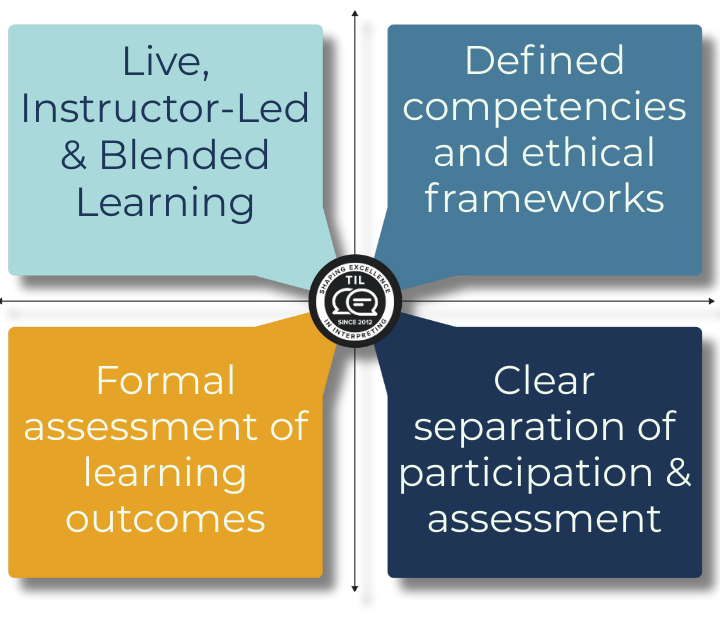
  • Delivering training through a live, instructor-led and blended format, and never fully asynchronous learning4 quadrants of excellence
  • Embedding clearly defined competencies and ethical frameworks into all training
  • Assessing learning outcomes through formal evaluation, not attendance alone
  • Providing transparent distinctions between completion, assessment, and participation

From a procurement and contracting perspective, standardized training benchmarks make it easier to articulate expectations, compare qualifications, and demonstrate due diligence when responding to audits, complaints, or funding requirements.

From a workforce-development standpoint, structured training pathways support interpreter retention, professional growth, and readiness for increasingly complex public-service environments. Agencies benefit from interpreters who are better prepared, more consistent in practice, and clearer about professional limits, reducing downstream issues and supervisory burden.

In short, investing in credible, standards-based training is not about adding barriers; it is about building a more reliable, sustainable interpreting workforce that organizations and consumers can confidently rely on.

  • If you are interested in receiving a copy of our updated Code of Conduct or Competencies Framework, please contact us at admin@interpreterslab.org

Advancing the Field: A Milestone in Court and Legal Interpreting for ASL-English Interpreters

We’re proud and delighted to share that The Interpreter’s Lab – Centre for Interpreter Education and Training has just completed the first-ever Interpreting in Legal and Court Settings: ASL–English Advanced Program, led by the exceptional Dr. Debra Russell. With over 20 ASL-English interpreters participating, this inaugural cohort marks a groundbreaking moment for interpreter education in BC and across Canada.

Advanced Training for ASL-English Interpreters in Court Settings

This program is more than another course, it represents the first coordinated, advanced training for interpreters in legal and court settings, built specifically for ASL-English interpreters and grounded in Canadian practice, standards, and legal frameworks. And it reflects something essential about how we work at The Interpreter’s Lab: when interpreters and our partners identify a gap, we respond, quickly, collaboratively, and with purpose.

After listening to ASL-English interpreters across BC describe the persistent gap in legal-interpreting training, we adapted our well-established spoken-language legal interpreter training framework and rebuilt it specifically for ASL-English interpreters. This required re-sequencing modules, reworking assignment design, and ensuring that the competencies, protocols, and ethical considerations unique to ASL–English court work were meaningfully integrated. And we did so in a relatively short time, ensuring that interpreters could access the training they needed without waiting years for a program to be developed.

Coordinated, advanced training for interpreters in legal and court settings, built specifically for ASL interpreters and grounded in Canadian practice, standards, and legal frameworks.

Under Dr. Russell’s leadership, participants engaged in rigorous, research-informed learning: case analyses, applied skill-development, explorations of courtroom dynamics, and considerations and protocols for team/co-interpreting practices. The energy, thoughtfulness, and commitment from this cohort made it clear just how needed, and overdue, this type of training truly is.

Best Practices, International Standards (ISO) and the Canadian Justice System

This program was also deliberately grounded in international standards and evidence-based research on interpreter education. Drawing on the ISO framework for interpreter training, particularly the standards developed under ISO TC 37/SC 5 and decades of scholarship on legal interpreting, assessment, and professional competencies, we ensured the curriculum aligned with recognized best practices.

Everything from sequencing to assignment design, to skill development was informed by research and premised on the Canadian Law and Justice system. This alignment with standards and evidence-based pedagogy is central to how we design our programs and reinforces our commitment to delivering training that reflects the realities and responsibilities of legal interpreting today.

“At The Interpreter’s Lab, our mission is to deliver accessible, responsive, and standards-based training”

We extend our sincere gratitude to all participants, and to Dr. Russell for her leadership, expertise, and generosity in shaping this pioneering program.

More Training Opportunities to Come in 2026

This inaugural cohort centred ASL–English interpreters; however, we acknowledge the important contributions of Deaf interpreters in legal settings and plan to explore future training options that support and reflect their role in this work. The timeline for this first delivery made it necessary to proceed with the established structure; however, The Interpreter’s Lab is fully prepared to adapt the program for a second offering that reflects the needs of all sign language interpreters.

“The information and the opportunity to have Dr Russell guide our learning was incredible, and I do feel as though it was a great professional development opportunity.”

As we continue investing in sector-specific ASL-English interpreter education, this first-of-its-kind program sets a new benchmark, and it’s only the beginning. More advanced training opportunities for signed-language interpreters are coming in 2026.


AI and Interpreting: What You Need to Know

This year at The Interpreter’s Lab, we’ve been digging deeper into AI, just as many others in the interpreting field have.

Interpreting in community and public service settings, whether in education, healthcare, or law enforcement, is uniquely complex. It’s not only about managing dynamic, interpersonal communication but also about working across many languages and navigating truly localized knowledge. Accuracy matters profoundly when people’s health, safety, or liberty are on the line. That means community interpreters must approach AI with caution.

Still, when used wisely, these tools can serve a valuable purpose.

“AI is not here to replace interpreters – and won’t be for the foreseeable future.”

From note-taking apps to terminology management, there are countless AI tools that can support interpreters before and after assignments. But when it comes to community interpreting, things get more complicated. Unlike conference interpreters who may work with teams, booths, and on-site technology support, community interpreters often work alone. They are expected to respond in the moment with critical decision-making skills rooted in professional confidence and ethical understanding. Confidentiality and client privacy are central, meaning that pulling out a phone or laptop mid-session to run an AI tool usually isn’t an option.

This doesn’t mean AI is off the table. As we learned recently at the August session of The Interpreter’s Lab Speakers Series Professional Development with Evelyn Cervantes, there are creative and ethical ways to bring AI into your professional toolkit.

Practical Ways Interpreters Working in Community and Public Sector Services Can Use AI

  1. Pre-Session Preparation
    AI tools can help interpreters research terminology, generate practice scenarios, or organize glossaries before an assignment. Some tools even allow you to upload documents or background material (with privacy considerations in mind) to get a clear sense of key concepts.
  2. Post-Session Reflection
    After assignments, AI can support with debriefing and self-study. Summarization tools, for instance, can help you review notes and identify areas where additional terminology practice is needed. As any good interpreter knows, a reflective practice is a professional practice.
  3. Practice Management
    No matter how powerful the tool, the responsibility for managing and organizing your practice remains yours. AI can generate resources, but it won’t tell you how to structure your files, prioritize your workload, or balance your commitments. That’s where your professional judgment comes in.

What to Watch Out For:
AI isn’t perfect, and interpreters need to approach it critically:

  • Accuracy and Reliability: Just because AI provides a reference doesn’t mean it’s correct, or even real. Always verify.
  • Privacy Concerns: Free versions of tools may not protect your data. Be cautious about uploading sensitive materials, especially anything linked to client information.
  • Free vs. Paid Subscriptions: Paid tools often provide better security, features, and accuracy. But even then, due diligence is essential.

Why This Matters
AI is not here to replace interpreters – and won’t be for the foreseeable future.  Instead, it can complement our skills and make us more efficient, better prepared, and more reflective practitioners, if used wisely. In community interpreting, where confidentiality, ethics, and quick thinking are paramount, the key is knowing when and how to integrate these tools without compromising professional standards.

As AI continues to evolve, so too will the conversations about how interpreters can, and should, engage with it. At The Interpreter’s Lab, we believe that staying informed and critically reflective is part of what makes a strong professional community. That’s why our monthly Pro-D sessions don’t just introduce tools, but also create space to explore the ethical, practical, and real-world implications for community interpreters – technology is only as useful as the ethical framework we bring to it.

AI isn’t a replacement for professional skill, judgment, or standards, but it can be a supportive ally when approached wisely. We invite you to join us as we continue to explore these questions together.

Not yet a member of The Interpreter’s Lab?

Join today to access our monthly Pro-D sessions, practical tools, and supportive community of interpreters. Learn more here


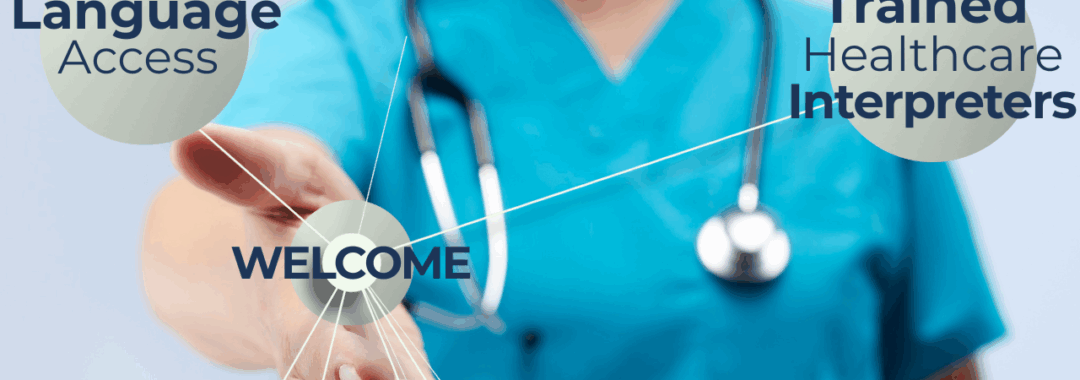
Raising the Standard: Language Access and the Role of Trained Healthcare Interpreters

Language access is a cornerstone of equity in healthcare: without it, care is not equally accessible, effective, or safe. For people who do not speak the same language as the service provider, or are Deaf or hard of hearing, access to trained interpreters is not just helpful — it’s essential for receiving safe, respectful, and effective care.

Interpreters working in signed or spoken languages, such as Mandarin, Arabic, Farsi, Punjabi, or any of the other 200+ languages spoken in Canada, play a vital role when it comes to public services in Canada – like healthcare. They help ensure that patients understand critical information, can provide informed consent, and are heard. Their work supports not only individual patients, but the quality and fairness of the healthcare system as a whole, and the professional integrity of the healthcare team. Extending beyond that, the work of interpreters contributes to more cohesive communities by bridging linguistic and cultural divides, fostering trust, and ensuring that all voices are heard in our every day lives.

When Every Word Matters: Interpreting in Canadian Medical Encounters

Healthcare interpreting also presents unique challenges. Like many specialized settings, it requires knowledge of specific terminology—not just medical terms, but also jargon unique to healthcare and distinctive of the Canadian system and context. While the biomedical model may be broadly consistent across countries—even those sharing the same language—the real distinctions lie in the broader context: how healthcare is organized, accessed, and delivered, as well as the cultural expectations and systemic nuances that shape patient-provider interactions. These differences have a significant impact on how we train interpreters at The Interpreter’s Lab. Effective interpreting depends not only on language fluency and interpreting competences, but on an understanding of these systems, roles, and protocols that influence every healthcare encounter.

Healthcare settings are emotionally complex and constantly shifting, often placing interpreters in the middle of deeply personal and difficult conversations. From end-of-life discussions to emotionally charged decisions, interpreters must stay poised, impartial, and accurate while navigating evolving emotions and sensitive interpersonal dynamics.

Interpreters working in medical settings must understand clinical systems, stay grounded in their professional role, and remain composed in difficult moments—all while making space for individuals to speak and be heard. This is why setting-specific training is essential. Without it, navigating the complexity of medical encounters has the potential to overwhelm interpreters and ultimately affect everyone involved.

“A patient without a professional interpreter is less likely to understand their diagnosis, less likely to be able to give fully informed consent for treatment, and ultimately less likely to adhere to their treatment protocol.” (National Standards for Healthcare Equity, p. 10)

Interpreting in Healthcare & Medical Settings is a specialized training program that helps interpreters build the knowledge and skills required to meet these challenges.

The Interpreting in Healthcare and Medical Settings covers:
• Canadian healthcare systems
• Medical and related terminology
• Ethics and role maintenance
• Cultural safety and the role of culture in healthcare
• Interpreting protocols and navigating complexities
• Techniques to manage assignment preparation, focus, memory, and accuracy

Specialized Interpreter Training Supports Quality Care and Equity in Service Provision

Training at The Interpreter’s Lab strengthens interpreters’ ability to work effectively with clinicians across disciplines and support patients from diverse cultural and linguistic backgrounds. By exploring how culture shapes health beliefs and communication, interpreters are better equipped to support meaningful interactions and contribute to more equitable care.

Our programs provide the tools, frameworks, and reflective practices needed to navigate ethical tensions in real time—helping interpreters stay grounded, make informed decisions, and uphold the integrity of their role, even under pressure.

The Human Element – Mission Critical
The human element in healthcare and medical interpreting cannot be understated: People are essential to the success of this work. While AI is often promoted as a solution to language barriers, the perception that it works well is often stronger than its actual effectiveness. In healthcare, where communication is dynamic, emotional, and deeply rooted in interpersonal and intercultural realities, AI is rarely a reliable or ethical substitute. It cannot interpret tone, context, or nuance, and it cannot support clarity or cultural safety. Human interpreters remain essential to ensuring language access that is accurate, appropriate, and equitable.

“People are essential to the success of this work.”

Interpreting in healthcare is more than just language work. It’s a critical part of ensuring language rights and language access and reducing barriers to care. Specialized training helps interpreters bring clarity, dignity, and equity into every conversation.

Resources and Additional Readings

  1. “When I’m sick, I’m not bilingual” – Language Support is Health Equity (2025). Access HERE
  2. Investing in Language Access to Optimize Health System Performance (Research Snapshot). Found HERE 
  3. Access to Health Care – addressing the Language Barriers (2009). Found HERE
  4. Medical Interpreting Services for Refugees in Canada – Current State of Practice and Considerations in Promoting this Essential Human Right for All (2024). Found HERE
  5. National Standards for Healthcare Equity: The Case for Provincial Interpretation Services. National Newcomer Navigation Network (2022). Found at Newcomer Access to Professional Interpretation Services in Healthcare

The Importance of Continuing Education for Interpreters

Learning Never Stops

The Greek philosopher and historian Plutarch wrote “The mind is not a vessel to be filled, but a fire to be kindled.” 

Since Socrates, the notion that education should ignite curiosity and foster critical thinking—rather than merely promote rote memorization—has been a guiding principle. His philosophy emphasized questioning and dialogue as essential to learning. Building on this foundation, modern thinkers recognize that theory without practice is hollow. 

Professionals who neglect reflective learning and ongoing education risk not only their own growth but also the quality of service they provide. To not progress is to stagnate.

The Importance of Continuing Education for Interpreters

The world is moving fast—new technologies, evolving best practices, and industry shifts are constant. It can feel overwhelming at times. Should you chase the latest trend, or focus on strengthening your existing skills? The real challenge isn’t just keeping up; it’s critically assessing what’s worth your time and how it benefits your career. And sometimes, the best way to navigate these changes is through collaboration—discussing new developments with like-minded colleagues who share your goals and challenges.

Continuing education isn’t just about learning something new; it’s about stepping back to see the bigger picture—understanding how changes in the industry impact your work and how to integrate new knowledge and tools effectively. Staying current with industry trends, technology, and best practices is essential, but lifelong learning isn’t just about maintaining relevance—it’s about advancing your career with clarity and purpose.

Interpreting as a Practice Profession

Dean and Pollard’s Demand-Control Schema (DC-S) frames interpreting as a practice profession—akin to law or medicine—where decision-making and problem-solving are essential. Every interpreting encounter presents unique demands, whether linguistic complexities, interpersonal dynamics, ethical considerations, or environmental factors. Skilled interpreters don’t just translate words—they assess these demands and apply strategic solutions to navigate challenges while ensuring clear, ethical, and effective communication.

This means that real-world practice should both inform and be informed by classroom learning. Training must bridge theory and application, equipping interpreters with the analytical and adaptive skills needed to manage complex, unpredictable situations. Ongoing professional development ensures that interpreters remain agile, ethical, and effective as the profession continues to evolve.

Continuing Education Options

Interpreters have a range of opportunities to advance their skills, whether they are early in their careers or seasoned professionals. The Interpreter’s Lab offers a variety of opportunities tailored to different career stages, including:

Workshops – Our monthly interactive sessions focus on practical skill development, covering ethics, decision-making, and domain-specific interpretation.

Advanced Training Programs – In-depth courses designed for interpreters seeking specialization in fields such as medical or legal interpretation.

Mentorship Programs – One-on-one and group mentorship opportunities provide personalized guidance, skill refinement, and career support.

Debriefing Sessions – Facilitated discussions that help interpreters process challenging assignments, navigate ethical dilemmas, and build resilience. Offered quarterly for free to all TIL Members. 

“The real challenge isn’t just keeping up; it’s critically assessing what’s worth your time and how it benefits your career.”

The Benefits of Ongoing Professional Development

Investing in continuing education provides both immediate and long-term benefits:

Staying Informed – Keeping up with evolving language access policies, interpreting regulations, and technological advancements ensures you remain competitive and well-equipped.

Enhancing Skills – Ongoing training strengthens language proficiency, cultural competence, and ethical decision-making.

Expanding Career Opportunities – Specialized training and certifications create pathways to higher-paying assignments and valuable professional connections.

Self-Promotion & Advocacy – Developing the skills to advocate for yourself and the profession not only elevates your career but also strengthens the interpreting field as a whole, with long-term rewards that may not be immediately visible.

Balancing Work and Learning

Interpreters often juggle demanding schedules, making it challenging to prioritize professional development. However, with the right approach, including the following, lifelong learning becomes manageable:

Set Clear Goals – Identify areas for growth and choose targeted training that aligns with your career objectives.

Access Online Learning – Webinars and self-paced courses provide flexibility, making it easier to fit learning into a busy schedule.

Create a Study Routine – Dedicating consistent time each week to professional development helps reinforce learning and maintain momentum.

Adopt a Strategic Mindset – Taking a disciplined, stoic approach to planning your day ensures that education remains a priority without overwhelming your workload.

Trusted Resources for Professional Growth

For interpreters seeking high-quality professional development, The Interpreter’s Lab offers industry-recognized training with a focus on real-world application. These programs equip interpreters with the knowledge and skills needed to thrive in an evolving profession.

Continuing education isn’t optional—it’s essential for interpreters who want to excel. Through targeted workshops, online courses, and advanced training, The Interpreter’s Lab supports professionals in staying ahead, refining their skills, and unlocking new career opportunities. Lifelong learning isn’t just about keeping up—it’s about growing, adapting, and elevating your professional impact.

In a time when everyone seems certain they know everything, isn’t it refreshing to embrace the idea that there’s always more to learn? As Socrates famously said, “I am wise because I know that I know nothing.”  True wisdom lies in recognizing the endless opportunities for growth.

For more information on available programs, visit The Interpreter’s Lab.

Take the quick assessment and see where your skills lie: LIFELONG LEARNING

References:

  • Dean, R. K., & Pollard, R. Q. (2001). Application of Demand-Control Theory to Sign Language Interpreting: Implications for Stress and Interpreter Training. Journal of Deaf Studies and Deaf Education, 6(1), 1-14. https://doi.org/10.1093/deafed/6.1.1
  • Plato. Apology. (as recorded by Plato)
  • Plutarch. On Listening to Lectures

What’s in the Interpreter’s Toolbox?

From Skills to Impact: How We Help Interpreters Build Meaningful Careers

At The Interpreter’s Lab, we design our courses with adults in mind – adults with busy schedules, other studies, family obligations, and those transitioning into or out of careers.

Our courses are short and intensive, yet they cover all the essential principles necessary for professional interpreter training. We emphasize blended learning, live sessions, passionate and experienced instructors, quizzes, robust final exams, and meaningful assignments. Our top priority is ensuring students understand both the importance and the responsibility of the interpreter role, particularly in public service and community settings. Interpreters engage directly with the real-life activities of others, which requires specific competencies to fulfill the role effectively. We also focus on self-awareness – helping students recognize areas where they might need improvement and providing tools and strategies to proactively enhance their professional skills.

We equip our students with tools both during the course and for their ongoing development. In fact, we explicitly tell them: “This is your toolbox – filled with the tools you need to do the job today and to do it even better tomorrow.”

A core component of our foundational course, Interpreting in Community Settings, is a practical research assignment called Researching the Landscape. This course teaches the fundamentals: the interpreter’s role, principles, ethics, competencies, skills, techniques, and public service protocols. The research assignment challenges students to identify where interpreters work by guiding them through a set of 15 questions designed to promote effective inquiry. They explore search engines, keywords, and online research methods while paying attention to the quality of their findings.

This is your toolbox – filled with the tools you need to do the job today and to do it even better tomorrow.

A comment I often hear from new students is: “I never realized what a far-reaching and professionally-defined occupation this is”. It’s true – interpreting plays a critical role in access, inclusion, and service efficiency, yet it remains almost invisible to the public. This lack of visibility stems partly from the fact that, in a multilingual society like Canada, bilingualism is often taken for granted. Many assume that speaking two languages equates to effective communication, message conversion, and a full understanding of how to respect the voices and intentions of speakers. The reality, however, is that interpreting is a highly specialized and often hidden profession.

Through the Researching the Landscape activity, students discover a wide range of places where interpreters work. Some findings hit the mark, while others miss – but the learning process is invaluable. They come to understand the concept of working through agencies, ex[;pre what a language service provider (LSP) is, and begin to grasp that pursuing a career in interpreting involves more than language skills. It requires contract negotiation, professional networking, organizational skills, and the mindset of a freelance professional.

This assignment is one of my personal favourites. After covering lessons on the interpreter’s role, comprehension, breaking down competencies, memory skills, note-taking, sight translation, ethics, and Standards of Practice, we arrive at the final session: the practical realities of working as an interpreter. This focus on professional preparedness sets our program apart. We don’t just teach skills – we empower our students to transform those skills and newfound confidence into real careers. We help them understand growth pathways, think beyond their immediate communities, and appreciate the broad scope and impact of interpreting.

Learn more about our programs: www.interpreterslab.org

Read what is covered in the Interpreting in Community Settings – A Foundational Program


Interpreting in Health, Law Enforcement and Social Service Settings in Canada

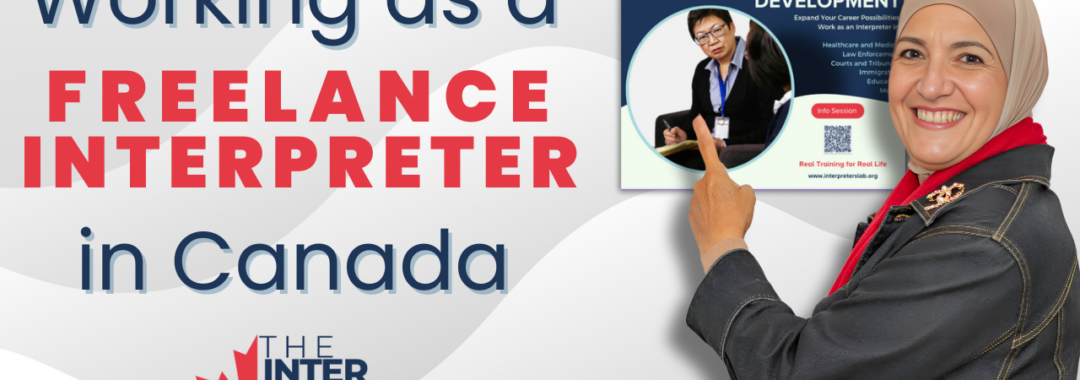
Working as a freelance interpreter can be an exciting and fulfilling job. Interpreters help people from different language backgrounds communicate clearly with public service providers, ensuring everyone can access information and services accurately, privately, and fairly.

Interpreters play a key role in today’s changing economy and community life by making sure everyone can fairly access essential services like healthcare, legal support, education, and social services. They help service providers and clients communicate effectively when needed. This task requires critical thinking skills and core competencies necessary to perform the work correctly. 

Role and Skills of Interpreters in Community Based Settings

Interpreters work in many different environments, making it hard to list all the places they might be needed. In a diverse country like Canada, interpreters play a key role in almost every part of community life, helping people communicate while respecting language differences. Their work helps keep communities connected and inclusive.

Being an interpreter requires a range of important skills. While many assume language ability is the main requirement, it’s just one of many. Interpreters need to be strong communicators with excellent interpersonal and intercultural awareness. They should have sharp cognitive abilities, a desire to improve memory, multitasking skills, and strong organizational habits. Beyond these, interpreters learn specialized techniques such as note-taking, consecutive and simultaneous interpreting, sight translation, research skills, and more.

Becoming a Freelance Interpreter

Training

Starting a new career begins with getting the right training. Interpreting, like any other profession, requires key skills and knowledge. A foundational training program will prepare you to work confidently as an interpreter. It’s about more than just knowing two languages – interpreters need specialized skills to work effectively with professionals like lawyers, doctors, nurses, and social workers.

Practice

Start working as an interpreter to sharpen your skills. Real-world experience will give you valuable insights into the profession. You’ll learn to handle different personalities, manage your schedule, plan your days, and research terms or office procedures before appointments. These hands-on experiences are part of the job. As you go, you might discover the need for new skills or a network of peers to help you navigate challenges. Interpreting is a practical profession where much of the learning happens on the job, as you apply what you’ve learned in training.


Continuing Education and Up-Skilling

It’s important to keep your skills up to date. Interpreters should attend regular workshops and professional development sessions. Be sure to keep records of your training by collecting certificates of attendance or participation. Ongoing education helps show your commitment and skill level.

You might also choose to specialize in areas like medical or legal interpreting. To expand your practice, consider taking specialized training programs. (Check out our article on why specialized training matters here – link the blog.) Working in specialized fields such as healthcare, law enforcement, and education involves more than just learning new terms. It requires understanding the systems, the professionals working in them, and their protocols, procedures, and processes.

Assessments and Certification

Consider taking a skills assessment to verify both your language abilities and professional interpreting skills. The CILISAT, recognized across Canada, is a one-time test that, if passed, provides a certificate confirming your qualifications in community interpreting. The Interpreter’s Lab is an authorized testing centre for the CILISAT. You can find out more HERE.

If you’re interested in becoming a certified interpreter, Canada offers three certification options, each with its own testing process. Certification requires maintaining professional membership and paying annual dues. You can learn more about the certification process by reading our blog on Interpreter Certification in Canada

Networking 

Join professional associations and membership groups to network and grow your career. Connect with peers, meet industry representatives, attend conferences and forums, and explore volunteer opportunities. These experiences can introduce you to new practice areas and ways of working while expanding your professional connections.

The Interpreter’s Lab Membership Program is a great start. Meet other interpreters, join the Community Hub, and get perks on training and professional development. 

Income and Career Outlook

Freelance interpreters working in community and public sector services like healthcare, social services, immigration, or courts typically earn between $26 and $70 per hour. This range varies across organizations and settings, and is different across Canada.

A key benefit of freelance interpreting is the ability to create your own schedule. Assignments can be during the day, evenings, or weekends, and may involve working in person, by phone, or on video calls. Interpreters often work with multiple agencies, allowing them to choose assignments and build strong professional relationships as they advance in their careers.

Working as a freelance community and healthcare interpreter in Canada can be a fulfilling career that blends language skills, cultural competence, and public service.

With the right certifications, ongoing skill development, and strategic networking, interpreters can build a successful freelance career while making a positive impact in their communities.]

FIND OUT MORE AT www.interpreterslab.org  OR JOIN AN INFORMATION SESSION AND GET YOUR QUESTIONS ANSWERED ON THE SPOT