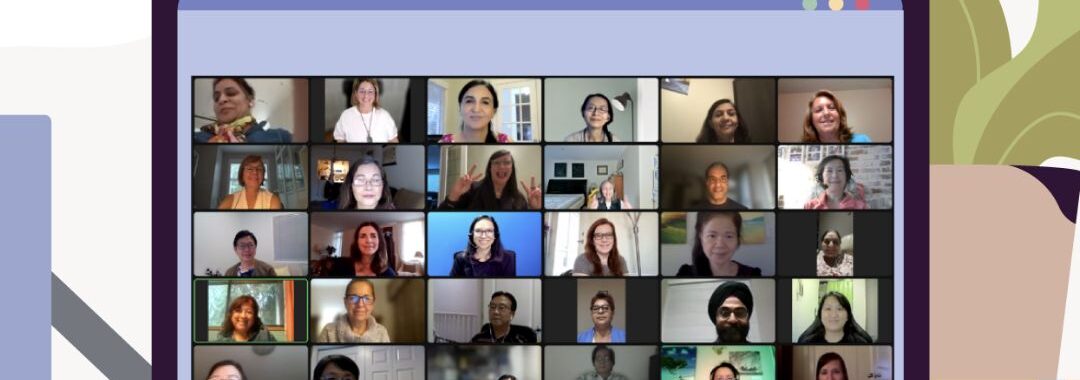
Interpreter Training Programs in Canada: From First Word to Full Career

A Learning Home Base for Interpreters at Every Stage of Their Career

Interpreting is not a skill you learn once and carry forever. It’s a practice. It deepens with every encounter, every setting, every challenge that asks more of you than the last one did.

The question isn’t whether to keep growing. It’s where. 

The reality is that most interpreters are left to navigate this on their own. Entry into the field often comes through a single course, a short training, or no formal preparation at all, and from there the expectation is that experience will somehow close the gaps. Yet the system has not been designed to support that kind of progression. It remains fragmented, inconsistent, and often disconnected from what interpreters need once they are already working.

We built our programs around a simple belief: interpreters deserve a learning home, not a scattered collection of one-off courses, but a place where every stage of your professional journey has somewhere to go. That’s why we chose the name, The Interpreter’s Lab; to signal a constant learning and experimentation – a place where we can all connect, share and learn together.

Interpreters are at different stages in their learning and practice journey, and that looks different for everyone.

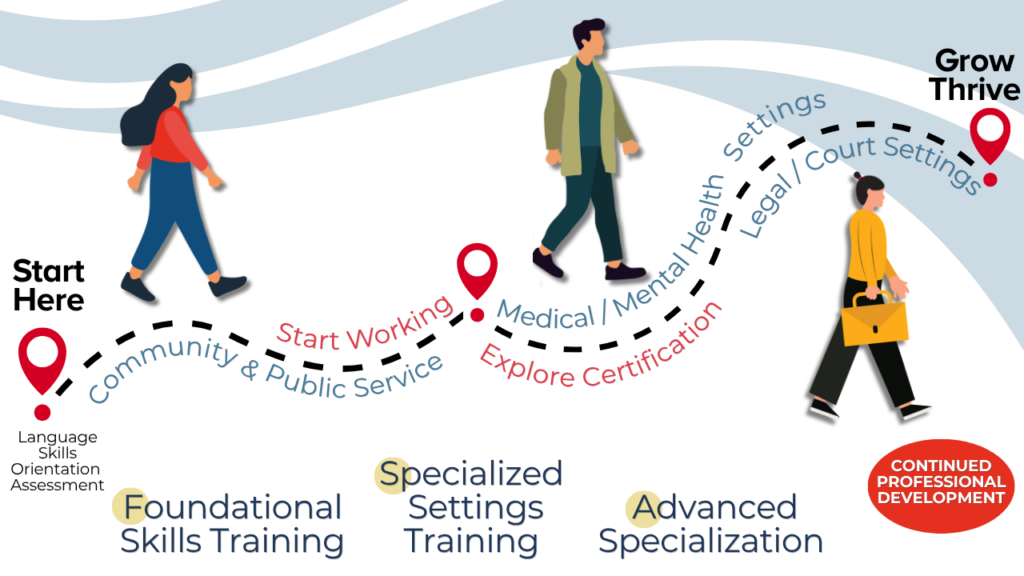
Start Your Career Here

If you’re just beginning, our foundational skills program, Interpreting in Community Settings, gives you the skills, the knowledge, the cohort, and the confidence to step into real work. Live classes, self-directed study components, practice with peers, student manuals and glossaries you’ll return to repeatedly, and a Certificate of Successful Completion that speaks to your qualifications and what you’ve earned. And that is recognized nation-wide. 

DISCOVER THE FOUNDATIONAL SKILLS TRAINING PROGRAM TO GET YOU STARTED

Advanced Interpreter Training: Medical, Mental Health, and Court Interpreting Settings

If you’re ready to specialize, our advanced training programs take you deeper into the settings that matter most: healthcare and medical interpreting, mental health and complex care, legal and court. These are intensive, short-course programs, serious, immersive learning for interpreters who want to build real skill and deliver with confidence.

DISCOVER ADVANCED PROGRAMS IN SPECIALIZED SETTINGS

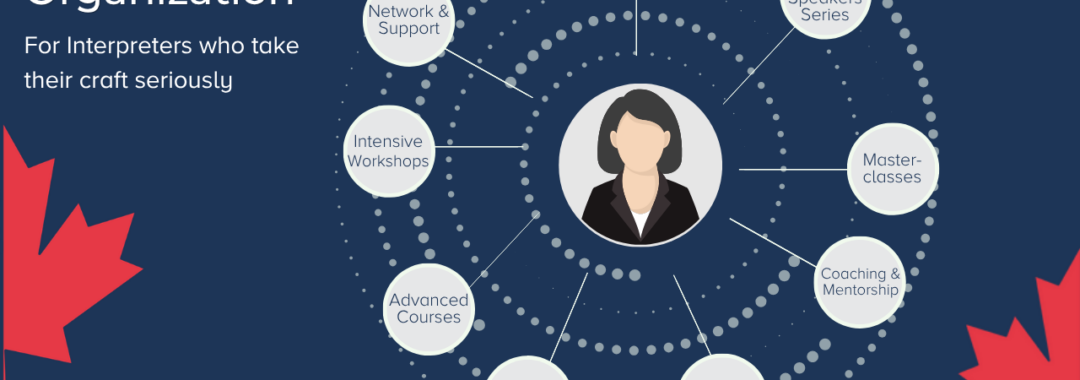
A 360 wrap-around organization for interpreters who take their craft seriously.

If you want to sharpen a specific skill, right now, and efficiently, our intensive workshops are designed for exactly that. Workshops on medical terminology OR simultaneous interpreting. Targeted, practical, and immediately applicable.

Each year, we bring a different focus, or revisit what matters most, based on what you, the interpreter, need.

FOR A FULL LISTING OF UPCOMING SESSIONS, PROGRAMS AND WORKSHOPS – CHECKOUT OUR CALENDAR

Everything You Need to Grow as an Interpreter — In One Place

And if, between programs, you want to continue learning and advancing your skills and career, our professional development focussed Membership Program is a 360 wrap-around:

  • monthly speakers
  • subject-matter experts
  • significant discounts on all advanced courses
  • quarterly drop-in sessions
  • masterclass access
  • exam prep support
  • an exclusive community of peers

Everything that a freelance professional needs to build and grow their practice.

DISCOVER MEMBERSHIP AND PROFESSIONAL DEVELOPMENT AT TIL

The Interpreter’s Lab also offers coaching, mentorship and language and skills assessments; the full arc of professional development, not just the beginning of it.

We think about this often: what does an interpreter actually need to become the professional they’re capable of being? Not just training, but continuity. Not just knowledge, but community. Not just a credential, but a career.

That’s what we’re building here. We have a place for you, wherever you are in your journey.

See you at The Lab!

Interpreter Training Is Not Content Delivery

Workshops, Techniques and the Hard Truth About Interpreter Training

There are tips and techniques.

There are workshops, webinars, and quick fixes.

And then there is training.

These things are not the same. Treating them as interchangeable has quietly undermined the interpreting profession for years.

Workshops have value. They raise awareness, introduce ideas, and support interpreters who already have a foundation. But they do not replace training.

Training is structured, cumulative, and grounded in standards. It is what moves someone from being bilingual to being appropriately qualified. That distinction matters, whether people realize it or not, especially in situations where the consequences are real and the impacts are lasting.

The Work Behind the Words

One of the most persistent myths in our field is that interpreting is simply “helping out” with language; that if you speak two languages and care enough, a few workshops will prepare you.

This belief is usually rooted in goodwill. Communities want access. Organizations are under pressure. People step in because someone must. But good intentions do not equal professional competence.

When interpreting is reduced to the act of speaking two languages, the work is treated as a simple transaction: words in, words out. But that framing oversimplifies the complex process of communicating across languages, cultures, and people. Interpreting involves constant decision-making within complex human and institutional contexts.

Interpreting requires far more than bilingual ability; it includes, among other important things, ethical judgment, role clarity, session management, discourse and register control, memory, and research skills.

Those competencies don’t emerge accidentally. They are developed deliberately and progressively.

“Interpreting is not a transaction. It is a professional, decision-based practice.”

Learning About Interpreting vs. Learning to Be an Interpreter

This is where confusion often arises.

Workshops tend to focus on content:

  • What interpreters do
  • Common mistakes
  • Ethical scenarios
  • Practical tips

Training focuses on formation:

  • Exploring communication
  • Meaning and language
  • Professional identity
  • Scope of practice
  • Decision-making and critical thinking
  • Developing professional competencies and skills
  • Accountability to standards
  • Consistency across settings
  • Ethical awareness and dilemma resolution

A webinar can raise awareness. A workshop can spark insight. But neither prepares someone to interpret in public service settings such as social services, healthcare, law enforcement, or mental-health contexts, where the consequences are real.

“Training is not about shortcuts. It is about readiness.”

Where Asynchronous Learning Fits–and Where It Doesn’t

Asynchronous learning, self-paced learning that occurs without live, real-time interaction between instructors and learners, has a role in interpreter education. It can support foundational knowledge, introduce concepts, and allow learners to engage with theory, terminology, and ethical frameworks at their own pace.

What it cannot do, on its own, is develop skilled interpreting competence. Asynchronous learning can support training, but it cannot replace it.

Interpreting is a performative, decision-based practice. It requires real-time interaction, guided feedback, correction, and exposure to unpredictability. These elements cannot be meaningfully replicated through fully self-directed, asynchronous formats. Without structured interaction and feedback, learners may absorb information without developing judgment.

When asynchronous learning is positioned as a complete substitute for interpreter training, it creates the illusion of readiness without the conditions needed to develop it.

And while the growth of asynchronous and on-demand learning has made education more accessible, that accessibility is not the same as adequacy. When it comes to acquiring tangible interpreting competencies, asynchronous learning alone is not innovation. It is omission.

Why Standards Matter, Especially When No One Is Enforcing Them

In many jurisdictions, including Canada, interpreter training is uneven or unregulated. That vacuum allows almost anything to be labelled “training.”

This is precisely why standards matter. International frameworks such as ISO 13611:2024 Interpreting services — Community interpreting — Requirements and recommendations and ISO/TS 6253:2024 Requirements and recommendations for training programmes in community interpreting articulate what professional practice and interpreter education require: defined learning outcomes, qualified educators, structured programmes, assessment, and progression.

Even when training programs are short in duration, they are designed to build competence, not simply share tips and tricks. 

At The Interpreter’s Lab (TIL), our courses are built around these principles, not to be prescriptive, but to be responsible. Without standards, training becomes performative rather than transformative.

Real-World Training for a Real-World Landscape

Our courses may not be the longest, and that is intentional.

Our programmes are largely self-funded by participants, so accessibility matters. We design our courses to be focused and rigorous, without unnecessary length or cost. At the same time, we are responding to urgent workforce needs and systems that too often rely on “good enough” language support. Shorter does not mean lighter.

At a time when interpreter training programmes have been closing across Canada, we have remained relevant by staying current. Our programmes are intentionally designed to sit at the intersection of academia and industry; grounded in professional practice and informed by the real-world realities interpreters are navigating now, not an abstract or idealized version of the profession.

“Accessibility in education is important, but accessibility is not the same as adequacy.”

This includes engaging with current modes of practice, evolving technologies, and the practical skills interpreters need to sustain their work, such as finding assignments, negotiating contracts and fees, and adapting to new forms of service delivery.

Rather than treating these realities as peripheral, we embed them into training as part of professional formation, alongside ethical judgment, international standards, and reflective practice.

Our programmes are taught by experienced practitioners and educators who have spent years working in, advocating for, and shaping this field; they are designed to lay a strong professional foundation.

Training does not need to be endless to be rigorous. It needs to be coherent, intentional, and accountable; it must provide a solid foundation for ongoing professional development, guided by those who understand both the field and the work.

From “Bilingual Helper” to Professional Practitioner

Many bilingual individuals have been interpreting for years before encountering formal training. When they do, the realization can be uncomfortable: there is much more to this profession than they were ever told.

That moment is not failure. It is professional awakening. As the saying goes, you don’t know what you don’t know.

Proper training reframes the role. It moves interpreters away from instinct-driven decisions and blurred boundaries, and toward ethical clarity, professional confidence, and consistency.

Training Is a Beginning, Not a Badge

Completing a solid training programme does not make someone “finished.” It provides a foundation, one that supports specialization, mentorship, and continuing professional development.

That is how professions function.

Tips have their place. Workshops have value.

But training, real training, is what turns intention into competence.

And once that distinction is clear, it’s impossible to ignore.

References and Resources
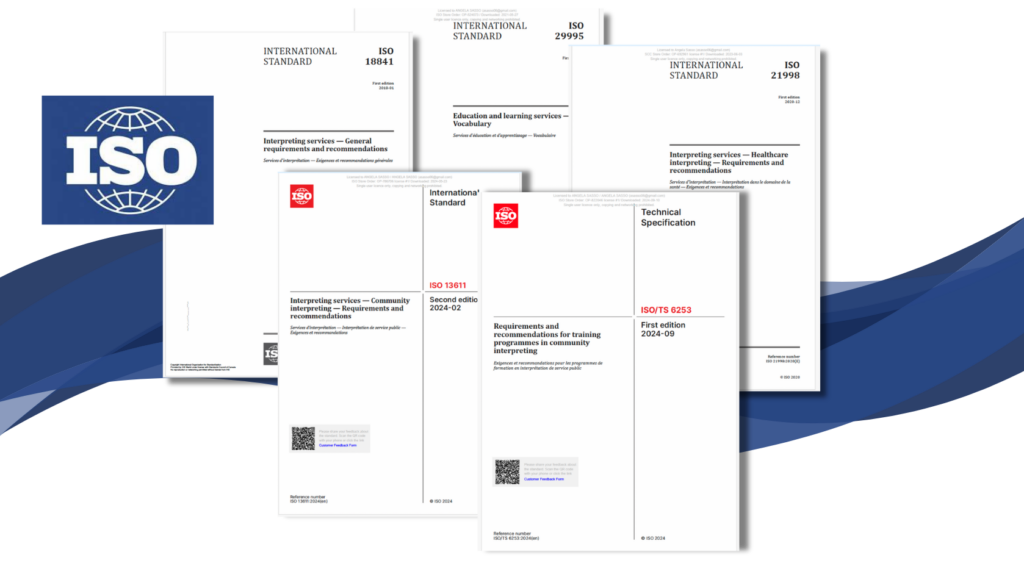
ISO STANDARDS ISO 37/SC 5

ISO 13611:2024

ISO/TS 6253:2024

Claudio Fantinuoli:

  1. Panel: The Future of Interpreter Training: Challenges, AI, and the Path Forward https://www.claudiofantinuoli.org/2025/02/28/the-future-of-interpreter-training-challenges-ai-and-the-path-forward/
  2. What future for translation and interpreting training institutions? https://www.claudiofantinuoli.org/2025/01/25/what-future-for-translation-and-interpreting-training-institutions/

 

Deep Impacts: 2025 Highlights at The Interpreter’s Lab

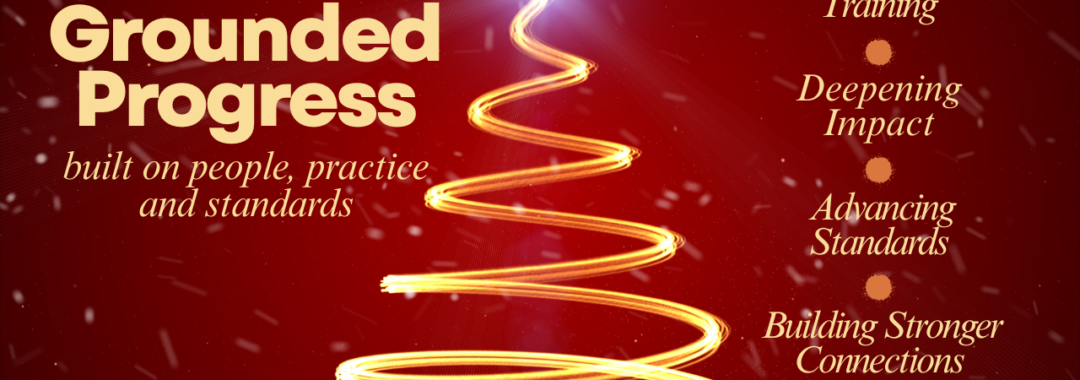
2025 was a year of deepening impact, strengthening training, advancing standards, and building stronger bridges between interpreters, institutions, and communities.

At TIL, we continue to advocate at all levels for the important contributions of interpreters and for recognition of interpreting as a specialized profession. The work that we do and the initiatives supported interpreters across spoken and signed languages nationwide. In 2025 over 150 new and practicing interpreters engaged in our training and continuing education programs. Building on current research and established best practices endorsed by international experts, TIL regularly strengthens its core curriculum and foundational ethical guidelines for interpreters.

Check out this Blog for More Information on How TIL Sets the Pace

Programs continued to align with Canadian and international standards while remaining grounded in real-world practice.

Learning & Professional Development (Membership Program)

Professional Development and Continuing Education

Interpreting in Law Enforcement – Working with the Police – Masterclass with Dr. Debra Russell (offered again in 2026)

  • 2 sessions for ASL interpreters
  • 1 session for spoken-language interpreters

Four cohorts of Interpreting in Community Settings – A Foundational Program

Interpreting in Legal & Court Settings

  • 1 cohort for spoken-language interpreters
  • 1 cohort for ASL–English interpreters, adapted from our long-standing spoken-language curriculum to meet the specific requirements of ASL–English interpreting.

Program & Curriculum Development

  • Implemented ISO/TS 6253:2024 across programs, supported by a successful full internal audit.

Updated course content across programs, including:

  • Revised Ethical Guidelines for Interpreters in Community Settings
  • Updated competency frameworks and assessment measures
  • Engaged a new instructor with expertise in training for interpreting in Indigenous languages 

Partnerships & Customized Training

  • Designed and delivered a customized training program for the Family Support Institute of BC (Resource Parent / Peer Programs)
  • Welcomed new partner agencies into our organizational training programs
  • Strengthened collaboration with professional membership organizations in Canada and internationally

Sector Leadership & Standards

Continued service as:

  • Board Member and Chair, Interpreting Committee – Canadian Language Industry Association (CLIA)
  • Certified Member, Women Business Enterprises (WBE)
  • Presentation to Canadian Translators, Terminologist and Interpreters Council Board at their annual AGM on ISO TC 37/SC 5 projects and standards
  • Ongoing leadership in the rollout and implementation of international standards in interpreter education
  • Initiated the BC Working Group on Interpreting Services, in collaboration with the Provincial Language Service (PHSA BC), a cross-sectoral initiative exploring system-level improvements to access and information on qualified language services.

Presentations & Advocacy

  • Speech-Hearing BC: Enhancing Speech-Language Pathology Practices: Strategies for Effective Collaboration with Interpreters
  • Health Standards Organization (HSO): Language Access as the Tipping Point for Equity and Inclusion
  • PSIT Networking Group – UK – London Metropolitan University (June 13); The Canadian Experience in Public Service Interpreting
  • Met with Minister Niki Sharma, BC Attorney General, to discuss language access, interpreting, procurement practices, and ISO standards.

Media & Knowledge Sharing

Excellence as Standard Practice

2025 was an exceptional year for The Interpreter’s Lab, marked by meaningful growth, collaboration, and impact. As always, we continue to evolve our programs, strengthen standards-aligned training, and respond to emerging needs in the field.

This progress is only possible through the trust and engagement of our members, partners, and collaborators. We look forward to building on this momentum together in 2026.

Advancing the Field: A Milestone in Court and Legal Interpreting for ASL-English Interpreters

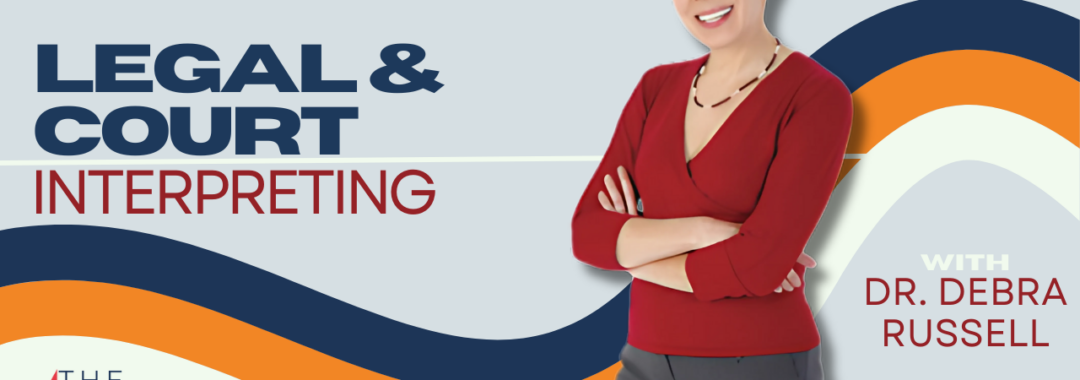
We’re proud and delighted to share that The Interpreter’s Lab – Centre for Interpreter Education and Training has just completed the first-ever Interpreting in Legal and Court Settings: ASL–English Advanced Program, led by the exceptional Dr. Debra Russell. With over 20 ASL-English interpreters participating, this inaugural cohort marks a groundbreaking moment for interpreter education in BC and across Canada.

Advanced Training for ASL-English Interpreters in Court Settings

This program is more than another course, it represents the first coordinated, advanced training for interpreters in legal and court settings, built specifically for ASL-English interpreters and grounded in Canadian practice, standards, and legal frameworks. And it reflects something essential about how we work at The Interpreter’s Lab: when interpreters and our partners identify a gap, we respond, quickly, collaboratively, and with purpose.

After listening to ASL-English interpreters across BC describe the persistent gap in legal-interpreting training, we adapted our well-established spoken-language legal interpreter training framework and rebuilt it specifically for ASL-English interpreters. This required re-sequencing modules, reworking assignment design, and ensuring that the competencies, protocols, and ethical considerations unique to ASL–English court work were meaningfully integrated. And we did so in a relatively short time, ensuring that interpreters could access the training they needed without waiting years for a program to be developed.

Coordinated, advanced training for interpreters in legal and court settings, built specifically for ASL interpreters and grounded in Canadian practice, standards, and legal frameworks.

Under Dr. Russell’s leadership, participants engaged in rigorous, research-informed learning: case analyses, applied skill-development, explorations of courtroom dynamics, and considerations and protocols for team/co-interpreting practices. The energy, thoughtfulness, and commitment from this cohort made it clear just how needed, and overdue, this type of training truly is.

Best Practices, International Standards (ISO) and the Canadian Justice System

This program was also deliberately grounded in international standards and evidence-based research on interpreter education. Drawing on the ISO framework for interpreter training, particularly the standards developed under ISO TC 37/SC 5 and decades of scholarship on legal interpreting, assessment, and professional competencies, we ensured the curriculum aligned with recognized best practices.

Everything from sequencing to assignment design, to skill development was informed by research and premised on the Canadian Law and Justice system. This alignment with standards and evidence-based pedagogy is central to how we design our programs and reinforces our commitment to delivering training that reflects the realities and responsibilities of legal interpreting today.

“At The Interpreter’s Lab, our mission is to deliver accessible, responsive, and standards-based training”

We extend our sincere gratitude to all participants, and to Dr. Russell for her leadership, expertise, and generosity in shaping this pioneering program.

More Training Opportunities to Come in 2026

This inaugural cohort centred ASL–English interpreters; however, we acknowledge the important contributions of Deaf interpreters in legal settings and plan to explore future training options that support and reflect their role in this work. The timeline for this first delivery made it necessary to proceed with the established structure; however, The Interpreter’s Lab is fully prepared to adapt the program for a second offering that reflects the needs of all sign language interpreters.

“The information and the opportunity to have Dr Russell guide our learning was incredible, and I do feel as though it was a great professional development opportunity.”

As we continue investing in sector-specific ASL-English interpreter education, this first-of-its-kind program sets a new benchmark, and it’s only the beginning. More advanced training opportunities for signed-language interpreters are coming in 2026.


The Importance of Continuing Education for Interpreters

Learning Never Stops

The Greek philosopher and historian Plutarch wrote “The mind is not a vessel to be filled, but a fire to be kindled.” 

Since Socrates, the notion that education should ignite curiosity and foster critical thinking—rather than merely promote rote memorization—has been a guiding principle. His philosophy emphasized questioning and dialogue as essential to learning. Building on this foundation, modern thinkers recognize that theory without practice is hollow. 

Professionals who neglect reflective learning and ongoing education risk not only their own growth but also the quality of service they provide. To not progress is to stagnate.

The Importance of Continuing Education for Interpreters

The world is moving fast—new technologies, evolving best practices, and industry shifts are constant. It can feel overwhelming at times. Should you chase the latest trend, or focus on strengthening your existing skills? The real challenge isn’t just keeping up; it’s critically assessing what’s worth your time and how it benefits your career. And sometimes, the best way to navigate these changes is through collaboration—discussing new developments with like-minded colleagues who share your goals and challenges.

Continuing education isn’t just about learning something new; it’s about stepping back to see the bigger picture—understanding how changes in the industry impact your work and how to integrate new knowledge and tools effectively. Staying current with industry trends, technology, and best practices is essential, but lifelong learning isn’t just about maintaining relevance—it’s about advancing your career with clarity and purpose.

Interpreting as a Practice Profession

Dean and Pollard’s Demand-Control Schema (DC-S) frames interpreting as a practice profession—akin to law or medicine—where decision-making and problem-solving are essential. Every interpreting encounter presents unique demands, whether linguistic complexities, interpersonal dynamics, ethical considerations, or environmental factors. Skilled interpreters don’t just translate words—they assess these demands and apply strategic solutions to navigate challenges while ensuring clear, ethical, and effective communication.

This means that real-world practice should both inform and be informed by classroom learning. Training must bridge theory and application, equipping interpreters with the analytical and adaptive skills needed to manage complex, unpredictable situations. Ongoing professional development ensures that interpreters remain agile, ethical, and effective as the profession continues to evolve.

Continuing Education Options

Interpreters have a range of opportunities to advance their skills, whether they are early in their careers or seasoned professionals. The Interpreter’s Lab offers a variety of opportunities tailored to different career stages, including:

Workshops – Our monthly interactive sessions focus on practical skill development, covering ethics, decision-making, and domain-specific interpretation.

Advanced Training Programs – In-depth courses designed for interpreters seeking specialization in fields such as medical or legal interpretation.

Mentorship Programs – One-on-one and group mentorship opportunities provide personalized guidance, skill refinement, and career support.

Debriefing Sessions – Facilitated discussions that help interpreters process challenging assignments, navigate ethical dilemmas, and build resilience. Offered quarterly for free to all TIL Members. 

“The real challenge isn’t just keeping up; it’s critically assessing what’s worth your time and how it benefits your career.”

The Benefits of Ongoing Professional Development

Investing in continuing education provides both immediate and long-term benefits:

Staying Informed – Keeping up with evolving language access policies, interpreting regulations, and technological advancements ensures you remain competitive and well-equipped.

Enhancing Skills – Ongoing training strengthens language proficiency, cultural competence, and ethical decision-making.

Expanding Career Opportunities – Specialized training and certifications create pathways to higher-paying assignments and valuable professional connections.

Self-Promotion & Advocacy – Developing the skills to advocate for yourself and the profession not only elevates your career but also strengthens the interpreting field as a whole, with long-term rewards that may not be immediately visible.

Balancing Work and Learning

Interpreters often juggle demanding schedules, making it challenging to prioritize professional development. However, with the right approach, including the following, lifelong learning becomes manageable:

Set Clear Goals – Identify areas for growth and choose targeted training that aligns with your career objectives.

Access Online Learning – Webinars and self-paced courses provide flexibility, making it easier to fit learning into a busy schedule.

Create a Study Routine – Dedicating consistent time each week to professional development helps reinforce learning and maintain momentum.

Adopt a Strategic Mindset – Taking a disciplined, stoic approach to planning your day ensures that education remains a priority without overwhelming your workload.

Trusted Resources for Professional Growth

For interpreters seeking high-quality professional development, The Interpreter’s Lab offers industry-recognized training with a focus on real-world application. These programs equip interpreters with the knowledge and skills needed to thrive in an evolving profession.

Continuing education isn’t optional—it’s essential for interpreters who want to excel. Through targeted workshops, online courses, and advanced training, The Interpreter’s Lab supports professionals in staying ahead, refining their skills, and unlocking new career opportunities. Lifelong learning isn’t just about keeping up—it’s about growing, adapting, and elevating your professional impact.

In a time when everyone seems certain they know everything, isn’t it refreshing to embrace the idea that there’s always more to learn? As Socrates famously said, “I am wise because I know that I know nothing.”  True wisdom lies in recognizing the endless opportunities for growth.

For more information on available programs, visit The Interpreter’s Lab.

Take the quick assessment and see where your skills lie: LIFELONG LEARNING

References:

  • Dean, R. K., & Pollard, R. Q. (2001). Application of Demand-Control Theory to Sign Language Interpreting: Implications for Stress and Interpreter Training. Journal of Deaf Studies and Deaf Education, 6(1), 1-14. https://doi.org/10.1093/deafed/6.1.1
  • Plato. Apology. (as recorded by Plato)
  • Plutarch. On Listening to Lectures

Master Legal Interpreting with Dr. Debra Russell

Your Path to Interpreting in Legal & Court Settings

Legal interpreting involves facilitating communication in a range of proceedings — depositions, trials, hearings, and more. It demands not only fluency in multiple languages but also a deep understanding of legal terminology, procedures, and cultural nuances that can influence communication.

Who Should Take This Course

If you have been working as an interpreter in other settings, such as social services, financial assistance, and other community-based situations, but are now ready to expand your practice, interpreting in legal and court settings is for you.

“It was a well-structured course led by a very knowledgeable instructor. I highly recommend this course to any interpreter who might be interested in interpreting in legal and court settings.”

– Corina, Interpreting in Legal and Court Settings Student / TIL

This course is designed for busy professionals who already have a lot going on but want to gain the skills and knowledge to expand their interpreting practice. Working as a court interpreter frequently means a higher hourly rate, with standard minimum hours per assignment.

With these additional specialized skills, you will be able to command higher pay rates—beyond courts and tribunals—that reflect the value you bring to all high-stakes, law enforcement environments.

Career Opportunities for Legal Interpreters

Qualified legal interpreters work with: 

  • Law firms 
  • Courts at all levels (local, provincial, and federal) 
  • Administrative tribunals 
  • Examinations for discovery and other legal settings 
  • Immigration and Refugee Board 
  • Municipal Police and the RCMP

The Ministry of the Attorney General, Court Services Branch (CSB), recognizes The Interpreter’s Lab (TIL) training as a qualification for court interpreting. Our Interpreting in Legal and Court Settings program is listed on the CSB spoken language interpreter application form, reflecting the quality and relevance of our training for interpreters pursuing work in legal environments.

Why Specialized Training in Legal and Court Interpreting Is Essential

Who better to teach legal and court interpreting than such an esteemed interpreter and educator as Dr. Debra Russell?

Meet Your Instructor Dr. Debra Russell

Dr. Debra Russell, a Canadian-certified interpreter, educator, and researcher with over 30 years of experience, has been at the forefront of advancing legal interpreting practices. She is a highly regarded educator and returns to TIL to lead our Interpreting in Legal and Court Settings program, starting February 6, 2025. This is a unique opportunity to learn from one of Canada’s most respected educators in the field.

Dr. Russell emphasizes the need for specialized skills to excel in legal and court settings, sharing insights into the complexities of working in these formal and high-stakes environments. Sharing her perspective as someone whose work and research have been rooted in the legal interpreting field for decades, Dr. Russell states:

“Legal proceedings are complex and nuanced. Misunderstandings in these settings can have serious consequences. Training provides interpreters with the skills and knowledge to navigate these challenges confidently and effectively.”

Specialized training prepares interpreters to handle the demands of legal proceedings by building on their existing expertise and addressing areas like:

  • Mastering legal terminology 
  • Becoming aware of and comfortable with procedural protocols 
  • Understanding the communication dynamics that influence interpreting in legal settings 
  • Gaining confidence to work in courtrooms, tribunals, or administrative hearings 
  • Understanding how to work in a variety of law enforcement settings (e.g., municipal police, RCMP, Canadian Border Services Agency)

This training helps interpreters navigate intimidating legal environments with professionalism, reducing anxiety and ensuring accuracy.

Take Your Career to the Next Level – Recognized by Agencies and Professional Memberships Across Canada including the Ministry of the Attorney General (MAG) 

If you’re an interpreter looking to expand your skill set and explore new opportunities, consider enrolling in TIL’s Interpreting in Legal and Court Settings program. By investing in this training, you’ll gain the tools needed to excel in legal settings and stand out as a professional in the field. 

This is also your chance to learn directly from Dr. Russell, whose expertise, research, and passion for teaching make her an invaluable resource for interpreters at all stages of their careers.

Start your journey toward becoming a highly skilled legal interpreter and open the door to a rewarding and  meaningful career.


Next Program Start Date: February 6, 2025

REGISTRATION CLOSES ON JANUARY 31, 2025

Live Sessions run Thursdays: 5:30 p.m. to 7:30 p.m. PST (UTC-7)

This course is a blended learning program, combining both online, real-time instruction with self-guided content, materials, resources, and student manuals.

  • TIL Members receive 20% off all second-level, advanced courses.

Learn More OR Register See the Course Outline


puzzle pieces coming togther

Bridging the Gap: The Urgent Need for Qualified Interpreters Across Sectors

A looming shortage of qualified and trained interpreters across languages is expected to cause disruptions in essential services such as law enforcement, courts, education, social services, healthcare, and many other settings. This shortage not only affects individuals who rely on these services but also places strain on organizations that require interpreters to function effectively. Addressing this gap is essential to fostering equitable access and ensuring that everyone can participate fully in society, regardless of the language they speak.

The Growing Need for Interpreters in Canada

Canada is one of the most multicultural and multilingual nations in the world, with over 200 languages spoken across the country (excluding indigenous languages which account for approximately 70 languages). In 2021, 4.6 million Canadians (12.7% of the population) predominantly spoke a language other than English or French at home, up from 4.0 million in 2016. This rise is largely attributed to immigration.*

Skilled and qualified interpreters serve as a vital link, ensuring access to critical services for newcomers, refugees, and long-standing communities whose primary language is not English or French, as well as for professionals in essential services.

In healthcare, for example, miscommunication due to language barriers can lead to misdiagnoses, delayed treatments, and poor patient outcomes. Similarly, in law enforcement and the legal system, misunderstandings can result in unfair trials or the mishandling of sensitive cases. Education and social services face comparable challenges, as teachers, counselors, and social workers often struggle to meet the needs of non-English-speaking individuals without appropriate linguistic support. Time and service delays affect the efficiency of programs as well as access to services.

Despite the increasing demand, the supply of interpreters has not kept pace. A combination of factors—including a lack of awareness about interpreting as a viable career, limited access to affordable training programs, and a mistaken belief that AI is taking over—has contributed to this shortage.

What It Takes to Be an Interpreter

Interpreting is not simply about speaking two languages fluently; it requires specialized skills and knowledge. Competent and trained interpreters must be adept at active listening, aware of cultural factors, ethical decision-making, and at maintaining neutrality at all times. Interpreters must also have a proficient understanding of the terminology specific to the fields they work in, such as medical or legal terminology, and learn the research skills to continuously improve their professional competences.

This complexity underscores the importance of formal training. While some agencies may hire interpreters without formal qualifications, most reputable organizations in British Columbia and across Canada require their interpreters to complete professional training programs. This ensures interpreters are equipped to handle the challenges of the job and deliver high-quality services.

As one language service provider manager recently put it:

“Many of our interpreters earn at least $2,000 a month working with us, and they often work with other agencies as well. While a very small number of agencies don’t require formal interpreter training, the majority in BC and across Canada do. Taking a recommended course will open up more opportunities for you to work with multiple agencies.”

The Cost of Skipping Training

Choosing not to pursue formal training can severely limit an interpreter’s opportunities. Agencies that do not require training often offer lower pay, irregular work, or limited professional growth. More importantly, interpreters without proper training may find themselves unprepared for the ethical and practical challenges of the role.

Untrained interpreters are also at risk of facing difficult questions during assignments. Imagine being asked by a police officer, lawyer, or doctor if you’ve completed any formal interpreter training. Being unable to confidently affirm your qualifications could damage your credibility and make it harder to secure future work.

As the same manager noted:

“If you’re asked on the job by one of the professionals you are assisting whether you’ve had training, you’ll need to be honest about your qualifications. Additionally, there are legal liability concerns to consider; without proper training, you may be seen as having failed to meet the standard of due diligence required for the role.”

Professional training not only enhances an interpreter’s skills but also boosts their confidence and opens doors to higher-paying and more rewarding assignments.

Training as a Pathway to Success

Fortunately, there are excellent training programs available to help aspiring interpreters enter the field. These programs cover essential topics such as interpreting techniques, ethics, cultural competency, and specialized terminology. They also provide valuable resources and networks for finding job opportunities.

GET YOUR COPY OF THE SPOKEN LANGUAGE INTERPRETER’S CAREER PATHWAY

In British Columbia – The Interpreter’s Lab, Centre for Interpreter Training and Education – has been a leader in interpreter education, offering courses that prepare individuals for the realities of the profession since 2012. Commenting on this, the manager remarked:

“I know that The Interpreter’s Lab offers helpful guidance on how to access job opportunities across the country. Many of the students mentioned to me that this was a very valuable part of the program.”

Working with Language Service Providers in British Columbia and across Canada, The Interpreter’s Lab connects successful graduates to work opportunities that are right for them. A solid introduction to a new agency, from a reputable agency such as The Interpreter’s Lab can give you that strong first step you need to begin your career.

Programs like these not only equip interpreters with the skills they need but also connect them with agencies that are actively seeking qualified professionals. For those willing to invest in their education, the rewards are significant: steady work, competitive pay, and the satisfaction of making a meaningful difference in people’s lives.

A Career with Purpose

Interpreting is more than just a job; it’s a calling. Interpreters play a crucial role in bridging language gaps and supporting equal access to vital services. Plus, interpreters preserve the dignity and autonomy of those unable to communicate in the service providers’ language by allowing them to be heard.

Whether it’s facilitating communication for a refugee through the asylum process, bridging communication in a hospital, or ensuring linguistic access to justice in a courtroom, interpreters profoundly impact lives every day. Their professional expertise not only supports individuals but also enhances the accessibility, efficiency, and equity of essential programs, and streamlines the workload for professionals that work in those essential services.

Additionally, interpreting can be a flexible and rewarding career. Many interpreters work on a freelance basis, allowing them to set their own schedules and take on assignments that align with their interests and expertise. Others work part-time or full-time with agencies, gaining stability and opportunities for professional development.

Demand for Qualified Interpreters

The shortage of qualified interpreters in Canada is a pressing issue that demands immediate attention. While the challenges are significant, the solutions are within reach. By investing in training, raising awareness, and fostering collaboration, we can ensure that every individual—regardless of the language they speak—has access to the services they need.

For those considering a career in interpreting, the message is clear: formal training is not just a recommendation; it’s a pathway to success. As the manager wisely advised, taking a course can open up more opportunities and provide the tools needed to thrive in this dynamic and rewarding field.

The Interpreter’s Lab is here to guide aspiring interpreters on their journey, ensuring that they are not only prepared but empowered to make a lasting impact. Together, we can bridge the gap and create a more inclusive and equitable society.


*Source: While English and French are still the main languages spoken in Canada, the country’s linguistic diversity continues to grow. Statistics Canada

Community Interpreting in the Age of AI: A Field in Transition

Is interpreting a profession on its last legs? Some might think so, especially with the rise of AI and machine translation. But in my opinion, interpreting will only end when human communication itself disappears. Particularly in the case of community, or public sector interpreting, where a constant evolution of languages, settings and complexities exist.

When I founded The Interpreter’s Lab in 2012, my goal was not just to offer professional development for interpreters working in public service settings like healthcare, courts, education and law enforcement. It was also about providing interpreters with a mirror to recognize the true value of their skills and contributions. Interpreters don’t just translate words — they navigate complex terminologies, cultural nuances, and often, life-or-death situations. Their role is multifaceted, requiring a range of talents far beyond simple language conversion.

From the beginning, The Interpreter’s Lab was designed to support the whole person, not just the professional. Freelancers, who work across various settings and disciplines, face unique challenges. They need more than just technical skills; they require career navigation tools, self-care strategies, and a strong community of peers and mentors. That’s what The Interpreter’s Lab has always been about — viewing interpreters as whole language professionals who deserve comprehensive support.

As the landscape of interpreter training has shifted, particularly in British Columbia, The Interpreter’s Lab has adapted. With the closure of many educational opportunities for interpreters, we expanded our offerings, developing critically important programs that start with foundational training. While there are interpreter training programs across Canada, many are not easily accessible. University programs might have strict entry requirements, or their schedules may not align with the various time zones.

Canada is home to a vast linguistic diversity, with 200 to 250 languages spoken across the country, excluding the diversity of Indigenous and signed languages. This range presents challenges in offering bilingual training, and it’s one reason why many programs have closed. However, the need for trained interpreters remains critical, and is increasing. Without proper training, the gap is filled by bilingual individuals who lack the necessary skills for high-stakes situations. While this might suffice for casual interactions, it is far from acceptable in hospitals, law enforcement, or financial services.

Interpreting is far from a dying profession. It’s a field that continues to evolve, demanding not only language skills but also cultural competence, ethical judgment, critical thinking skills, emotional resilience and, of course, the professional competences required of the specialized role. The Interpreter’s Lab remains dedicated to supporting interpreters, ensuring they have the tools and training necessary to thrive in this vital profession.

Monthly Professional Development Workshop [Members Only]

Our monthly Professional Development Workshops  offer in-depth and interactive opportunities to explore subject matter designed to advance your professional practice – topics such as “simultaneous interpreting” and “working in remote settings”.

Members complete our 2.5-hour workshops with new skills, knowledge and tools they can apply directly to the workplace. Plus, for every hour of participation in our Workshops, you will receive one credit toward your professional portfolio.


About this Session

Interpreting for Neurodiverse Clients: Understanding ADHD and Enhancing Communication

This presentation will explore the unique communication challenges interpreters face when working with neurodiverse clients, specifically those with ADHD. Participants will gain a deeper understanding of ADHD, its impact on communication, and how neurodiversity shapes interactions in various settings. The session will focus on strategies interpreters can use to maintain clarity and support effective communication, ensuring that the needs of both clients and service providers are met. Attendees will learn techniques to adapt their interpreting style, manage attention challenges, and foster a more inclusive communication environment for neurodiverse individuals.


About the Speaker

Doug is an ADHD coach who has recently transformed his personal journey into a powerful tool for helping others. Through ADHD Coaching Training, Doug discovered innovative strategies that can help clients dramatically improved focus, organization, and productivity. He has recently launched his practice with a focus on youth and children, but also works with adults in giving them a strong scaffolding to overcome some of the challenges that ADHD brings, but to also appreciate the strengths and super-powers it provides. Doug’s sessions blend practical skill-building with motivational guidance, empowering clients to design personalized systems for time management, task completion, and goal-setting. His professional development session at TIL will aid interpreters in better understanding and navigating communication matters as they pertain to interpreting, and provide useful tools for both work and home environments.


Want to know more about The Interpreter’s Lab Membership? Click the link below.
https://www.interpreterslab.org/interpreter-training-resources