Interpreter Training Programs in Canada: From First Word to Full Career

A Learning Home Base for Interpreters at Every Stage of Their Career

Interpreting is not a skill you learn once and carry forever. It’s a practice. It deepens with every encounter, every setting, every challenge that asks more of you than the last one did.

The question isn’t whether to keep growing. It’s where. 

The reality is that most interpreters are left to navigate this on their own. Entry into the field often comes through a single course, a short training, or no formal preparation at all, and from there the expectation is that experience will somehow close the gaps. Yet the system has not been designed to support that kind of progression. It remains fragmented, inconsistent, and often disconnected from what interpreters need once they are already working.

We built our programs around a simple belief: interpreters deserve a learning home, not a scattered collection of one-off courses, but a place where every stage of your professional journey has somewhere to go. That’s why we chose the name, The Interpreter’s Lab; to signal a constant learning and experimentation – a place where we can all connect, share and learn together.

Interpreters are at different stages in their learning and practice journey, and that looks different for everyone.

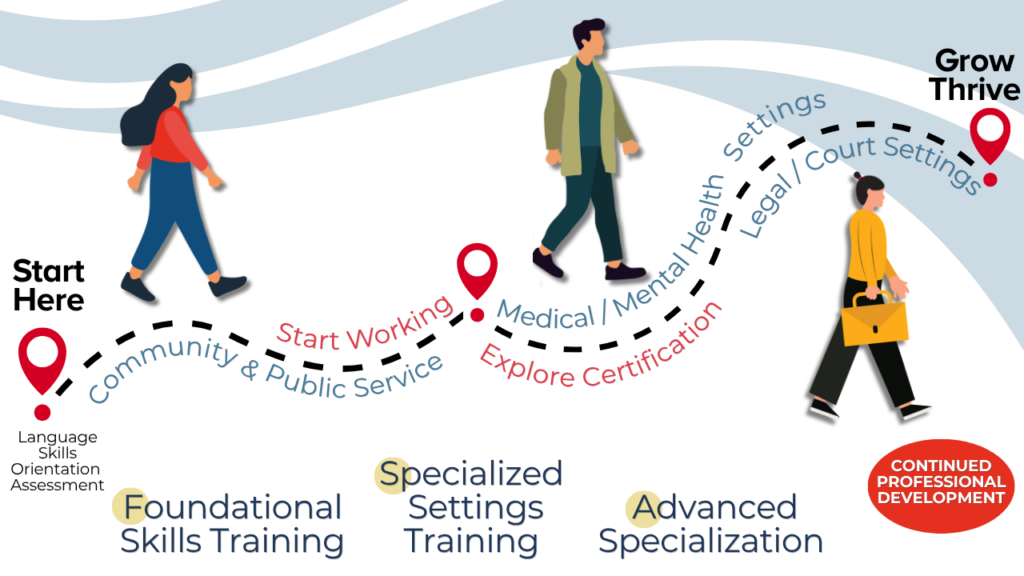
Start Your Career Here

If you’re just beginning, our foundational skills program, Interpreting in Community Settings, gives you the skills, the knowledge, the cohort, and the confidence to step into real work. Live classes, self-directed study components, practice with peers, student manuals and glossaries you’ll return to repeatedly, and a Certificate of Successful Completion that speaks to your qualifications and what you’ve earned. And that is recognized nation-wide. 

DISCOVER THE FOUNDATIONAL SKILLS TRAINING PROGRAM TO GET YOU STARTED

Advanced Interpreter Training: Medical, Mental Health, and Court Interpreting Settings

If you’re ready to specialize, our advanced training programs take you deeper into the settings that matter most: healthcare and medical interpreting, mental health and complex care, legal and court. These are intensive, short-course programs, serious, immersive learning for interpreters who want to build real skill and deliver with confidence.

DISCOVER ADVANCED PROGRAMS IN SPECIALIZED SETTINGS

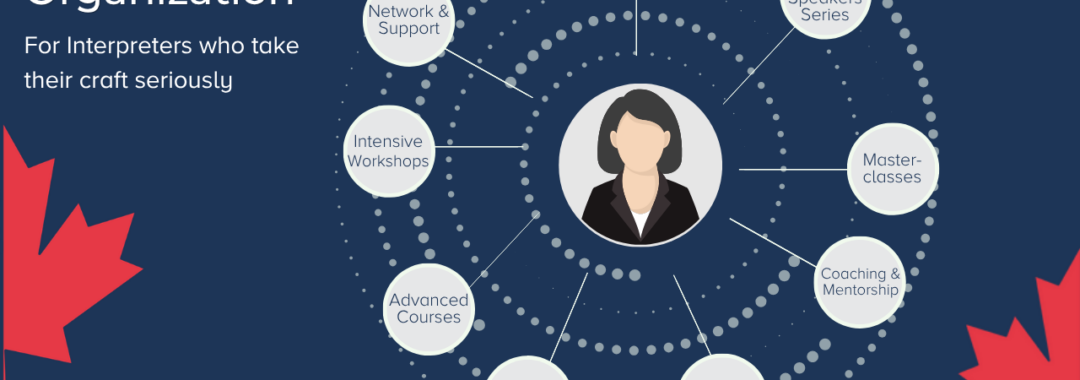
A 360 wrap-around organization for interpreters who take their craft seriously.

If you want to sharpen a specific skill, right now, and efficiently, our intensive workshops are designed for exactly that. Workshops on medical terminology OR simultaneous interpreting. Targeted, practical, and immediately applicable.

Each year, we bring a different focus, or revisit what matters most, based on what you, the interpreter, need.

FOR A FULL LISTING OF UPCOMING SESSIONS, PROGRAMS AND WORKSHOPS – CHECKOUT OUR CALENDAR

Everything You Need to Grow as an Interpreter — In One Place

And if, between programs, you want to continue learning and advancing your skills and career, our professional development focussed Membership Program is a 360 wrap-around:

  • monthly speakers
  • subject-matter experts
  • significant discounts on all advanced courses
  • quarterly drop-in sessions
  • masterclass access
  • exam prep support
  • an exclusive community of peers

Everything that a freelance professional needs to build and grow their practice.

DISCOVER MEMBERSHIP AND PROFESSIONAL DEVELOPMENT AT TIL

The Interpreter’s Lab also offers coaching, mentorship and language and skills assessments; the full arc of professional development, not just the beginning of it.

We think about this often: what does an interpreter actually need to become the professional they’re capable of being? Not just training, but continuity. Not just knowledge, but community. Not just a credential, but a career.

That’s what we’re building here. We have a place for you, wherever you are in your journey.

See you at The Lab!

Language is the door, not the destination.

Those of us who work in interpreting, whether we call it a field, a profession, or an industry, arrive here via many different pathways.

In my observation, there are two common paths. Some come through language itself. They begin as translators, interpreters, linguists—people drawn to words, to structure, and to meaning, often working within or alongside language service providers and others in the language industry. Others, like me, come through equity, access, and inclusion: through community engagement, through policy work, and through building systems that respond more fairly and more intelligently to diverse communities.

Language was my starting point, but it was also my turning point.

For many years, my work focused on systemic change, strengthening policies, improving community engagement practices, and supporting institutions to better include those who were often left at the margins. I was concerned with participation: who is at the table, who is not, and why. I spent years examining how institutions respond to communities, how policies unintentionally exclude, and how good intentions often fail in practice.

Again and again, language surfaced as a primary barrier, one that could be addressed, and often was. Sometimes this was done in thoughtful, comprehensive ways; other times through ad-hoc, temporary solutions. Regardless of the approach, language services were often where the conversation stopped. The deed done. The issue considered addressed.

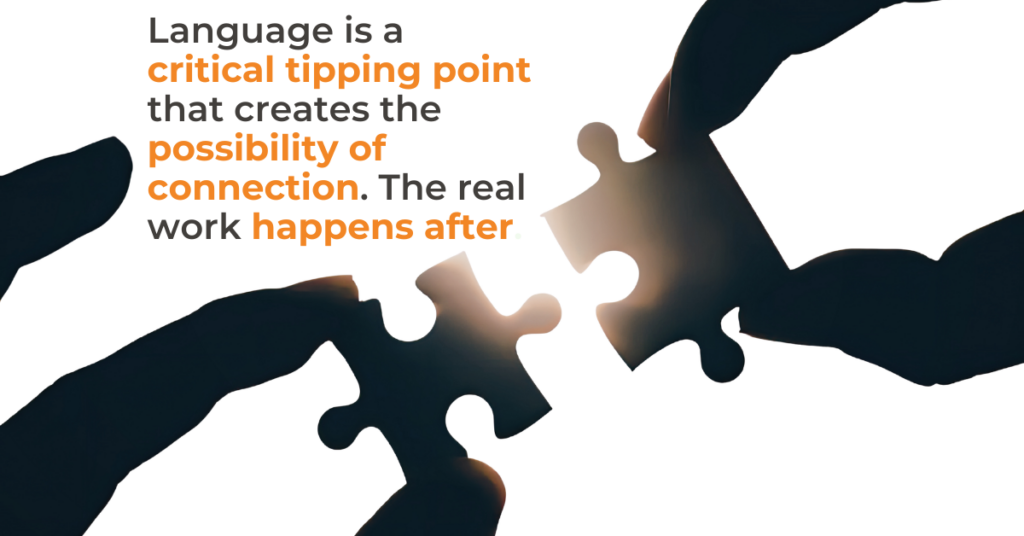
To me, language is a critical tipping point: language is the threshold. It is the first step into the room. It creates the possibility of connection, but it does not guarantee it.

What happens beyond that threshold is where the real work begins. Inclusion is not achieved simply because two people technically understand each other’s words.

That is why the conversation cannot focus only on those accessing a service. It must also include those providing it, those designing the systems, and those responsible for engagement, risk management, client safety, compliance with legislation and policy, and organizational effectiveness. They are as much part of the equation as individuals who do not communicate in the dominant language. Communication is relational. It affects everyone in the room.

Years ago, volunteering on a UNICEF project in Ecuador, I began to see how fragile communication can be when it depends on whoever happens to speak both languages in the moment. When I was back in Canada and working in healthcare environments, I witnessed situations that unsettled me. Bilingual individuals were asked to step into complex, emotionally charged encounters without preparation, without a framework, and without clarity about their role. The assumption was straightforward: if you speak the language, you can interpret.

Interpreting is structured meaning-making within human systems. It is a critical element in a multilingual, multicultural community.

Filling a Much Felt Gap: Interpreter Training

The Interpreter’s Lab did not emerge from a business plan. It emerged from recognizing a gap between what systems required and how we were preparing people to meet those demands. I was not interested in producing more bilingual helpers. I was interested in strengthening professional practice, building education that respected the complexity of the work and helping institutions understand that language access is not an optional courtesy. It is part of operational integrity.

Over time, I have come to see interpreting as one of the most underestimated professions within public service systems. Interpreters stand at critical intersections, in courtrooms, clinics, classrooms, and social service offices, supporting conversations that shape decisions about health, legal status, education, and family life. And yet the profession is still too often framed as an extension of bilingualism rather than as a discipline in its own right.

Perhaps that is because many of us arrived here indirectly, some through language itself, others through equity and access work, and many through lived experience.

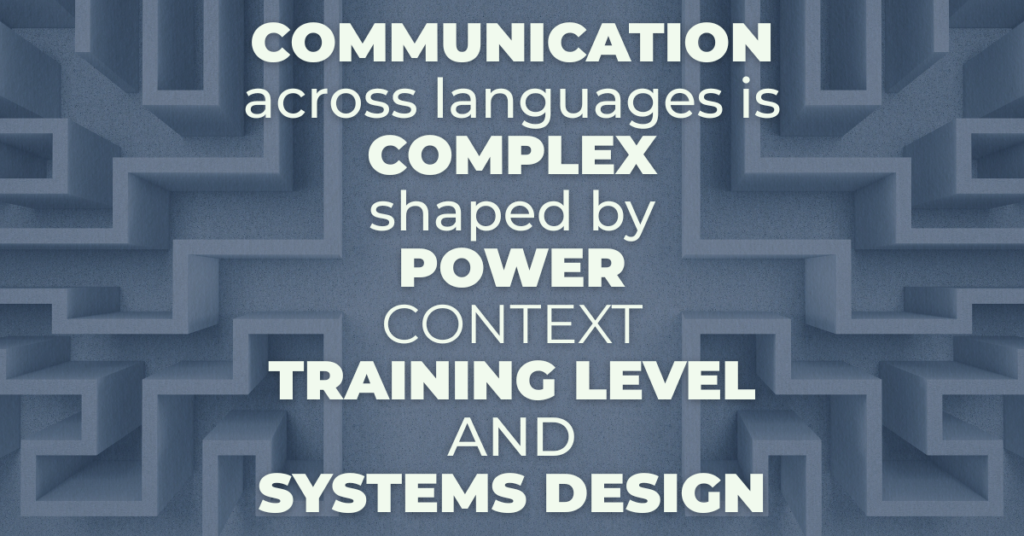
Wherever we entered, many of us arrived at the same realization: communication across languages is neither simple nor neutral. It is shaped by power, context, and training, or by the absence of training.

Language opens the door. What we build beyond that door, the standards, the competencies, the expectations, the accountability, determines whether inclusion is genuine or superficial.

The work we do at The Interpreter’s Lab and through our many initiatives continues to sit at that threshold, not only preparing interpreters through programs and curricula that advance the profession. but also asking how systems understand and support the work. Because if we value our own professional integrity, whether as clinicians, lawyers, educators, or policymakers, we must also value the integrity of the communication that underpins it.

Language gives us the opportunity to learn from and about one another.

What we choose to do with that opportunity is the real measure of systemic change.

Interpreter Training Is Not Content Delivery

Workshops, Techniques and the Hard Truth About Interpreter Training

There are tips and techniques.

There are workshops, webinars, and quick fixes.

And then there is training.

These things are not the same. Treating them as interchangeable has quietly undermined the interpreting profession for years.

Workshops have value. They raise awareness, introduce ideas, and support interpreters who already have a foundation. But they do not replace training.

Training is structured, cumulative, and grounded in standards. It is what moves someone from being bilingual to being appropriately qualified. That distinction matters, whether people realize it or not, especially in situations where the consequences are real and the impacts are lasting.

The Work Behind the Words

One of the most persistent myths in our field is that interpreting is simply “helping out” with language; that if you speak two languages and care enough, a few workshops will prepare you.

This belief is usually rooted in goodwill. Communities want access. Organizations are under pressure. People step in because someone must. But good intentions do not equal professional competence.

When interpreting is reduced to the act of speaking two languages, the work is treated as a simple transaction: words in, words out. But that framing oversimplifies the complex process of communicating across languages, cultures, and people. Interpreting involves constant decision-making within complex human and institutional contexts.

Interpreting requires far more than bilingual ability; it includes, among other important things, ethical judgment, role clarity, session management, discourse and register control, memory, and research skills.

Those competencies don’t emerge accidentally. They are developed deliberately and progressively.

“Interpreting is not a transaction. It is a professional, decision-based practice.”

Learning About Interpreting vs. Learning to Be an Interpreter

This is where confusion often arises.

Workshops tend to focus on content:

  • What interpreters do
  • Common mistakes
  • Ethical scenarios
  • Practical tips

Training focuses on formation:

  • Exploring communication
  • Meaning and language
  • Professional identity
  • Scope of practice
  • Decision-making and critical thinking
  • Developing professional competencies and skills
  • Accountability to standards
  • Consistency across settings
  • Ethical awareness and dilemma resolution

A webinar can raise awareness. A workshop can spark insight. But neither prepares someone to interpret in public service settings such as social services, healthcare, law enforcement, or mental-health contexts, where the consequences are real.

“Training is not about shortcuts. It is about readiness.”

Where Asynchronous Learning Fits–and Where It Doesn’t

Asynchronous learning, self-paced learning that occurs without live, real-time interaction between instructors and learners, has a role in interpreter education. It can support foundational knowledge, introduce concepts, and allow learners to engage with theory, terminology, and ethical frameworks at their own pace.

What it cannot do, on its own, is develop skilled interpreting competence. Asynchronous learning can support training, but it cannot replace it.

Interpreting is a performative, decision-based practice. It requires real-time interaction, guided feedback, correction, and exposure to unpredictability. These elements cannot be meaningfully replicated through fully self-directed, asynchronous formats. Without structured interaction and feedback, learners may absorb information without developing judgment.

When asynchronous learning is positioned as a complete substitute for interpreter training, it creates the illusion of readiness without the conditions needed to develop it.

And while the growth of asynchronous and on-demand learning has made education more accessible, that accessibility is not the same as adequacy. When it comes to acquiring tangible interpreting competencies, asynchronous learning alone is not innovation. It is omission.

Why Standards Matter, Especially When No One Is Enforcing Them

In many jurisdictions, including Canada, interpreter training is uneven or unregulated. That vacuum allows almost anything to be labelled “training.”

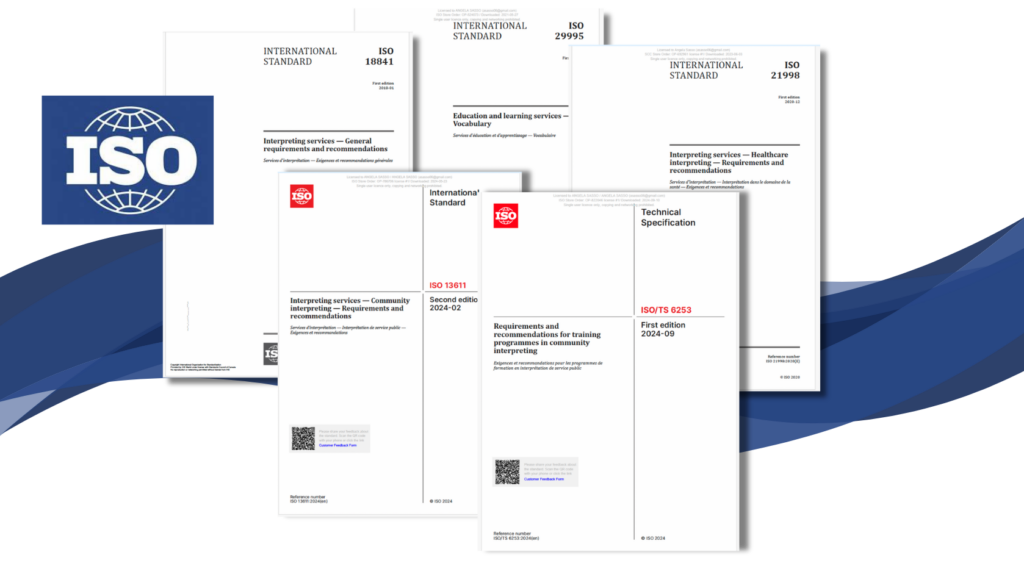
This is precisely why standards matter. International frameworks such as ISO 13611:2024 Interpreting services — Community interpreting — Requirements and recommendations and ISO/TS 6253:2024 Requirements and recommendations for training programmes in community interpreting articulate what professional practice and interpreter education require: defined learning outcomes, qualified educators, structured programmes, assessment, and progression.

Even when training programs are short in duration, they are designed to build competence, not simply share tips and tricks. 

At The Interpreter’s Lab (TIL), our courses are built around these principles, not to be prescriptive, but to be responsible. Without standards, training becomes performative rather than transformative.

Real-World Training for a Real-World Landscape

Our courses may not be the longest, and that is intentional.

Our programmes are largely self-funded by participants, so accessibility matters. We design our courses to be focused and rigorous, without unnecessary length or cost. At the same time, we are responding to urgent workforce needs and systems that too often rely on “good enough” language support. Shorter does not mean lighter.

At a time when interpreter training programmes have been closing across Canada, we have remained relevant by staying current. Our programmes are intentionally designed to sit at the intersection of academia and industry; grounded in professional practice and informed by the real-world realities interpreters are navigating now, not an abstract or idealized version of the profession.

“Accessibility in education is important, but accessibility is not the same as adequacy.”

This includes engaging with current modes of practice, evolving technologies, and the practical skills interpreters need to sustain their work, such as finding assignments, negotiating contracts and fees, and adapting to new forms of service delivery.

Rather than treating these realities as peripheral, we embed them into training as part of professional formation, alongside ethical judgment, international standards, and reflective practice.

Our programmes are taught by experienced practitioners and educators who have spent years working in, advocating for, and shaping this field; they are designed to lay a strong professional foundation.

Training does not need to be endless to be rigorous. It needs to be coherent, intentional, and accountable; it must provide a solid foundation for ongoing professional development, guided by those who understand both the field and the work.

From “Bilingual Helper” to Professional Practitioner

Many bilingual individuals have been interpreting for years before encountering formal training. When they do, the realization can be uncomfortable: there is much more to this profession than they were ever told.

That moment is not failure. It is professional awakening. As the saying goes, you don’t know what you don’t know.

Proper training reframes the role. It moves interpreters away from instinct-driven decisions and blurred boundaries, and toward ethical clarity, professional confidence, and consistency.

Training Is a Beginning, Not a Badge

Completing a solid training programme does not make someone “finished.” It provides a foundation, one that supports specialization, mentorship, and continuing professional development.

That is how professions function.

Tips have their place. Workshops have value.

But training, real training, is what turns intention into competence.

And once that distinction is clear, it’s impossible to ignore.

References and Resources

ISO STANDARDS ISO 37/SC 5

ISO 13611:2024

ISO/TS 6253:2024

Claudio Fantinuoli:

  1. Panel: The Future of Interpreter Training: Challenges, AI, and the Path Forward https://www.claudiofantinuoli.org/2025/02/28/the-future-of-interpreter-training-challenges-ai-and-the-path-forward/
  2. What future for translation and interpreting training institutions? https://www.claudiofantinuoli.org/2025/01/25/what-future-for-translation-and-interpreting-training-institutions/


responsive by design

Interpreter Training That Keeps Pace

At The Interpreter’s Lab – Centre for Interpreter Education and Training (TIL), our programs are regularly reviewed and updated to reflect evolving professional standards, practitioner experience, and the realities of public-service interpreting. Continuous improvement is not an add-on, it is part of how we design, deliver, and assess training.

What’s NEW for 2026

  • Updated ethical guidelines, standards of practice, and competency frameworks, aligned with current international standards
  • Improved navigation to help participants move more easily through course content
  • Enhanced learning resources to support applied practice
  • Course content updated to ensure alignment with current standards, clearer competency expectations, and consistent assessment of learning outcomes.

Professional Standards

Professional standards are not static. ISO standards, for example, are developed by international experts and are periodically reviewed and revised to remain relevant as professional contexts, technologies, and expectations evolve. As a long-standing member of ISO TC 37/SC 5 (since 2010) and the Project Leader for ISO/TS 6253:2024 – Requirements and Recommendations for Training Programmes in Community Interpreting, TIL’s Founder and Director, Angela Sasso, is very familiar with the components required to prepare bilingual individuals to work competently as interpreters in public-service settings.

This expertise, combined with the exceptional experience of our instructional team, all practicing interpreters, translators and educators, underpins TIL’s approach. Ethical decision-making, standards of practice, and clearly defined competencies form the foundation of our course design, and recent updates to international guidance are reflected throughout our curriculum.

Our programs follow the newest international standard, ISO TS 6253:2024, which sets the requirements and recommendations for interpreter training in community settings. We are also active across Canada in training interpreters, working with organizations, and supporting educators.
Because there is no outside accreditation body for this standard, we created our own careful review process. This process is based on our long history with standards work since 2010 and more than 30 years of experience in the interpreting field.

Assessment and Certification

All TIL courses conclude with a final exam to assess learning outcomes. Assessment is an essential part of ensuring that participants have not only attended but have met the learning objectives. To be awarded a Certificate of Successful Completion, participants must:

  • Achieve a minimum 75% passing grade on the final exam
  • Attend live, instructor-led sessions
  • Complete all online modules and assignments

Participants who complete the live sessions but do not meet all assessment requirements may instead receive a Confirmation of Attendance, verifying their participation.

Investing in credible, standards-based training is not about adding barriers; it is about building a more reliable, sustainable interpreting workforce that organizations and consumers can confidently rely on.

Balancing Access and Professional Expectations

At TIL, we work deliberately to balance accessible learning with professional rigour. This balance is not always simple, but it is essential if training is to be both inclusive and credible for the organizations and communities interpreters serve.

Our programs are designed to be accessible at the outset, with flexibility to expand into more in-depth, customized learning over time when organizational or workforce needs call for it.

Looking Ahead to 2026 and Beyond

In 2025, we also delivered advanced training in legal and court settings for ASL–English interpreters in British Columbia. Building on that work, this program will be offered nationally in 2026, further strengthening specialized training pathways across Canada.

What This Means for Agencies and Organizations

For agencies and organizations responsible for procuring, managing, and assuring the quality of interpreting services, training is not simply a credential, it is a risk-management and workforce-development tool.

Standards-aligned training helps ensure that interpreters understand and apply ethical decision-making, professional boundaries, role clarity, and sector-specific protocols consistently across assignments. This reduces variability in service delivery, supports compliance with institutional policies, and strengthens confidence among service users, staff, and funders.

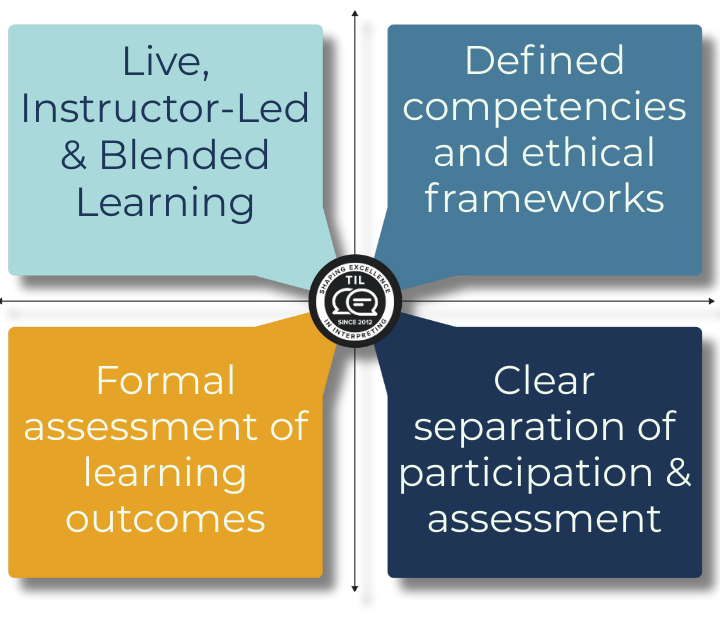
TIL’s approach supports quality assurance by:

  • Delivering training through a live, instructor-led and blended format, and never fully asynchronous learning4 quadrants of excellence
  • Embedding clearly defined competencies and ethical frameworks into all training
  • Assessing learning outcomes through formal evaluation, not attendance alone
  • Providing transparent distinctions between completion, assessment, and participation

From a procurement and contracting perspective, standardized training benchmarks make it easier to articulate expectations, compare qualifications, and demonstrate due diligence when responding to audits, complaints, or funding requirements.

From a workforce-development standpoint, structured training pathways support interpreter retention, professional growth, and readiness for increasingly complex public-service environments. Agencies benefit from interpreters who are better prepared, more consistent in practice, and clearer about professional limits, reducing downstream issues and supervisory burden.

In short, investing in credible, standards-based training is not about adding barriers; it is about building a more reliable, sustainable interpreting workforce that organizations and consumers can confidently rely on.

  • If you are interested in receiving a copy of our updated Code of Conduct or Competencies Framework, please contact us at admin@interpreterslab.org

Advancing the Field: A Milestone in Court and Legal Interpreting for ASL-English Interpreters

We’re proud and delighted to share that The Interpreter’s Lab – Centre for Interpreter Education and Training has just completed the first-ever Interpreting in Legal and Court Settings: ASL–English Advanced Program, led by the exceptional Dr. Debra Russell. With over 20 ASL-English interpreters participating, this inaugural cohort marks a groundbreaking moment for interpreter education in BC and across Canada.

Advanced Training for ASL-English Interpreters in Court Settings

This program is more than another course, it represents the first coordinated, advanced training for interpreters in legal and court settings, built specifically for ASL-English interpreters and grounded in Canadian practice, standards, and legal frameworks. And it reflects something essential about how we work at The Interpreter’s Lab: when interpreters and our partners identify a gap, we respond, quickly, collaboratively, and with purpose.

After listening to ASL-English interpreters across BC describe the persistent gap in legal-interpreting training, we adapted our well-established spoken-language legal interpreter training framework and rebuilt it specifically for ASL-English interpreters. This required re-sequencing modules, reworking assignment design, and ensuring that the competencies, protocols, and ethical considerations unique to ASL–English court work were meaningfully integrated. And we did so in a relatively short time, ensuring that interpreters could access the training they needed without waiting years for a program to be developed.

Coordinated, advanced training for interpreters in legal and court settings, built specifically for ASL interpreters and grounded in Canadian practice, standards, and legal frameworks.

Under Dr. Russell’s leadership, participants engaged in rigorous, research-informed learning: case analyses, applied skill-development, explorations of courtroom dynamics, and considerations and protocols for team/co-interpreting practices. The energy, thoughtfulness, and commitment from this cohort made it clear just how needed, and overdue, this type of training truly is.

Best Practices, International Standards (ISO) and the Canadian Justice System

This program was also deliberately grounded in international standards and evidence-based research on interpreter education. Drawing on the ISO framework for interpreter training, particularly the standards developed under ISO TC 37/SC 5 and decades of scholarship on legal interpreting, assessment, and professional competencies, we ensured the curriculum aligned with recognized best practices.

Everything from sequencing to assignment design, to skill development was informed by research and premised on the Canadian Law and Justice system. This alignment with standards and evidence-based pedagogy is central to how we design our programs and reinforces our commitment to delivering training that reflects the realities and responsibilities of legal interpreting today.

“At The Interpreter’s Lab, our mission is to deliver accessible, responsive, and standards-based training”

We extend our sincere gratitude to all participants, and to Dr. Russell for her leadership, expertise, and generosity in shaping this pioneering program.

More Training Opportunities to Come in 2026

This inaugural cohort centred ASL–English interpreters; however, we acknowledge the important contributions of Deaf interpreters in legal settings and plan to explore future training options that support and reflect their role in this work. The timeline for this first delivery made it necessary to proceed with the established structure; however, The Interpreter’s Lab is fully prepared to adapt the program for a second offering that reflects the needs of all sign language interpreters.

“The information and the opportunity to have Dr Russell guide our learning was incredible, and I do feel as though it was a great professional development opportunity.”

As we continue investing in sector-specific ASL-English interpreter education, this first-of-its-kind program sets a new benchmark, and it’s only the beginning. More advanced training opportunities for signed-language interpreters are coming in 2026.


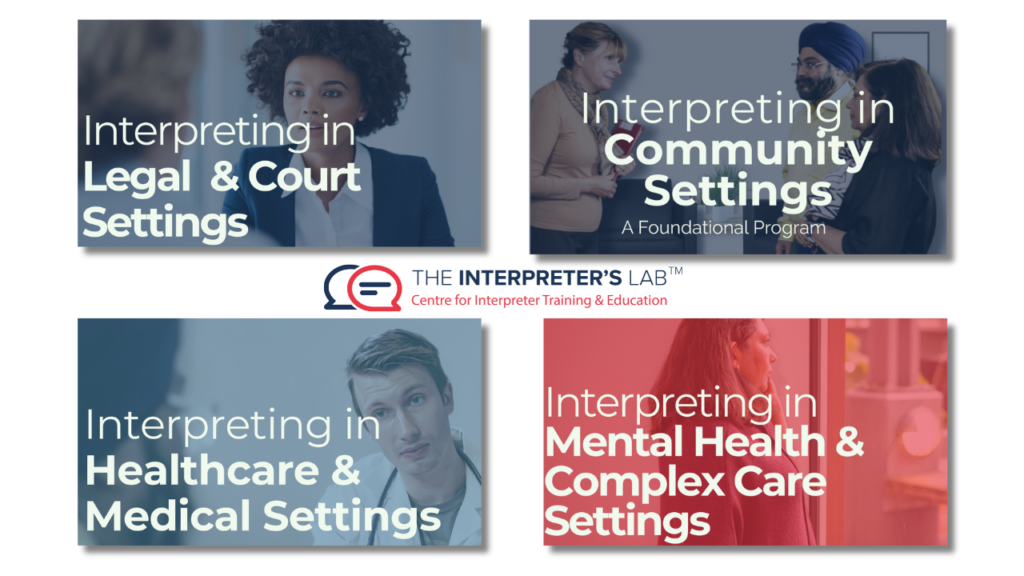
Interpreting in Mental Health & Complex Care Settings Training Program

Develop Advanced Skills for Mental Health and Specialized Care Interpreting

This program is designed for experienced healthcare interpreters who want to expand into mental health and other complex care environments.

You will learn how to work effectively as part of an interdisciplinary team, support accurate and respectful communication, and navigate culturally nuanced conversations involving mental health, trauma, and sensitive care contexts.

What You’ll Learn:

  • Key dynamics of interpreting in mental health settings
  • Mental health terminology, conditions, diagnoses, and treatments
  • Trauma awareness, secondary trauma, and interpreter self-care
  • Culturally informed communication and mental health interviewing
  • Approaches for MAiD, gerontology, SLP, and other complex care settings

Program Includes:

  • Live online classes with interactive role plays and simulations
  • Real-world case scenarios and guided practice
  • Live online classes and real-time discussions
  • Curated resources and links

Plus

  • Comprehensive student manual  – Interpreting in Mental Health Settings
  • Mental Health Terminology – including conditions, treatment options and pharmaceuticals

Strengthen your ability to interpret with care and professionalism across mental health and complex care environments.

Certificate of Successful Completion recognized across Canada.

Find out more: www.interpreterslab.org/programs-mental-health-interpreter-training

Have questions before you join? Sign up for a FREE INFORMATION SESSION  and get all your questions answered before you sign up.
ILCS Banner

Interpreting in Legal & Court Settings Training Program

Advance Your Skills in Legal, Court, and Law-Enforcement Interpreting

This program provides the essential knowledge and practical skills needed to work confidently in legal, court, and related law-enforcement settings.

Recognized by the Ministry of Attorney General – Court Services Branch, the training strengthens your understanding of legal processes, terminology, protocols, and ethical responsibilities while preparing you for the CTTIC Court Interpreter certification exam.

What You’ll Learn:

  • Key procedures and protocols across legal, court, and law-enforcement environments
  • Legal terminology, research strategies, and resource navigation
  • Sight translation, memory, conversion, and note-taking techniques
  • Consecutive and simultaneous interpreting practice
  • Professional ethics and standards of conduct

Program Includes

  • Live online classes with interactive role plays and simulations
  • Curated resources and links

Plus Two student manuals:

  • Interpreting in Legal and Court Settings
  • Glossary & Terminology Workbook

Optional bilingual tutorials (e.g., Building Your Bilingual Legal Glossary)

Develop the competence, clarity, and confidence needed to interpret effectively across legal and court environments.

Find out more: www.interpreterslab.org/programs-court-interpreter-training

Have questions before you join? Sign up for a FREE INFORMATION SESSION  and get all your questions answered before you sign up.

Interpreting in Healthcare & Medical Settings Training Program

Advance Your Skills for Professional Medical Interpreting

Build the specialized knowledge, confidence, and practical competence you need to interpret safely and effectively in healthcare environments. Grounded in the Canadian healthcare system and aligned with national standards, this program prepares you to work in hospitals, clinics, and community health settings—and supports your readiness for the CTTIC Medical Interpreter certification exam.

What You’ll Learn

Develop a strong foundation in:

  • The professional role and responsibilities of the healthcare interpreter
  • Essential skills for fast-paced, high-stakes medical encounters
  • Medical and healthcare terminology
  • Canada’s healthcare system, key organizations, and service pathways
  • Medical specialties, hospital departments, and levels of care
  • Common illnesses, conditions, procedures, and treatments
  • Models of health, well-being, and patient-centred care
  • How culture, communication, and context shape health decisions
  • Intercultural and interpersonal communication skills in clinical settings

Plus, You’ll Also Get:

  • Interactive role plays, case studies, and simulation activities
  • Live online classes and real-time discussions
  • Curated resources and links
  • A comprehensive student manual

Certificate of Successful Completion recognized across Canada

Strengthen your professional practice, deepen your subject-matter expertise, and enhance your employability in one of the most in-demand interpreting fields.

Find out more: www.interpreterslab.org/programs-healthcare-interpreter-training

Have questions before you join? Sign up for a FREE INFORMATION SESSION  and get all your questions answered before you sign up.

Interpreting in Community Settings: A Foundational Program

Kickstart Your Career as a Community Interpreter
Don’t miss your opportunity to start a new career!

Get the practical skills, tools, and confidence you need to begin working as an interpreter in a variety of community settings. Rooted in the Canadian context, aligned with current ISO standards, and recognized across Canada, this course blends hands-on training with up-to-date industry insights to help you understand how the field works—and how to enter it.

What’s Included:

  • Two practical course manuals
  • Glossary of key industry terms
  • Additional curated resources and links
  • Live online classes with real-time interaction
  • 12-week access to all course materials
  • Course exams and certificate included
  • Certificate of Successful Completion (recognized across Canada)

Plus:

  • Step-by-step guidance on finding and applying for interpreter jobs
  • Introductions to trusted language service providers and partner agencies

Build your skills, expand your opportunities, and start your interpreting journey with clarity and support.

Find out more: www.interpreterslab.org/programs-community-interpreter-training

Have questions before you join? Sign up for a FREE INFORMATION SESSION  and get all your questions answered before you sign up.

Interpreting in Community Settings: A Foundational Program

Kickstart Your Career as a Community Interpreter
Don’t miss your opportunity to start a new career!

Get the practical skills, tools, and confidence you need to begin working as an interpreter in a variety of community settings. Rooted in the Canadian context, aligned with current ISO standards, and recognized across Canada, this course blends hands-on training with up-to-date industry insights to help you understand how the field works—and how to enter it.

What’s Included:

  • Two practical course manuals
  • Glossary of key industry terms
  • Additional curated resources and links
  • Live online classes with real-time interaction
  • 12-week access to all course materials
  • Course exams and certificate included
  • Certificate of Successful Completion (recognized across Canada)

Plus:

  • Step-by-step guidance on finding and applying for interpreter jobs
  • Introductions to trusted language service providers and partner agencies

Build your skills, expand your opportunities, and start your interpreting journey with clarity and support.

Find out more: www.interpreterslab.org/programs-community-interpreter-training

Have questions before you join? Sign up for a FREE INFORMATION SESSION  and get all your questions answered before you sign up.