
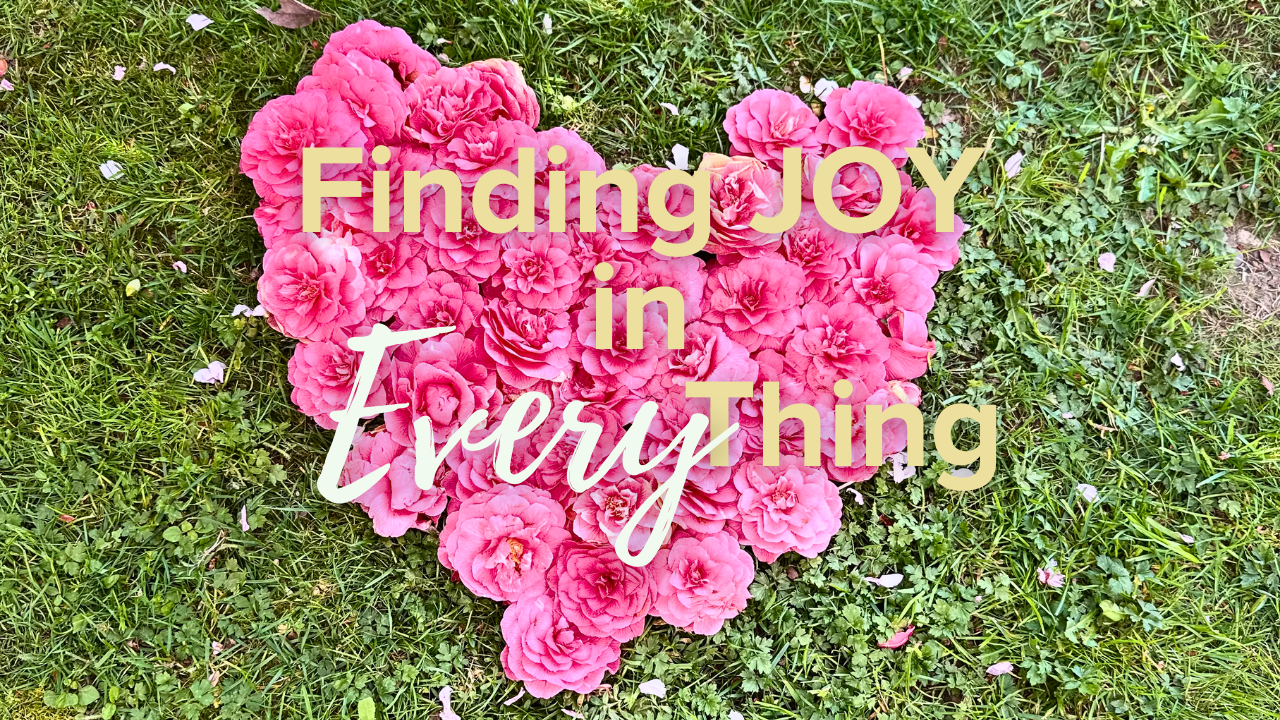
One morning, while out walking my pug – who, at fifteen, strolls through life on her own schedule – I came upon a beautiful arrangement of fallen flowers that someone had formed into a perfect heart on the ground. Instead of brushing them aside as dead waste, this lovely soul allowed them to create something new and beautiful, giving me a reminder of possibility and joy.
I believe this same idea applies to the everyday challenges and transitions we all face. When we shift our perspective, we uncover opportunities in unexpected places – transforming endings into new beginnings without losing sight of who we are.
I am probably not alone in feeling a little stretched thin these last few years. I know many of us have gone through, or are going through, challenges in our lives, in many different areas. Lately I’ve taken a step back from the constant push through, to examine and reflect. I took the time to learn new ways of understanding the world, explored other philosophies, read a few interesting books, and listened to podcasts not in my usual rotation. Doing so shifted my perception and allowed me to acknowledge that sometimes when things are not going as planned, then maybe the plan needs to change. And that includes changing oneself. Coming across the pattern of flower petals – deliberately created to highlight the magnificence in the ordinary – was just the thing to demonstrate how one can see things from different points of view.
This shift extended to the work I do. Working in language access and public‑sector interpreting can be both challenging and exciting: new trends and technologies can simultaneously feel like a push and a pull. At its core, interpreting is a human-centred activity, one that I came to while involved in the work of social justice and access. Sometimes it can feel like we’ve moved away from those central tenets of connection, inclusion, and cohesive communities. But the essentiality of language diversity, language access and language equity is vibrantly seen in everyday interpreting – in the services that affect us all – interpreters and non-interpreters alike. Our connection is one long chain, where each link matters. It’s this significance and meaning that allows our work to be enduring, even as we are reforming and recreating ourselves – like the heart of petals.
Finding creativity in constraint, gratitude in the everyday, and kindness in every conversation reminds us to focus on what is essential, embrace what allows us to grow, and renew ourselves in our work.