Standards-Aligned Training for Interpreters Working in Canadian Legal Contexts
Practical Foundations for Legal Interpreting
Interpreters working in legal and court settings face complex linguistic, procedural, ethical, and cognitive demands. This program addresses these challenges directly through guided instruction, analysis of real scenarios, and structured practice.
Participants learn not only what to do, but why decisions matter in legal contexts, supporting sound professional judgement and accountability.
How the Course Works
Self-directed online modules to build foundational knowledge
Skills practice in legal discourse, memory, note-taking, and accuracy
Guided reflection on ethics, professional identity, and decision-making
Learning activities grounded in real Canadian legal contexts
What You’ll Learn
- Professional Scope, Concepts, and Practice
- Ethics and Decision-Making
- Canadian Law and the Canadian Legal System
- Criminal Law and the Trial Process
- Youth Law and Youth Criminal Justice
- Civil Law and Administrative Law (Tribunals)
- Legal Language and Legal Discourse
- Core Interpreting Modes, Strategies, and Techniques
- Memory, Accuracy, and Note-Taking in Legal Interpreting
- Essential Legal Terminology
- Mastering Interpreting Skills through Strategic Practice
- Professional Practice and Professional Identity
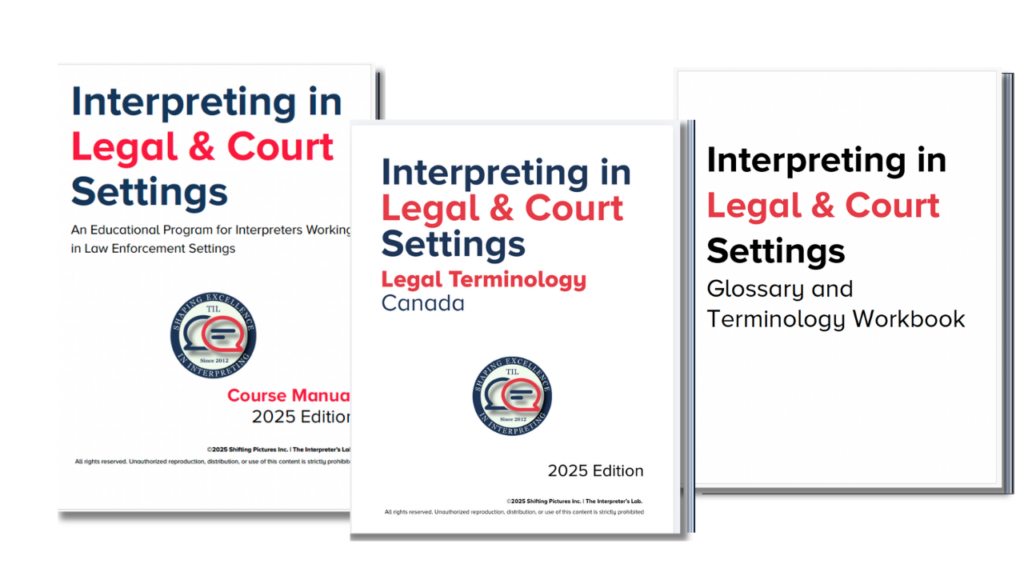
Interpreting in Legal and Court Settings Training Program Schedule and Fees
OUR LEGAL AND COURT PROGRAM ACCEPTS STUDENTS THAT HAVE SUCCESSFULLY COMPLETED A FOUNDATIONAL TRAINING PROGRAM IN INTERPRETING.
NEXT SESSION: FEBRUARY 16, 2027 to MARCH 6, 2027
Tuesdays: 5:30 p.m. to 7:30 p.m. PST (UTC-7)
$1,125* + GST (where applicable).
Enrol today and get started in your new career.
Become a Member and receive a 20% discount – a $225 savings.

Your Learning Experience
Live, instructor-led online classes
Guided practice, discussion, and applied learning
Structured modules covering law, terminology, skills, and ethics
Capstone project integrating learning across the course
This course combines self-paced learning with live interactive sessions
Legal Settings and Contexts
- RCMP and law enforcement
- The Canadian court and legal system
- Lawyers and legal firms
- Administrative tribunals (civil and criminal)
- The immigration and refugee process
- Canada Border Services Agency
- Ministry of Attorney General
- Correctional Services Canada
- Municipal police and community policing
- Child protection and family maintenance services
Core Skills and Knowledge Gained
- Structure and function of the Canadian legal system
- Criminal, civil, youth, and administrative law processes
- Legal language, discourse, and terminology research strategies
- Consecutive, simultaneous, and sight translation in legal settings
- Interpreting strategies for complex and high-pressure environments
- Ethical decision-making and professional accountability
- Role boundaries and professional conduct in court and tribunal settings
Meet your Instructor - Dr. Debra Russell, PhD.